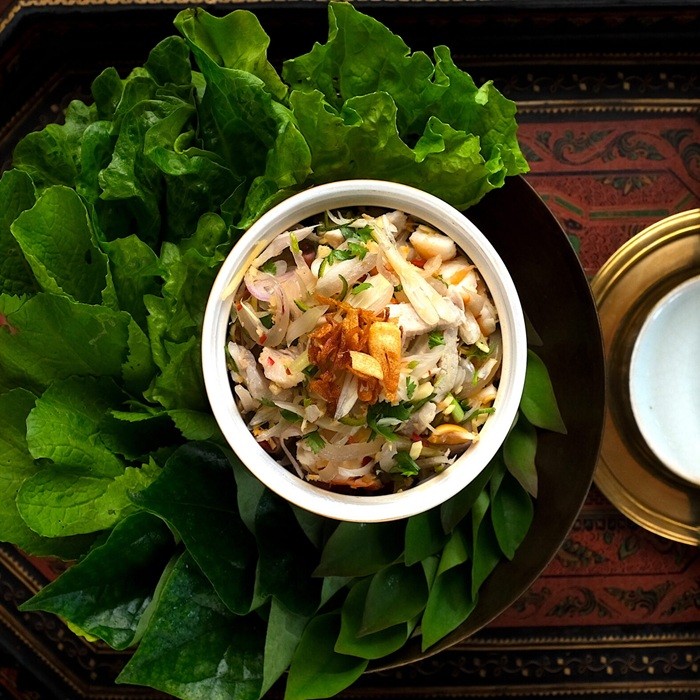
Rinse the rice, soak in water for about 10 minutes, then drain well. Heat a wok or large skillet over medium heat. Add the rice and stir constantly until evenly dark golden brown and very fragrant, about 5 minutes. Transfer to a bowl to cool. Grind finely using a spice grinder or mortar and pestle, then sift through a fine mesh strainer to remove any large pieces. Set aside. Thinly slice the shallots lengthwise. Finely chop the galangal, pickled scallion heads, chili peppers, and bitter orange zest. Coarsely grind the roasted peanuts. Heat a frying pan over low heat, add shredded coconut, and toast, stirring, for 2–3 minutes. Set aside. In a large bowl, combine lime juice, bitter orange juice, palm sugar, pickled scallion brine, and fish sauce. Stir until fully dissolved and well mixed. In a mixing bowl, combine dried shrimp, toasted coconut, chopped aromatics, and dressing. Mix well. Add roasted rice powder and stir again. Top with coarsely ground roasted peanuts. Place the salad on a large plate. Let each guest spoon a little onto their own small plate, wrap in leafy greens with vegetables, and enjoy in bite-size portions. For a vegetarian version, omit the dried shrimp and fish sauce. Season to taste with soy sauce and a pinch of sea salt, keeping the sweet-sour balance.
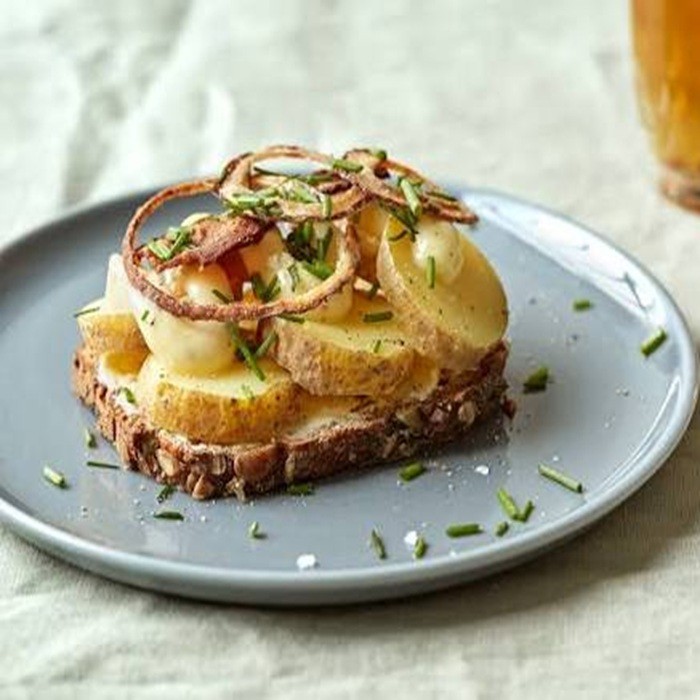
Scrub the potatoes clean and place in a small saucepan with water and 1 tablespoon of salt. Bring to a boil and simmer the potatoes for about 10 minutes. Turn off the heat and let the potatoes stand in the water for 5 minutes. Drain the potatoes and allow to cool slightly. Remember that potatoes come in various sizes, so the cooking time may vary – if they do not easily glide off of a fork when speared and lifted out of the water, they are not done yet. Fry bacon slices and transfer to a dish lined with paper towels. Peel the red onion and slice in thin rings. Transfer the flour to a bowl and toss the onions in the flour. Remove onions and shake off excess flour. Heat the oil in a saucepan over medium heat. You can test whether the oil is hot enough by adding a small piece of onion to the saucepan. If the oil bubbles around the onion, the oil is ready. Transfer as many onion rings to the saucepan as can fit in one layer. Do not add too many onion rings at once. Fry the onions for a couple of minutes until they are golden brown. Transfer onions to a dish lined with paper towels and sprinkle with salt. Repeat the process until all onions are fried. Butter a slice of dark rye bread and arrange round potato slices (or, if the potatoes are very small, halved potatoes) on top. Top your open potato sandwich with a good mayonnaise, crispy fried onions, fried bacon and sliced chives.
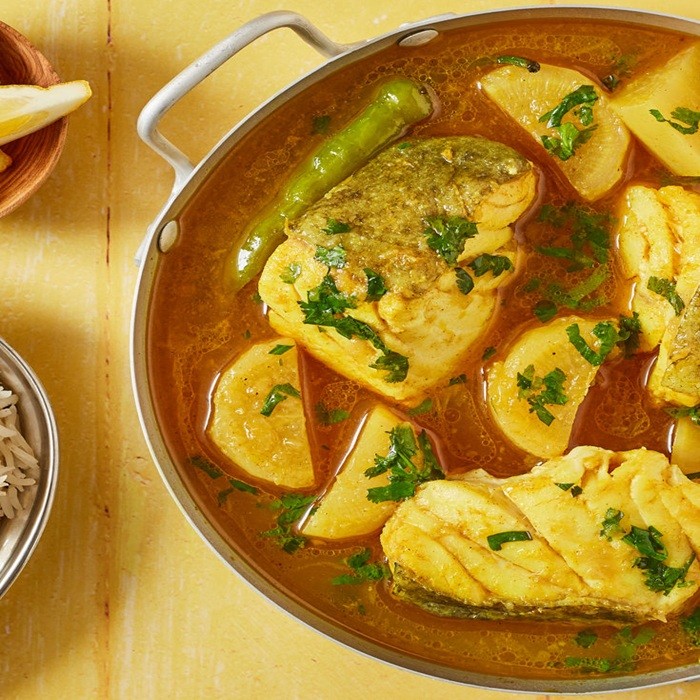
If you are using rohu fish it will usually be frozen. Soak it in cold water for 30-45 minutes to defrost and while still a little firm, descale and cut each steak into quarters and wash in cold saltwater a few times. Drain and set aside. If using an alternative such as cod, cut into 2 ½ inch chunks then rinse, drain and set aside 2 Top and tail the daikon and peel using a potato peeler. Cut in half widthways then cut each half down the middle, lengthways. Now slice into 2cm-thick half-moon pieces. Rinse and set aside 3 Place a large, shallow saucepan over a medium heat and add the oil. When the oil is hot add the crushed garlic and stir for a minute until pale golden 4 Add the onion paste and salt and cook for 3-5 minutes, until the onion softens and becomes translucent, stirring occasionally 5 Pour in 200ml of water then cover and cook for 10 minutes, stirring once or twice 6 After 10 minutes add the ground spices and stir for a couple of minutes so that the spices cook through. Cover and cook for 5 minutes over a low heat then stir in the daikon. After a minute or so add 200ml of water. Cover and cook for 10 minutes on a medium heat 7 Add the fish pieces to the pan and mix thoroughly so that the fish is coated in the spices. Gently shake the pan and cover and cook for 5 minutes on medium heat. It is very important not to stir the pot after this stage 8 Meanwhile, boil some water. After the 5 minutes are over carefully pour 500ml hot water into the pan. When doing this pour into the sides of the pan so that you don’t pour boiling water directly onto the fish 9 Give the pan a gentle shake then cover and simmer over high heat for 15 minutes. Add the chopped coriander and chillies and continue cooking for another 5 minutes then turn off the heat. Serve immediately with rice and the lime wedges
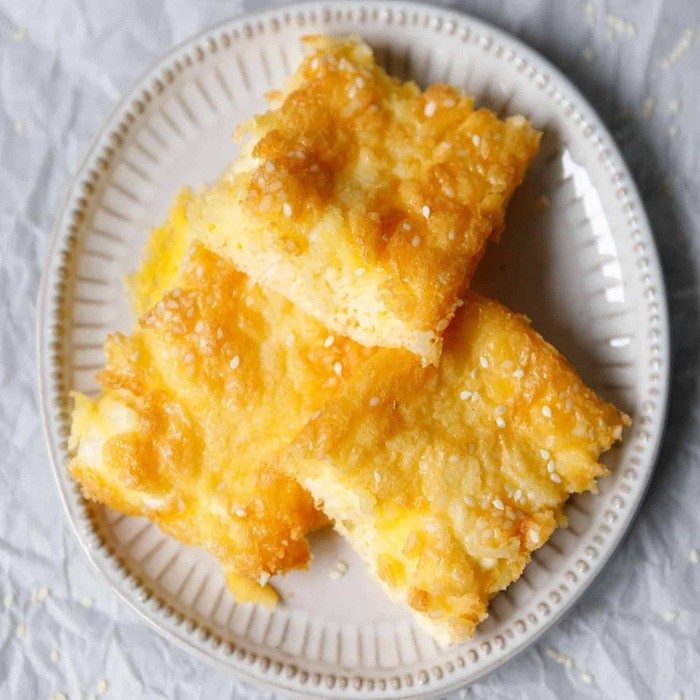
Preheat oven to 360 F (180 C) Beat eggs in a bowl, using a whisk ( no mixer needed). Slowly add the melted butter, whisking to incorporate. Add the cheeses (mozzarella, feta and cream cheese), stir to combine. Then add the baking powder and whisk. Grease a 8×8 -inch square baking dish with butter and pour the mixture inside. Top with sesame seeds (optional). Bake for 20 minutes, until golden. Let it cool for 5-10 minutes inside the pan, then cut into pieces and serve. Keep in the fridge for up to 3 days.
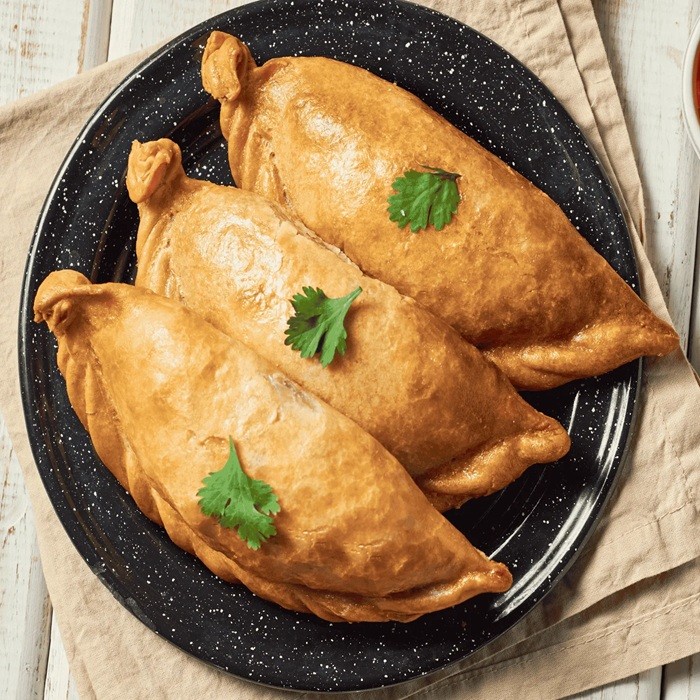
Make the filling: Melt butter in a large skillet over medium heat. Add onion, garlic, oregano, cumin, salt, and pepper; cook and stir until onion is golden brown, 5 to 7 minutes. Add pork and cook until completely browned and crumbly, 7 to 10 minutes more. Drain fat from the skillet. Stir in raisins, olives, and hard-cooked eggs. Whisk water and cornstarch together in a small bowl; pour into the skillet and stir until liquid thickens. Remove from the heat and set aside. Make the dough: Whisk milk and melted shortening together in a bowl until evenly blended. Stir flour and salt together in a separate large bowl. Pour milk mixture into flour mixture; whisk until well combined and a dough forms. Let rest for 10 minutes. Preheat the oven to 400 degrees F (200 degrees C). Line a baking sheet with parchment paper. Roll dough on a lightly floured surface to a thickness of 1/8 inch. Cut into 12 circles with a round cookie cutter or glass. Spoon filling into the center of each circle. Fold each circle in half and press the edges with a fork to seal. Brush the tops with beaten egg. Place empanadas onto the prepared baking sheet. Bake in the preheated oven until golden brown, about 25 minutes.
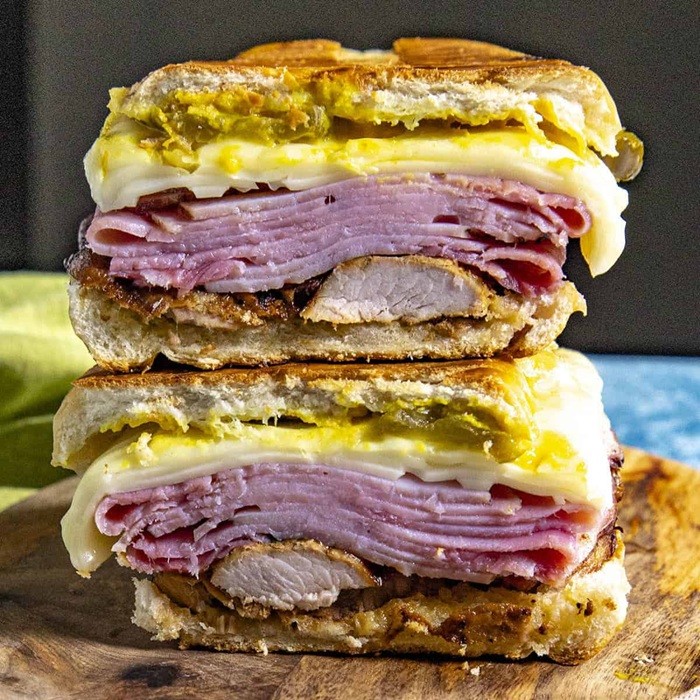
Step 1 Place pork chops in a 3-qt. glass baking dish. Using a fork, poke holes into pork all over; season all over with 1 tsp. salt. Drizzle with oil and toss to coat. Step 2 In a small bowl, combine orange zest and juice, lime zest and juice, oregano, pepper, garlic powder, cumin, and onion powder. Add half of marinade to pork and let rest 10 to 15 minutes. Step 3 Meanwhile, arrange a rack in center of oven; preheat to 425°. Add mustard and mayonnaise to remaining marinade and stir until smooth. Step 4 Transfer pork to oven and roast until an instant-read thermometer inserted into thickest part registers 140°, 15 to 20 minutes. Step 5 To build sandwiches, cut loaf in half crosswise, then cut each piece in half lengthwise for 4 pieces total. Spread butter on outside of bread on the top and bottom. Spread mustard mixture on cut sides of bread. On 2 bread pieces, layer each with 2 oz. cheese, 4 oz. ham, half of roast pork, 4 pickle slices, and remaining 2 oz. cheese. Close with remaining bread pieces and wrap each sandwich in foil. Step 6 Heat a large cast-iron skillet over medium heat. Place foil-wrapped sandwiches in skillet, then place another heavy skillet on top to create a homemade sandwich press. If you don’t have another heavy skillet, weigh the pan down with another lighter skillet or baking sheet, then top with couple of canned goods. Step 7 Grill sandwiches, turning halfway through, until toasted and cheese is melted, 3 to 4 minutes per side. Cut each sandwich in half and serve.

Sift the flour, baking powder, and salt into a large mixing bowl. Combine the lard and milk in a saucepan, and heat until the milk is hot. Pour the hot milk into the flour mixture, and stir until a dough forms. Turn out onto a floured surface, and knead until smooth and elastic. Cover, and allow to rest for 15 minutes. Preheat oven to 375 degrees F (190 degrees C). Roll the dough out on a floured surface 1/4-inch thick. Cut into 4-inch rounds. Brush the outer edges of each circle with beaten egg, and fill with a small mound of cheese. Fold each circle in half to form a half-moon; press the edges with your fingers or a fork to seal. Place the empanadas onto a parchment paper-lined baking sheet. Brush the tops with remaining egg. Bake in preheated oven until golden-brown, about 20 minutes. Alternatively, the empanadas may be deep fried in 375 degrees F (190 degrees C) oil. If deep frying, do not brush the outsides of the empanadas with egg. Drain on paper towels.
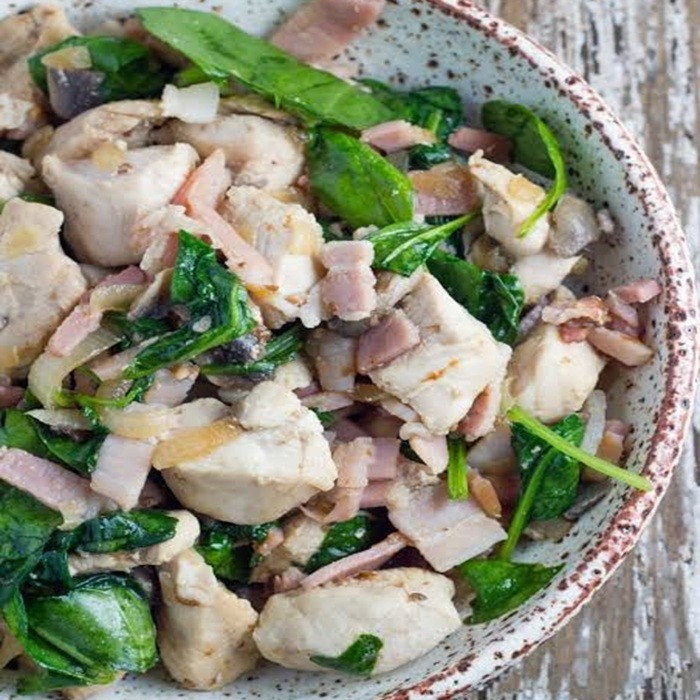
Place chicken breast in a saucepan and cover with water. Bring to a boil, add 1 tsp salt and simmer for approximately 15 minutes. Allow chicken to cool and then shred meat with two forks. Finely chop shallot/red onion. Stir mayonnaise, crème fraîche, Dijon mustard and apple cider vinegar to combine. Season with salt, pepper and extra Dijon mustard to taste. Combine with onion and chicken. Fry bacon until crisp and transfer to plate lined with paper towels. Rinse mushrooms, slice and fry in the same pan as bacon until golden (approximately 5 minutes). Season with a bit of salt and pepper. Arrange your chicken salad in a serving dish, topped with crisp bacon, mushrooms and chopped parsley. Serve on a slice of light or dark bread.
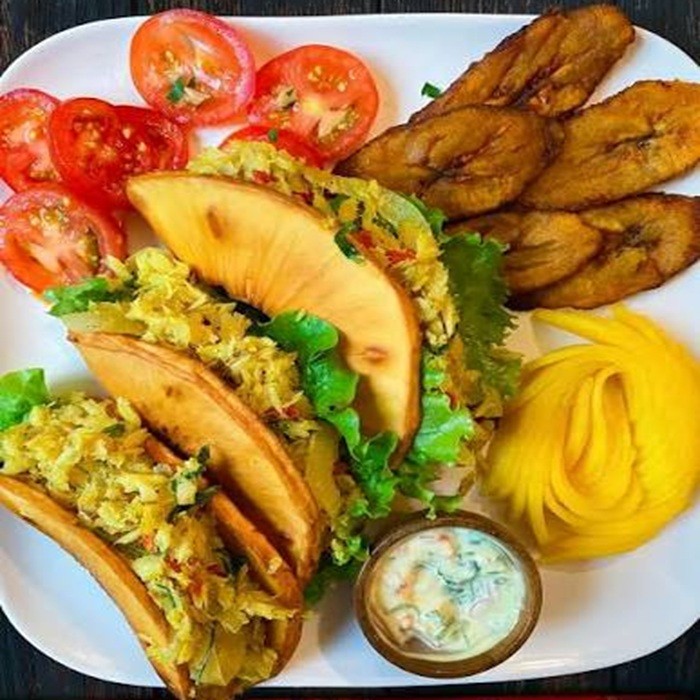
Place a large pot of water to boil, add breadfruit, and let it cook for around 30 minutes Remove breadfruit from pot and let it cool for a few minutes Hold the breadfruit firmly and using a large sharp knife slice into thin rounds Slice as many as you need Then cut off skin and core (You may leave the core on if you like) Gently fold to shape like a taco shell, use two toothpicks to hold it in place. Place on a large plate or tray and repeat this process for all breadfruit slices Heat oil for deep frying, using a pair of tongs submerge breadfruit slices in pan, You can guide slices with tongs if you need to You can leave the small toothpicks in the taco shells and remove them after they're cooked. Or, you can do like I did. If your'e using larger toothpicks, you may need to remove them safely. Be very careful as you need to adjust it in the hot oil. Remove when golden brown Set over tissue paper Repeat this for the rest of the shells Stuff the shell with your favorite filling. I chose codfish/ salt fish
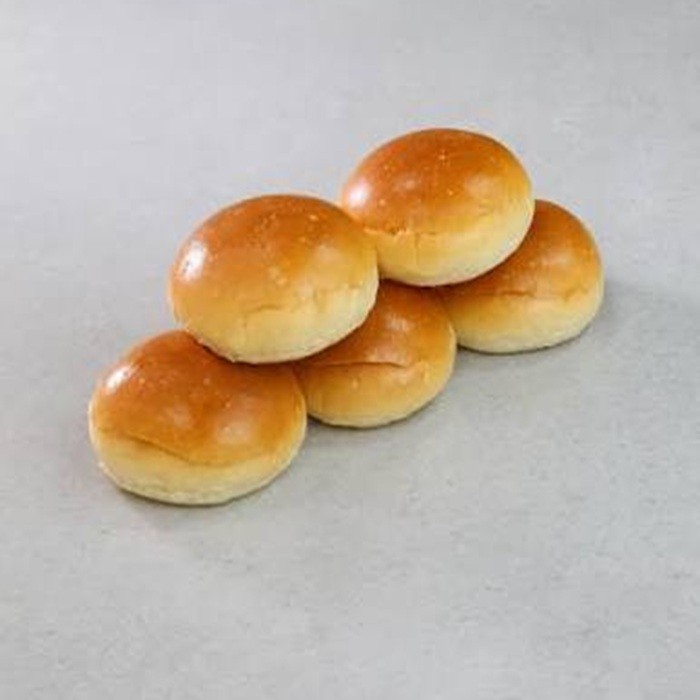
Combine the flour, the sugar, yeast, and salt in a mixing bowl or large bowl Add warm milk and start kneading dough Once the dough is smooth and elastic, add the butter and continue kneading Allow the dough to rise in a covered bowl until it’s doubled in bulk, about 90 minutes. Turn the dough out onto a lightly floured surface, divide dough and round all of the pieces into smooth balls. Lightly grease pans Place dough on pan Cover the pans, and let the loaves rise until they're puffy and soft Using a brush, add egg whites to loaves Towards the end of the rising time, preheat the oven to 375°F Uncover the loaves, and bake them for 28 to 32 minutes, until their crust is golden brown Remove from oven and enjoy
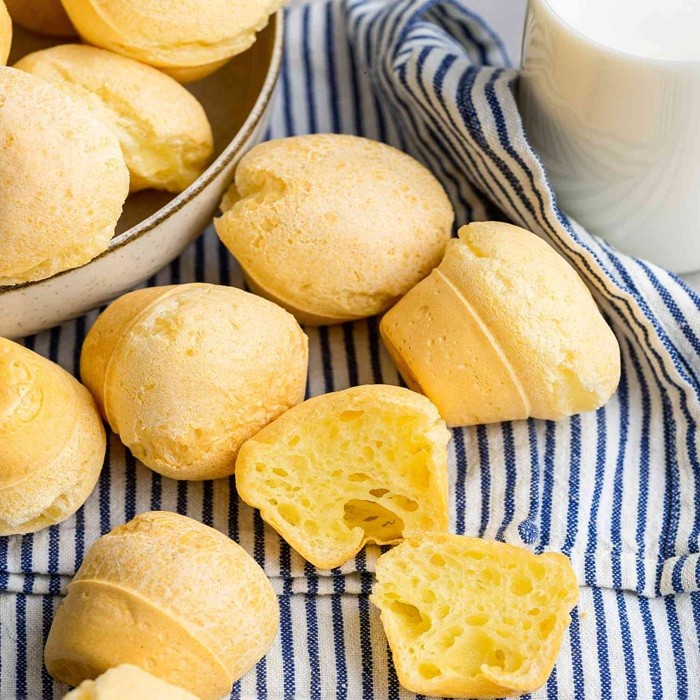
step 1 Heat the oven to 220C/200C fan/gas 7. Oil or butter a baking sheet and set aside. step 2 Heat the milk, butter and salt in a medium saucepan and bring to a boil. Remove from the heat and add the tapioca flour. Stir vigorously, then leave to cool a little. step 3 Pour the dough into a standing mix to beat the dough until its cool, or use a wooden spoon and beat by hand. Beat the eggs in one at a time, waiting until each is completely incorporated before adding the next. When the dough is glossy and mixed, add the parmesan. Beat again until mixed. step 4 Spoon the dough onto the baking sheet in 1 tbsp balls, 5cm apart. Bake for 30 mins until crisp and golden. Remove from the oven and eat while still warm.
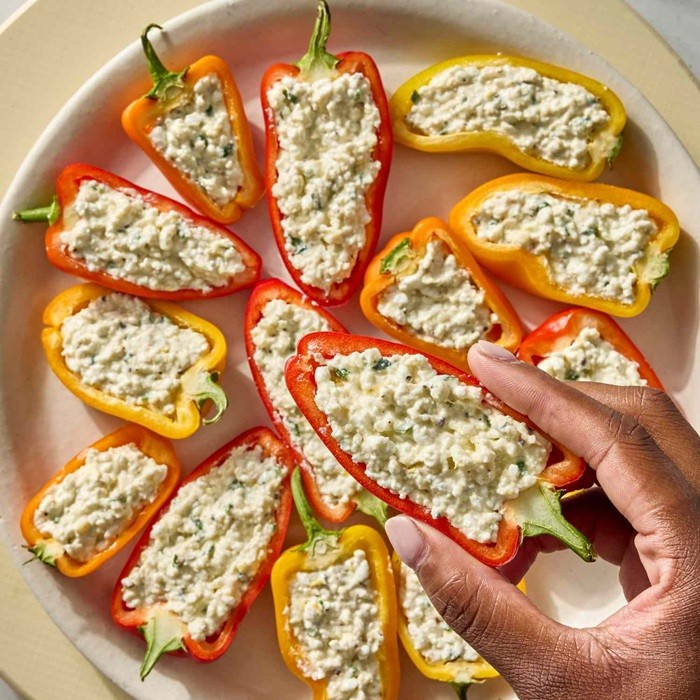
Cut the peppers lengthwise and remove the seeds. In a bowl combine 3.5 oz (100 grams) Feta cheese, 7 oz (200 grams) cottage cheese, 1 tbsp chopped chives (optional), 1 tbsp chopped parsley (optional), 1/4 tsp salt (more or less to taste) and 1 tbsp lemon juice. Fill the peppers with the mixture. Top with chopped chives and parsley. Serve.
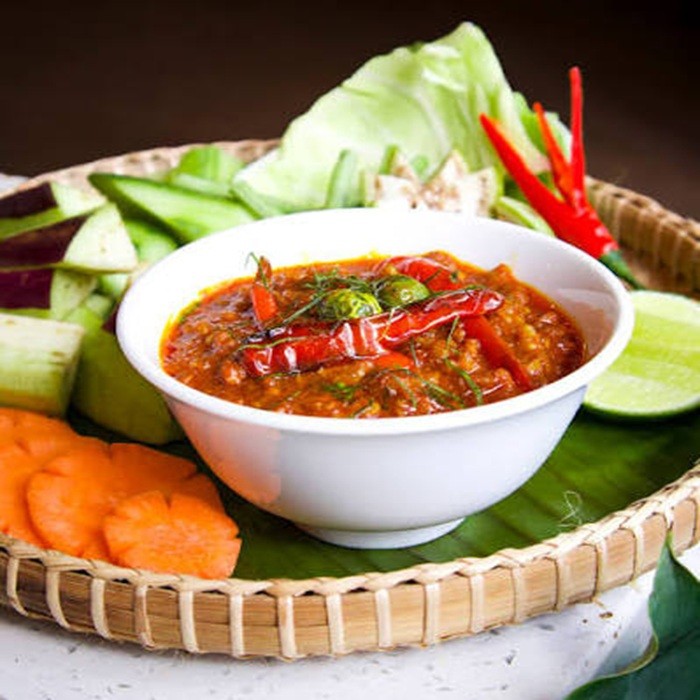
1. Heat 2 tbsp vegetable oil in a large skillet over medium-high heat until shimmering, about 1 minute. 2. Add 4 cloves minced garlic and 2 finely chopped shallots to the skillet, stirring constantly until fragrant and lightly golden, 2-3 minutes. 3. Tip: Keep the heat medium to prevent burning—garlic can turn bitter if overcooked. 4. Add 1 lb ground pork to the skillet, breaking it up with a spoon, and cook until no pink remains, 5-7 minutes. 5. Stir in 3 tbsp prahok and cook for 1 minute to blend the flavors, mashing it slightly into the pork. 6. Pour in 1 cup coconut milk, stirring to combine, then reduce heat to medium-low and simmer for 10 minutes until the mixture thickens slightly. 7. Tip: Simmer gently to avoid curdling the coconut milk—a steady bubble is ideal. 8. Add 2 tbsp fish sauce, 1 tbsp palm sugar, and 2 minced Thai chilies, stirring until the sugar dissolves, about 2 minutes. 9. Remove the skillet from heat and stir in 2 tbsp lime juice, mixing thoroughly. 10. Tip: Add lime juice off the heat to preserve its fresh, tangy flavor without cooking it out. 11. Transfer the dip to a serving bowl and garnish with ¼ cup chopped fresh cilantro. 12. Let the dip cool for 5 minutes before serving to allow the flavors to meld.
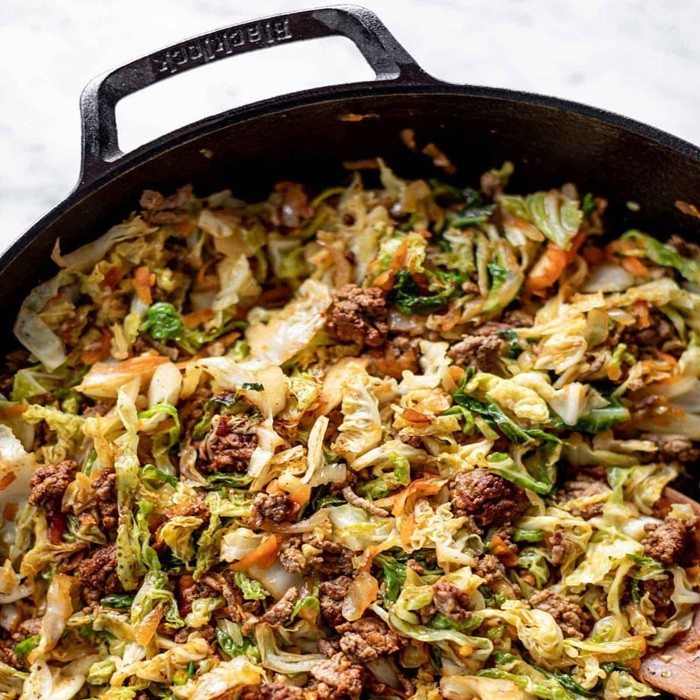
Heat a large skillet or braiser over medium heat on the stovetop. Add the olive oil. A braiser with cooked ground beef Cook the Meat: Add the ground meat to the pan. Use a potato masher or wooden spoon to break it into small pieces. Cook for 3–4 minutes until browned. Add Vegetables and Seasoning: Stir in the onion, carrots, red pepper, garlic, and tomato paste. Season with salt, black pepper, smoked paprika, ground cumin, and Italian seasoning (if using). Cook for 2–3 minutes, stirring frequently. A braiser with cooked ground beef, carrots, onions, peppers, garlic and seasoning. Add Cabbage and Liquid: Add the chopped cabbage, apple cider vinegar or lemon juice (if using), and water. Stir well to combine. Reduce the heat to medium-low, cover, and cook for 30 minutes. Stir occasionally to prevent the cabbage from sticking to the bottom of the pan. A pot with cooked ground beef, vegetables and cabbage on a stove top Check for Doneness: Uncover and check the texture of the cabbage. If necessary, increase the heat to medium-high and cook for an additional 5–7 minutes to evaporate excess liquid and finish cooking. A braiser with cooked ground meat and cabbage dish on a stove top Garnish and Serve: Sprinkle with chopped parsley or fresh herbs before serving.
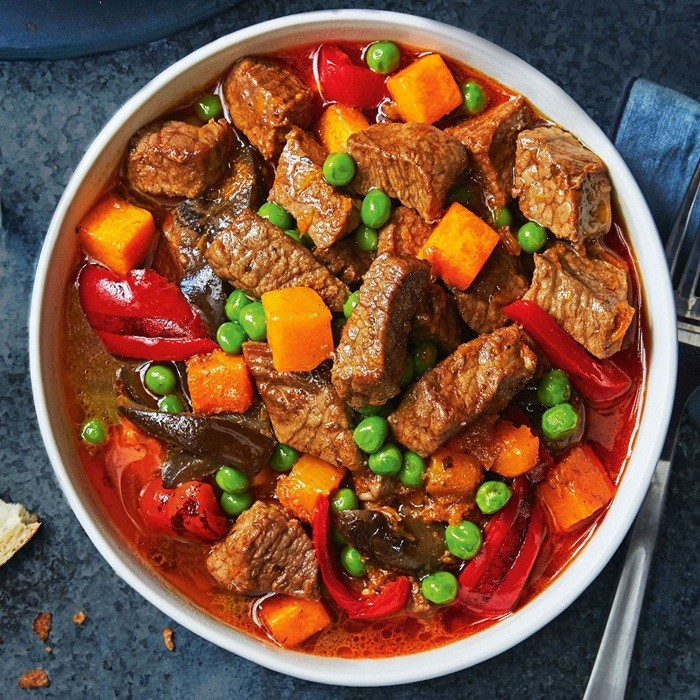
Cut the beef into 1-inch chunks. Dredge the beef in the flour until all of the beef sides are covered. In a large soup pot, melt the butter over medium high-heat. In small quantities, brown the beef on all sides, removing the browned beef and setting it aside in a large bowl as you go. When the beef is browned, add the onion and the garlic to the pot. Sauté the onion and garlic for one minute, scraping the bottom of the pot as you stir. Return the browned beef to the pot and add the beef stock, pumpkin puree, Worcestershire sauce, salt, and pepper. Stir well and bring to a boil. Once the liquid is boiling, reduce heat to medium-low and simmer for 3 hours, stirring occasionally. Add the potatoes, carrots and thyme sprigs to the pot and increase heat to medium. Cook for an additional 30 minutes. Salt to taste and serve.
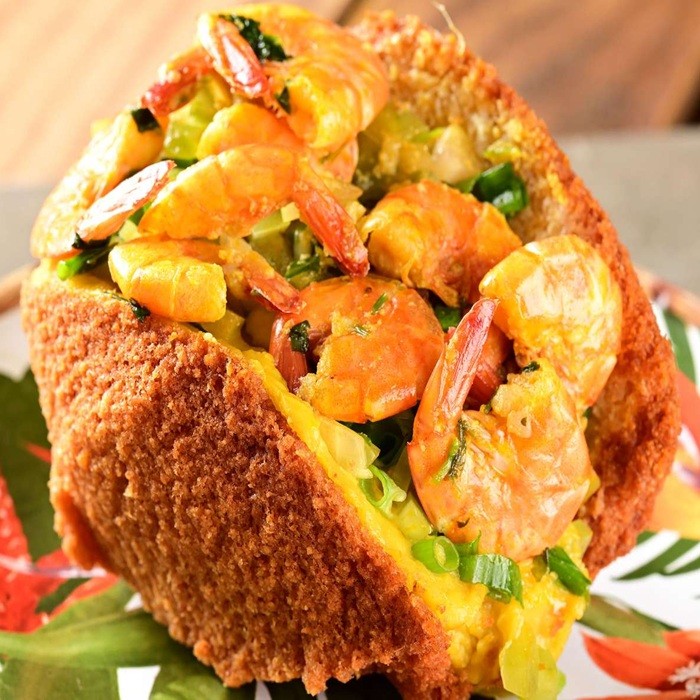
step 1 Make the filling by placing the onion, ginger, garlic, chilli, and some salt into food processor. Purée until smooth. Heat the oil in a frying pan and pour the purée into it. Fry for 5 mins or until cooked through. Add the prawns, tomatoes and chopped coriander. Squeeze in the lime and add salt to taste. Cook for 3 mins, or until the prawns have cooked through. Remove from the heat. step 2 Drain and rinse the black-eyed peas. Pour into a food processor with the garlic and chili. Purée until smooth. Scrape into a bowl and add the onion, flour, salt, chilli powder and baking powder. Mix and roll into 16 balls. step 3 Heat the oven to 190C/170C fan/gas 5. Heat 8cm of the palm or vegetable oil in a wok or small heavy pan. When a small piece of bread sizzles, drop 4-5 balls into the oil. Fry until golden and crisp, about 4-5 mins. Drain on kitchen paper and repeat until they are all finished. You can keep them warm in the oven while you finish. Slice the fritters open down the centre and spoon the prawn filling in. Serve with hot sauce.
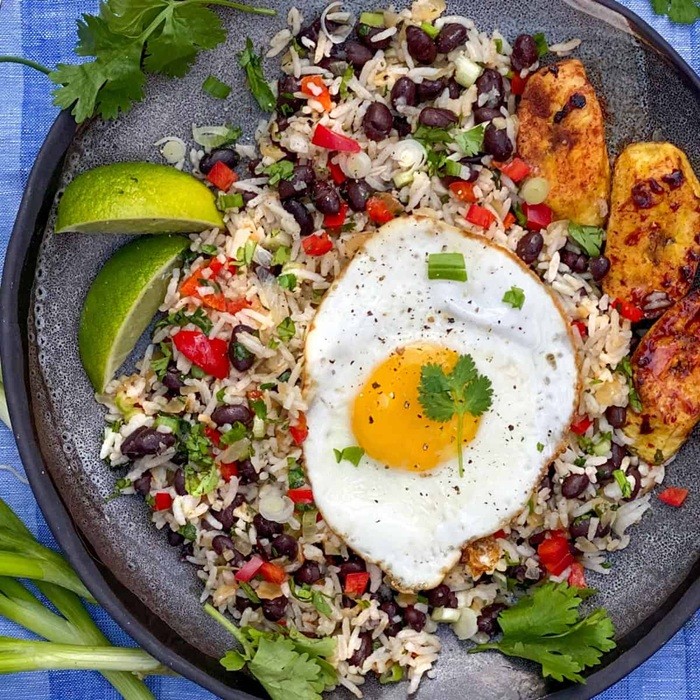
Heat up a pan over medium high heat, add olive oil and let it get hot. Add onions, peppers, cilantro, garlic, cumin, salt and pepper, cook for 3 to 5 min until onion is translucent. Mix in the beans, stir and reduce heat to medium, add the Lizano sauce, stir and cook for 5 more minutes. Add the rice, stir and cooked for a few more minutes, to incorporate all the flavors in the rice. The time to cook it I will depend of how you like your gallo pinto, some people like it a little wet and some other like it a little toasted or dry. I prefer it not too dry, so I cook it for about 5 to 7 min.
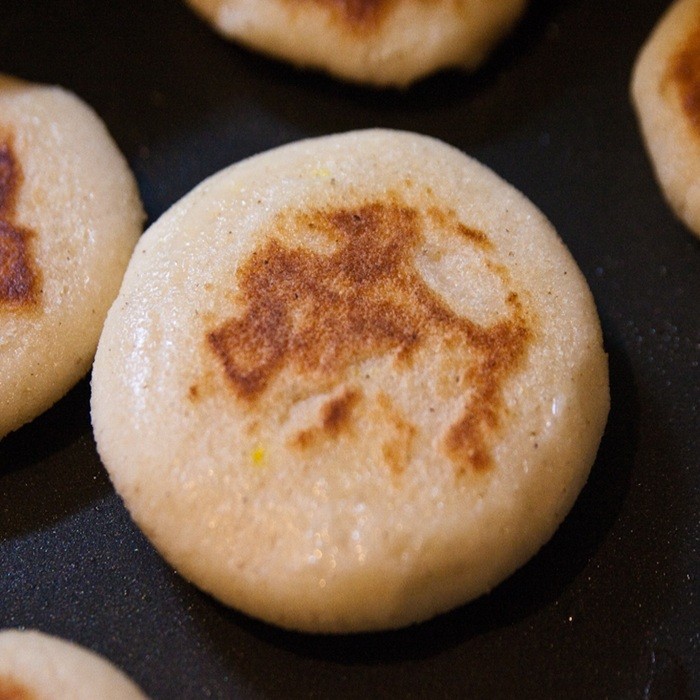
Put the corn flour in a bowl and add the salted water little by little, mixing with the flour until all the water has been used and the flour has become a dough. Let it rest for five minutes. Now, shape the dough into round rolls about 3 inches in diameter and 1/2 inch thick. In a lightly greased skillet, slowly cook the arepas until a crust forms on each side. Now place them into a casserole and bake in the oven at 350 degrees for approximately 20 minutes, until the arepas sound hollow when tapped. To enhance taste: instead of using just water, use chicken or beef broth.
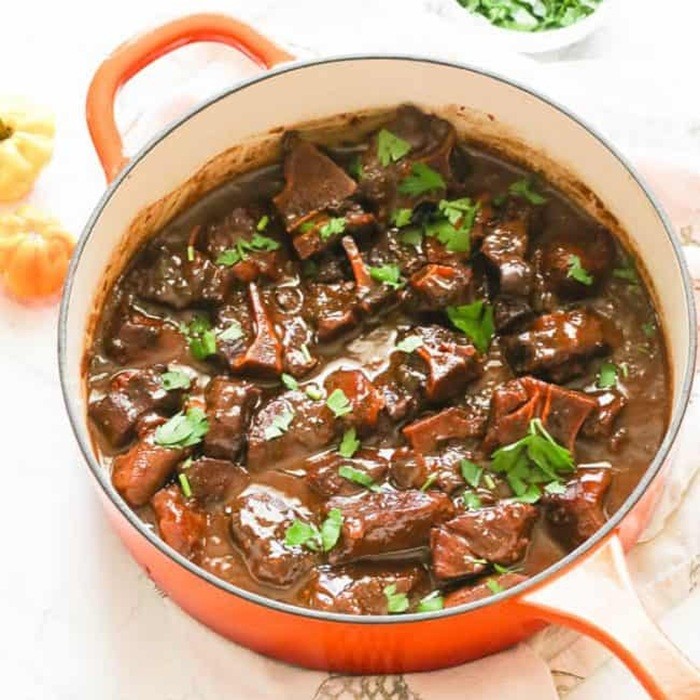
Wash the stewing steak and place it in the mixing bowl with the lemon or lime juice. Set that to one side; while you slice the garlic into tiny slices, slice the onion. Chop the basil and thyme. Now you need to be very careful when you slice the scotch bonnet peppers; you want these in fine pieces, which you can either do with a long knife trying not to touch the pepper, or you can wear rubber gloves to cut it up. Wash your hands straight afterward and do not touch your eyes; these peppers really burn your hands and eyes if they make contact with the skin! Now rinse the lime or lemon juice off the stewing steak. And cut the meat into cubes. Also, chop the pig’s trotters and the oxtail into cubes. Fill the large saucepan with water and bring to a boil. Add the pig’s trotters. When the pig’s trotters have boiled, drain the excess water, and now add the stewing steak and cover with fresh hot water. Now add your chopped garlic, onion, and peppers. Now add the cinnamon stick, cloves, basil, and thyme and a pinch of salt and sugar to taste. Now simmer until the meat is tender. The flavor of this dish comes out over a few days and therefore gets tastier each time you reheat it; make sure you always reheat the entire pot to boiling point.
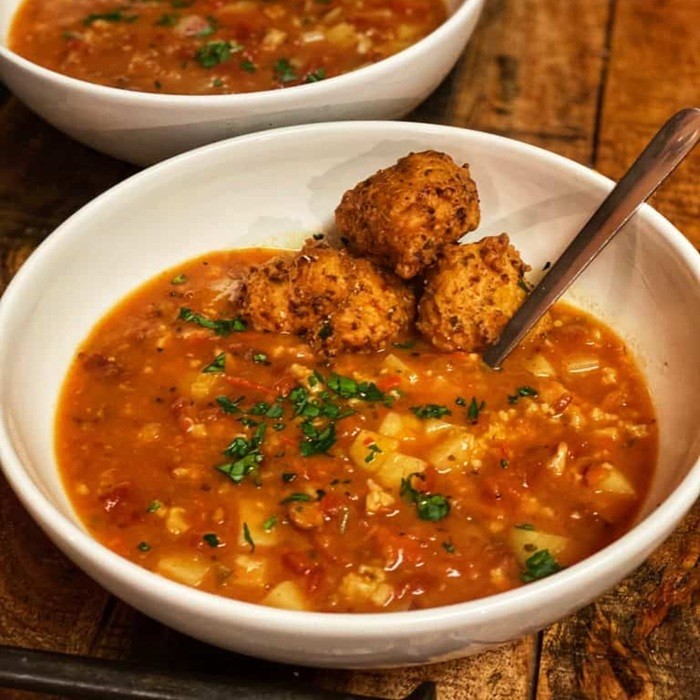
Conch Stew Cooking Directions Clean conch meat and pound to tenderize. Boil conch for 2 - 3 hours or until tender. Make Sea Pie while conch cooks (instructions below). Once cool, cut conch in bite size pieces and season. Add all ingredients, except flour, to pan and simmer for 10 to 20 minutes. Mix flour with 1 cup water and pour into pan to thicken. Add Sea Pie pieces and continue to cook for an additional 10 minutes. Sea Pie Cooking Directions Make dough with flour, pinch of salt and water so that you can roll out as thin as possible, then cut into 2 ½” x 2 ½” squares. Let set for 30 minutes then stretch squares to thin them out and add to conch stew mixture. Serve with white rice, plantain, breadfruit or your choice of vegetables.
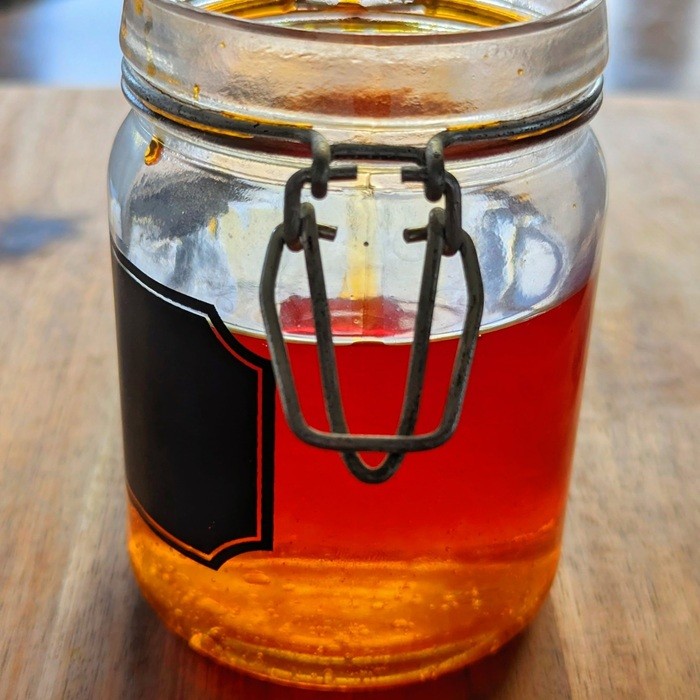
Heat the vegetable or olive oil and Achiote seeds in a small skillet over medium heat for about 2 to 3 minutes. Don't let the seeds turn black. Remove the skillet from the heat and let stand for 5 minutes more. Strain the oil and store for up to 15 days at room temperature in a jar with a tight lid.
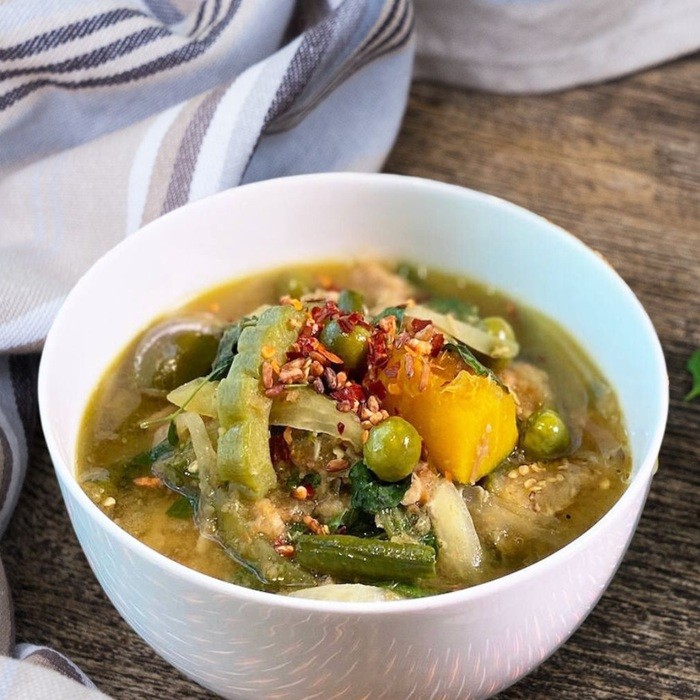
1. Heat 1 tbsp vegetable oil in a large pot over medium-high heat until it shimmers, about 1 minute. 2. Add 1 lb boneless, skinless chicken thighs to the pot and cook until browned on all sides, approximately 5-7 minutes, stirring occasionally to prevent sticking. 3. Pour 4 cups water into the pot and bring to a boil, then reduce heat to a simmer. 4. Stir in 2 tbsp tamarind paste, 1 tbsp fish sauce, and 1 tsp sugar until fully dissolved, about 1 minute. 5. Add 1 stalk lemongrass and 2 kaffir lime leaves to the pot, then cover and simmer for 10 minutes to infuse the broth with flavor. 6. Tip: Bruising the lemongrass before adding helps release its essential oils for a more aromatic stew. 7. Add 1 cup pineapple chunks, 1 cup cherry tomatoes, and 1 cup green beans to the pot, stirring gently to combine. 8. Simmer uncovered for 10-12 minutes, or until the green beans are tender but still crisp and the tomatoes start to soften. 9. Tip: Avoid overcooking the vegetables to maintain their vibrant color and texture in the final dish. 10. Stir in 1 Thai chili and simmer for an additional 2 minutes to incorporate the heat. 11. Tip: Taste the broth and adjust with extra tamarind paste or fish sauce if desired, but do so gradually to avoid overpowering the balance. 12. Remove the pot from heat and discard the lemongrass and kaffir lime leaves before serving. 13. Present the stew hot in bowls, optionally garnished with fresh herbs like cilantro.
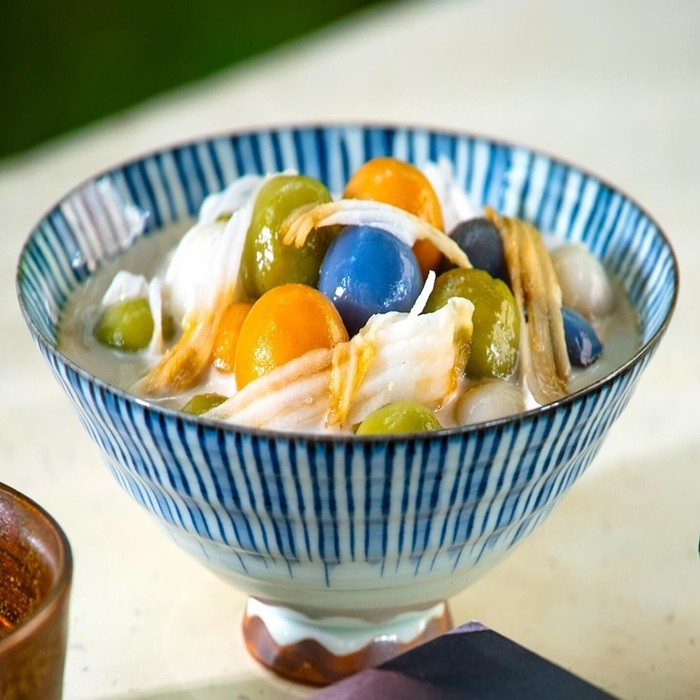
Place coconut cream in a small pot over low heat. Cut 3 pandan leaves into large strips and add to the pot with brown sugar, salt, and ginger. Bring to a boil, then cook 2 more minutes. Turn off the heat, remove the pandan leaves, and let cool. Chop the remaining 4 pandan leaves, blend with ¼ cup water until very green, then strain well. In a bowl, place 200 g sticky rice flour, add a little pandan liquid, and knead until smooth. Peel and chop beetroot, blend with ¼ cup water until red, then strain well. In a bowl, place 200 g sticky rice flour, add a little beetroot liquid, and knead until smooth. Bring 3 litres of water to a boil in a medium–large pot. Divide each dough into small pieces, roll into balls about ⅓ the size of a ping pong ball, then drop into boiling water. When they float, remove and place them into fresh, icy water to keep them separate. Drain well, then place the mixed colored balls into the cooled coconut sugar syrup and stir. Serve in small bowls (add longan and shredded coconut as desired). Add the coloring liquids gradually—each flour absorbs differently. You want a dough that’s smooth and pliable, not sticky.
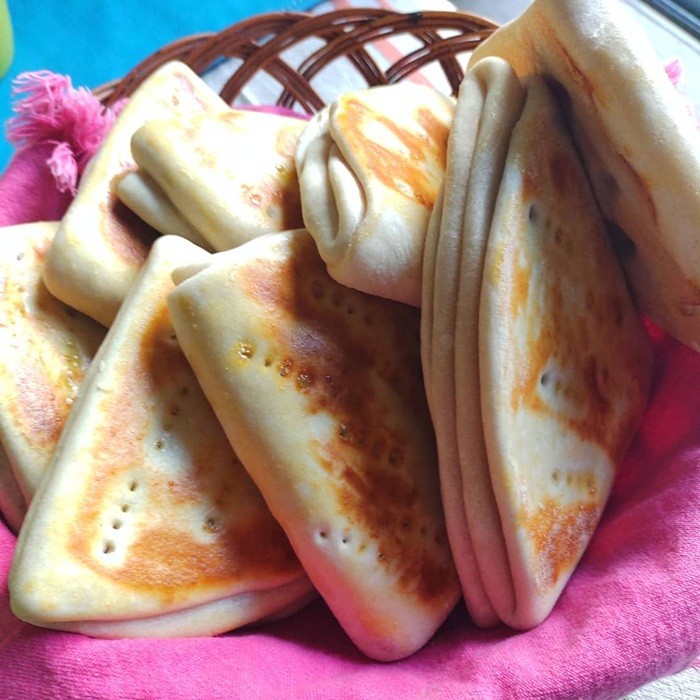
Preheat the oven to 450 degrees F (230 degrees C). Grease a baking sheet. Whisk flour, 1 cup melted butter, milk, baking powder, and salt together in a bowl until begins to pull together. Turn dough out onto a lightly floured surface; knead until smooth and elastic. Roll dough out to ⅛-inch thickness; cut into 8-inch circles. Brush circles with remaining 3 tablespoons melted butter. Fold each circle in half, then fold in half again to form triangles. Press firmly to seal the layers; place on the prepared baking sheet. Bake in the preheated oven until golden brown, about 15 minutes. Serve warm