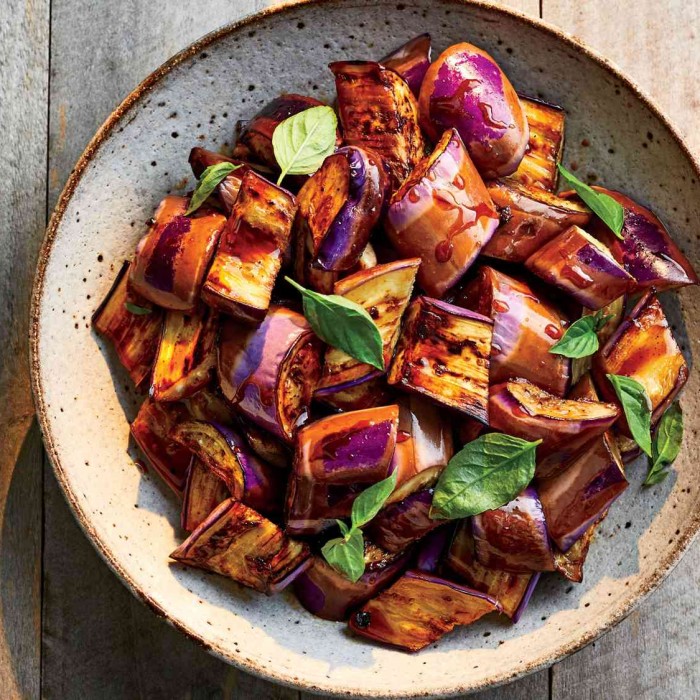
1. Slice 1 lb. small Japanese or Italian eggplant (about 3) into quarters lengthwise, then cut crosswise into 2"-wide pieces. Place in a medium bowl. Add 1 Tbsp. sugar, 1 tsp. Diamond Crystal or ½ tsp. Morton kosher salt, and ½ tsp. freshly ground black pepper. Toss to evenly coat eggplant and let sit at room temperature at least 20 minutes and up to 2 hours. 2. Peel and thinly slice 8 garlic cloves. Add 3 Tbsp. vegetable oil and half of garlic to a medium Dutch oven or other heavy pot. Cook over medium-high heat, stirring constantly with a wooden spoon, until light golden and crisp, about 5 minutes. Using a slotted spoon, transfer garlic chips to a plate; season lightly with salt. 3. Place 4 oz. ground pork in same pot and break up into small pieces with wooden spoon. Season with ¼ tsp. Diamond Crystal or Morton kosher salt and cook, undisturbed, until deeply browned underneath, about 5 minutes. Using a slotted spoon, transfer to another plate, leaving fat behind in the pot. 4. Place eggplant on a clean kitchen towel and blot away any moisture the salt has drawn out. 5. Working in batches and adding more oil if needed, cook eggplant in the same pot until lightly browned, about 3 minutes per side. Transfer to a plate with pork. 6. Pour 1½ cups of water into the pot and scrape up browned bits from the bottom with a wooden spoon. Add remaining garlic, 3 Tbsp. coconut vinegar or unseasoned rice vinegar, 2 Tbsp. soy sauce, 2 bay leaves, 1 tsp. freshly ground black pepper, and remaining 1 Tbsp. sugar. Bring to a simmer, then return pork and eggplant to pot. Reduce heat to medium-low, partially cover, and simmer until eggplant is tender and silky and sauce is reduced by half, 20–25 minutes. Taste and season with more salt and pepper and add a little more sugar if needed. 7. Top with garlic chips and serve with cooked white rice.
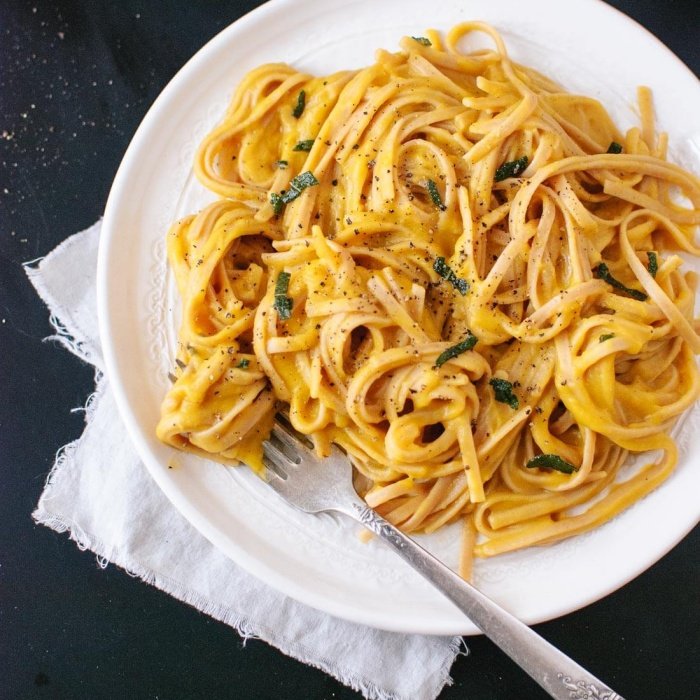
Heat oven to 200C/180C fan/gas 6. Put the squash and garlic on a baking tray and drizzle with the olive oil. Roast for 35-40 mins until soft. Season. Cook the pasta according to pack instructions. Drain, reserving the water. Use a stick blender to whizz the squash with 400ml cooking water. Heat some oil in a frying pan, fry the sage until crisp, then drain on kitchen paper. Tip the pasta and sauce into the pan and warm through. Scatter with sage.
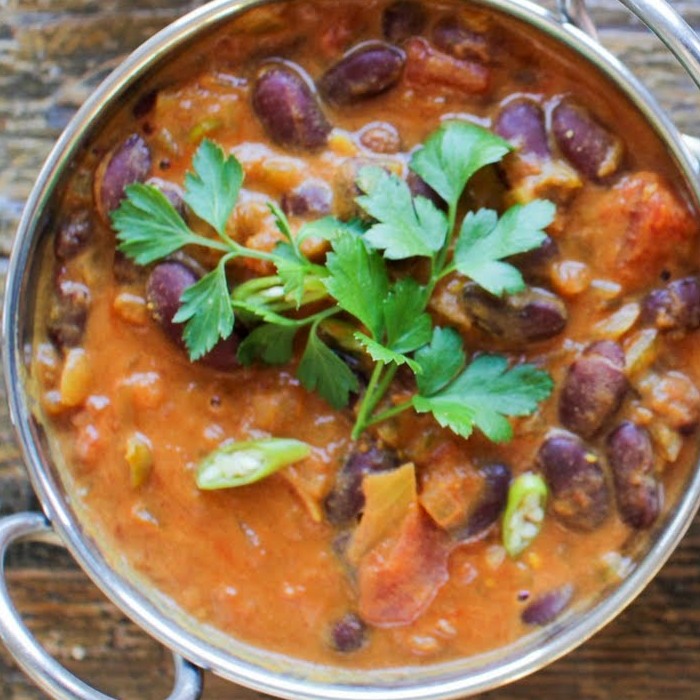
Heat the oil in a large frying pan over a low-medium heat. Add the onion and a pinch of salt and cook slowly, stirring occasionally, until softened and just starting to colour. Add the garlic, ginger and coriander stalks and cook for a further 2 mins, until fragrant. Add the spices to the pan and cook for another 1 min, by which point everything should smell aromatic. Tip in the chopped tomatoes and kidney beans in their water, then bring to the boil. Turn down the heat and simmer for 15 mins until the curry is nice and thick. Season to taste, then serve with the basmati rice and the coriander leaves.

step 1 Place the noodles and beansprouts in a heatproof bowl and cover with boiling water. Leave for 4 mins, or until the noodles are tender. Drain, then cool under cold running water and drain again. Return to the bowl. step 2 Stir together the lime zest and juice, fish or soy sauce and sugar. Stir into the noodles with the red onion and lettuce. step 3 To make with mince, heat a little oil in a non-stick frying pan and stir-fry 500g minced pork, a small knob of grated ginger and pinch cayenne pepper or chilli powder for 10 mins, until the mince is browned and cooked through. Mix into the noodles, divide between four bowls and serve warm. step 4 To make with steak, make the rice noodle salad. Heat 1 tsp sunflower oil in a frying pan. Tip 2 tbsp sesame seeds onto a plate. Rub 1 tsp oil into 4 x 175g sirloin steaks and press into sesame seeds. Fry for 5 mins for medium rare, turning halfway. Leave to rest for 5 mins, then thinly slice. Toss 1 deseeded and shredded red chilli, and a handful mint leaves into noodles. Top with steak to serve.

step 1 Heat the oven to 180C/160C fan/gas 4. Make the latkes by combining all of the ingredients. step 2 Heat the oil in a large non-stick pan. Spoon in the mixture to make six round latkes. Fry for 4-5 mins on each side, then transfer to a baking sheet and bake for 10 mins. step 3 Combine the yogurt and mint in a small bowl. Toss the salad leaves and tomatoes together, then serve the latkes with the mint yogurt and salad.

step 1 First, make the crispy shallots. Heat the oil in a saucepan to 180C (a cube of bread will turn golden in 15 secs). Toss the shallots in a little flour and deep-fry for 1 min or until light golden and crispy. Drain on kitchen paper. Can be made up to two days before and kept in an airtight container. step 2 To make the filling, heat the oil in a medium non-stick frying pan and gently fry the shallots for 10 mins until starting to turn golden. step 3 Add the sauerkraut and cabbage, and cook for 5-10 mins until the cabbage has softened. Taste and add a little salt if under-seasoned, or sugar if stringent. Scrape into a bowl and leave to cool completely. step 4 To make the dough, mix the eggs and oil with 125ml water, then gradually add in the flour, mixing well with your hands. Knead it on a well-floured surface until the dough stops sticking to your hands. You should end up with firm, elastic dough. Wrap it in cling film and rest in the fridge for at least 30 mins, or overnight. step 5 Flour your work surface generously. Roll out the dough to a 40cm circle or until the dough is as thick as £1 coin. step 6 Using a 9cm cookie cutter, cut out discs in the dough – you should end up with about 25 discs. Do not throw away the off-cuts – we throw them in with the pierogi when boiling to minimise any waste. step 7 Have a well-floured tray ready. Put 1 tsp of the filling into the centre of each disc. In your hand, fold in half around the filling and seal to create half-moon shapes. Put them on the floured tray, making sure they don’t touch each other. step 8 Bring a large saucepan of salted water to the boil and carefully lower the pierogi in. Boil them for 2 mins or until they float to the top. step 9 Drain and serve with a knob of butter and some soured cream. Finish by sprinkling the crispy shallots on top to serve.
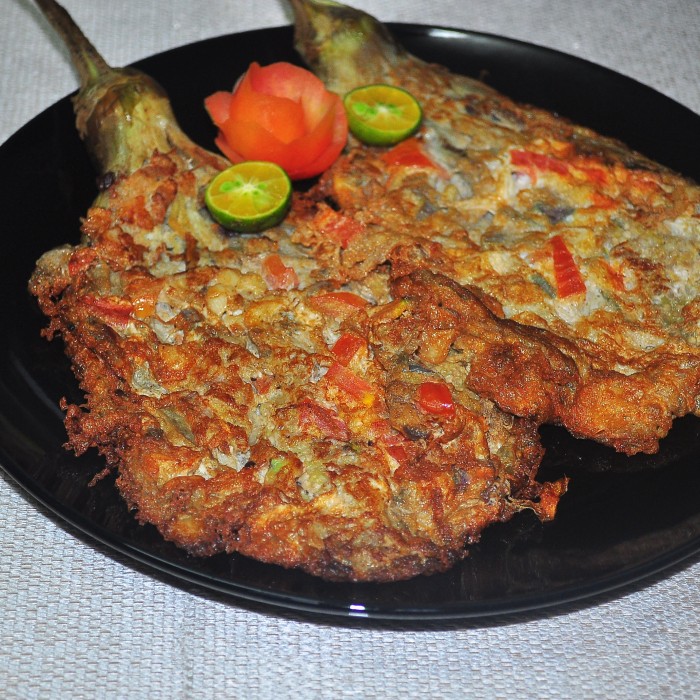
0. Grill the eggplant until the color of skin turns almost black 1. Let the eggplant cool for a while then peel off the skin. Set aside. 2. Crack the eggs and place in a bowl 3. Add salt and beat 4. Place the eggplant on a flat surface and flatten using a fork. 5. Dip the flattened eggplant in the beaten egg mixture 6. Heat the pan and pour the cooking oil 7. Fry the eggplant (that was dipped in the beaten mixture). Make sure that both sides are cooked. Frying time will take you about 3 to 4 minutes per side on medium heat.
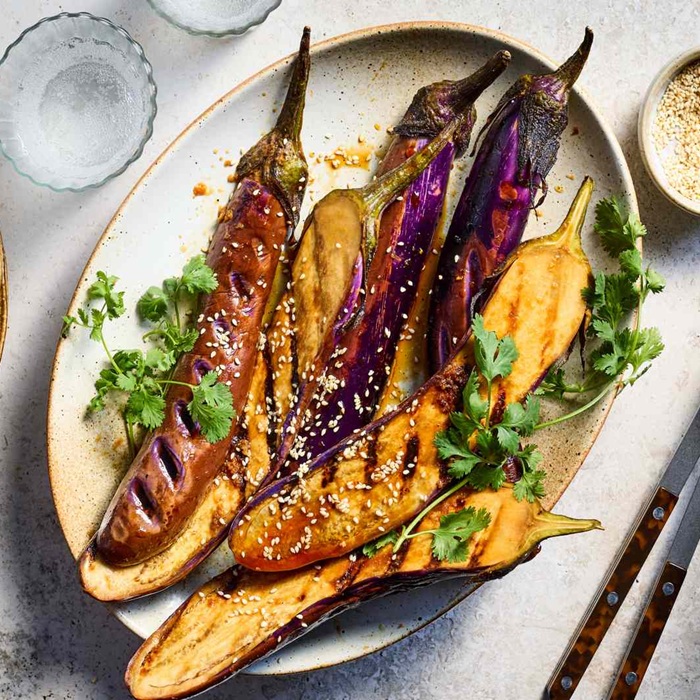
step 1 Brush each aubergine slice with some oil, then season. Heat a griddle pan or barbecue. When hot, griddle the aubergine slices for 2-3 mins on each side until golden brown and tender. step 2 Mix the yogurt with the tahini, garlic, lemon juice and herbs, then season. Top the aubergines with the dressing and scatter over extra herb leaves.
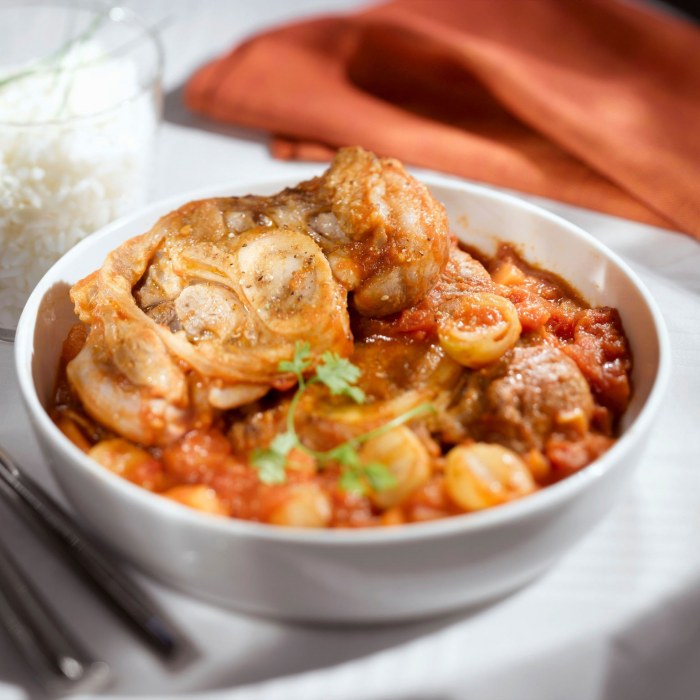
Heat the oven to 300 degrees. Dredging the shanks: pour the flour into a shallow dish (a pie plate works nicely). Season the veal shanks on all sides with salt and pepper. One at a time, roll the shanks around in the flour coat, and shake and pat the shank to remove any excuses flour. Discard the remaining flour. Browning the shanks: put the oil and 1 tablespoon of the butter in a wide Dutch oven or heavy braising pot (6 to 7 quart) and heat over medium-high heat. When the butter has melted and the oil is shimmering, lower the shanks into the pot, flat side down; if the shanks won’t fit without touching one another, do this in batches. Brown the shanks, turning once with tongs, until both flat sides are well caramelized, about 5 minutes per side. If the butter-oil mixture starts to burn, lower the heat just a bit. Transfer the shanks to a large platter or tray and set aside. The aromatics: pour off and discard the fat from the pot. Wipe out any burnt bits with a damp paper towel, being careful not to remove any delicious little caramelized bits. Ad the remaining 2 tablespoons butter to the pot and melt it over medium heat. When the butter has stopped foaming, add the onion, carrot, celery, and fennel. Season with salt and pepper, stir, and cook the vegetables until they begin to soften but do not brown, about 6 minutes. Stir in the garlic, orange zest, marjoram, and bay leaf, and stew for another minute or two. The braising liquid: add the wine, increase the heat to high, and bring to a boil. Boil, stirring occasionally, to reduce the wine by about half, 5 minutes. Add the stock and tomatoes, with their juice, and boil again to reduce the liquid to about 1 cup total, about 10 minutes. The braise: Place the shanks in the pot so that they are sitting with the exposed bone facing up, and pour over any juices that accumulated as they sat. Cover with parchment paper, pressing down so the parchment nearly touches the veal and the edges hang over the sides of the pot
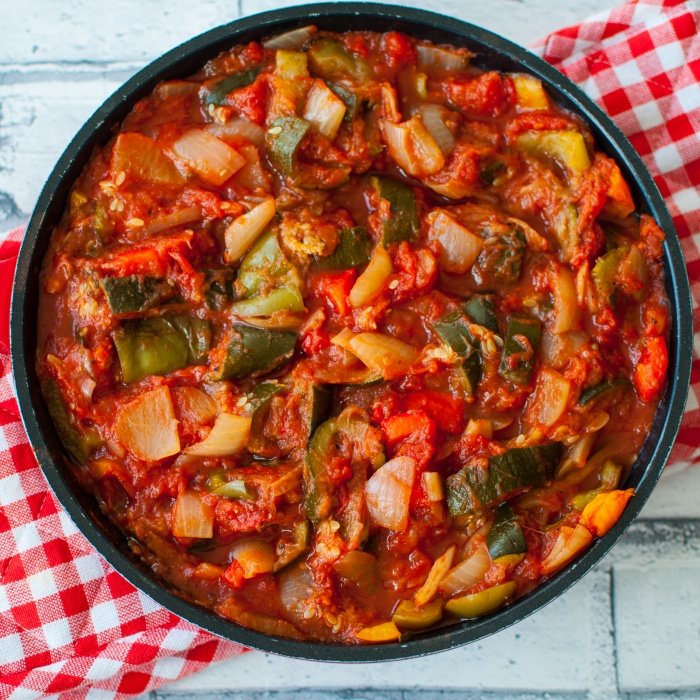
Cut the aubergines in half lengthways. Place them on the board, cut side down, slice in half lengthways again and then across into 1.5cm chunks. Cut off the courgettes ends, then across into 1.5cm slices. Peel the peppers from stalk to bottom. Hold upright, cut around the stalk, then cut into 3 pieces. Cut away any membrane, then chop into bite-size chunks. Score a small cross on the base of each tomato, then put them into a heatproof bowl. Pour boiling water over the tomatoes, leave for 20 secs, then remove. Pour the water away, replace the tomatoes and cover with cold water. Leave to cool, then peel the skin away. Quarter the tomatoes, scrape away the seeds with a spoon, then roughly chop the flesh. Set a sauté pan over medium heat and when hot, pour in 2 tbsp olive oil. Brown the aubergines for 5 mins on each side until the pieces are soft. Set them aside and fry the courgettes in another tbsp oil for 5 mins, until golden on both sides. Repeat with the peppers. Don’t overcook the vegetables at this stage, as they have some more cooking left in the next step. Tear up the basil leaves and set aside. Cook the onion in the pan for 5 mins. Add the garlic and fry for a further min. Stir in the vinegar and sugar, then tip in the tomatoes and half the basil. Return the vegetables to the pan with some salt and pepper and cook for 5 mins. Serve with basil.

step 1 Heat oven to 200C/180C fan/gas 6. Toss the pumpkin or squash in a roasting tin with half the oil and seasoning, then roast for 30 mins until golden and tender. step 2 Meanwhile, put the remaining oil in a pan with the onion, ginger and lemongrass. Gently cook for 8-10 mins until softened. Stir in the curry paste for 1 min, followed by the roasted pumpkin, all but 3 tbsp of the coconut milk and the stock. Bring to a simmer, cook for 5 mins, then fish out the lemongrass. Cool for a few mins, then whizz until smooth with a hand blender, or in a large blender in batches. Return to the pan to heat through, seasoning with salt, pepper, lime juice and sugar, if it needs it. Serve drizzled with the remaining coconut milk and scattered with chilli, if you like.
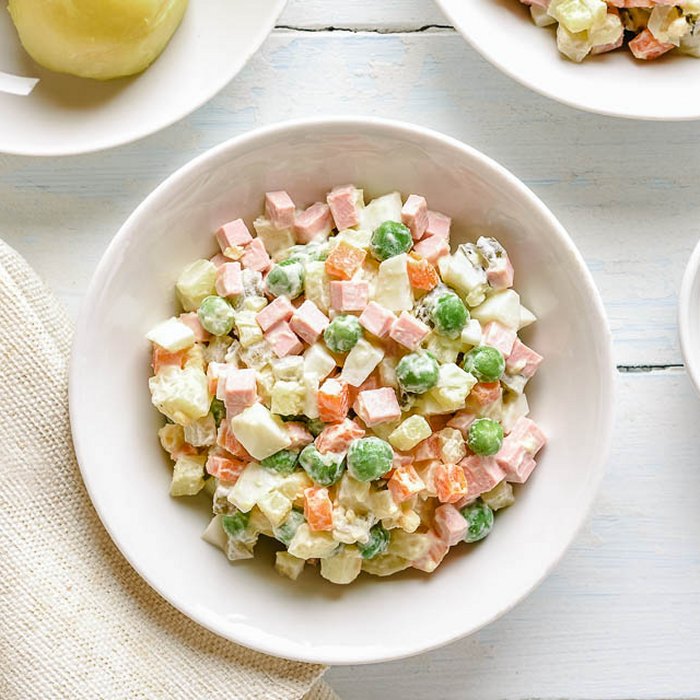
Cut the potatoes and carrots into small uniform cubes. Place them in a large pot and fill with water. Add salt and vinegar. Bring it to a boil over medium high heat, and then reduce the heat to medium and continue to cook until the potatoes are cooked through, about 15 minutes. Drain the potatoes and let it cool to room temperature. Meanwhile, cut the sausage and pickles into small cubes, and chop the green onions. Cut the hard-boiled eggs into small cubes as well. If using fresh dill, chop them as well. In a large bowl, combine potatoes, carrots, sausage, pickles, peas and green onions. Add mayo and dill and mix until well combined. Salt and pepper to taste. Cover with a plastic wrap and refrigerate for at least 1 hour before serving.
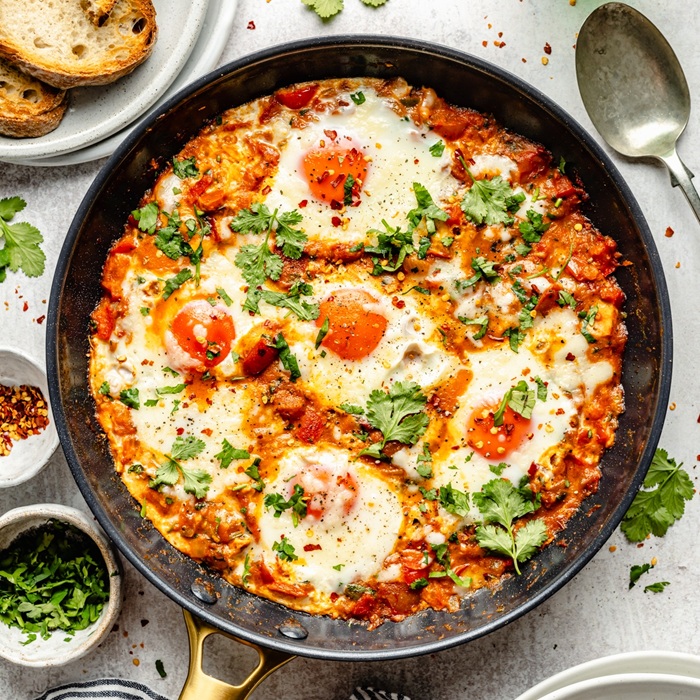
1 First, pan fry the black pepper and garlic over a dry medium heat until fragrant. 2 Add a good amount of extra virgin olive oil and infuse for a minute. 3 Once the oil heats up, add the tomatoes and salt, and cover with a lid. Simmer for 5 minutes. 4 Remove the lid and mash the tomatoes. Reduce until you reach the desired consistency of choice. 5 Make craters for the eggs and lower the heat. Carefully crack the eggs into the craters, making sure it touches the pan and not the tomato sauce. 6 Cover the eggs and leave it for 5 minutes without lifting the lid. 7 Remove from the heat and let the residual heat steam the eggs for 1-2 minutes. 8 Serve with flatbread. Enjoy!
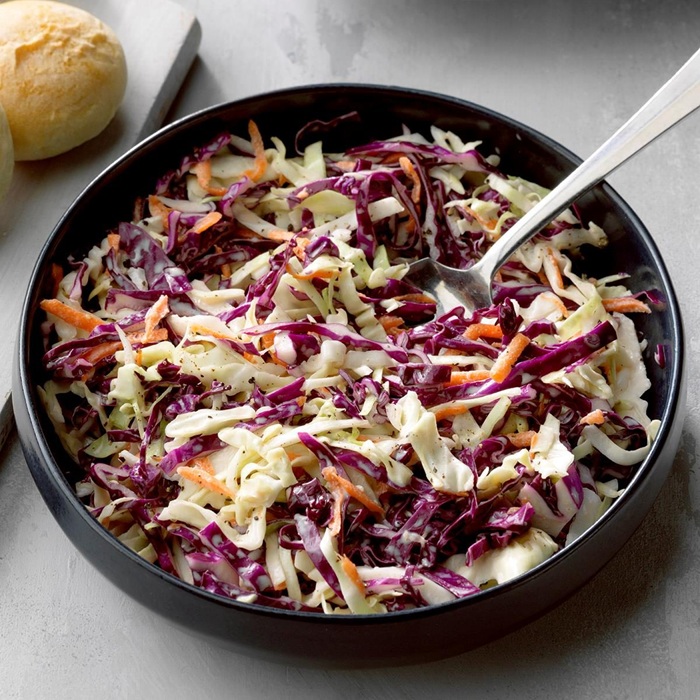
step 1 Whisk together mayonnaise, lemon zest and juice, vinegar, mustard and celery salt in a small bowl, then season generously. step 2 Add cabbage, carrots, onion and celery. Mix well and refrigerate. Can be made up to 1 day ahead.

step 1 Soak the rice fl our pancakes according to pack instructions or in boiling water for 30 secs. Remove and cool on kitchen paper. Soak the rice noodles according to pack instructions, then drain and cut them into 2cm strips. step 2 Lay a rice pancake on a board and arrange some rice noodles, chicken, vegetables and herb leaves about a third of the way up, leaving a 1cm edge at the side. Fold the sides over the vegetables and then roll up lengthways to make a cigar. Store in the fridge, covered with moist kitchen paper for up to 1 day. step 3 Mix together the ingredients for the dipping sauce and put into a bowl. To serve, arrange the rolls on a plate along with the leaves and herbs. To eat, wrap each roll in a piece of lettuce with a herb sprig and dunk into the sauce.

step 1 Whizz half the avocado flesh with the yogurt, lime and lemon juice and seasoning. Dice the remaining avocado, then gently stir into the whizzed mix with most of the lime zest. Cover, then chill until ready to serve. step 2 Boil potatoes for 6 mins, then drain well and toss with olive oil, chilli powder and cumin seeds. Now set aside until half an hour before your guests arrive. step 3 Heat oven to 200C/180C fan/gas 6, then roast potatoes for about 30 mins, shaking the tray halfway, until golden and tender. Transfer the dip to one or two bowls, scatter with the remaining lime zest and serve with the hot potatoes, and tortilla chips for dipping.
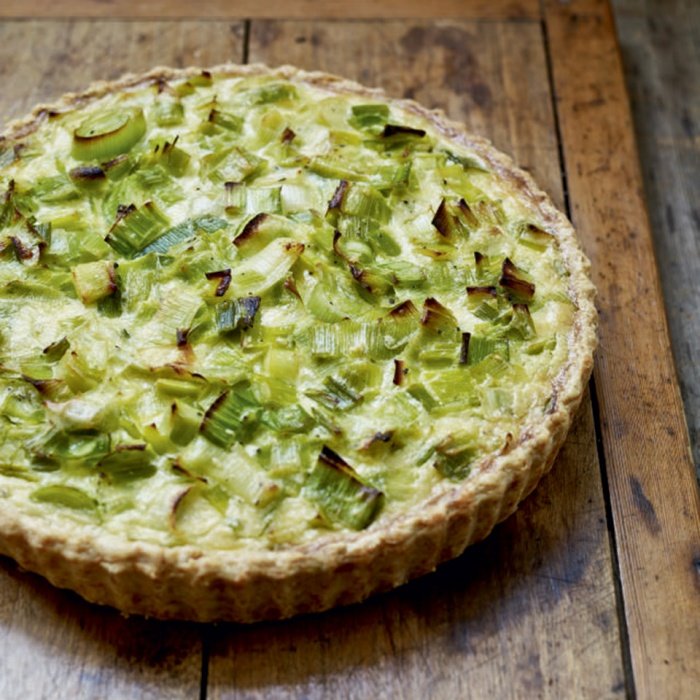
For the pastry, sift the flour and salt into the bowl of a food processor, add the butter and lard, then whizz together briefly until the mixture looks like fine breadcrumbs. Tip the mixture into a bowl, then stir in the cheese and enough of the water for the mixture to come together. Tip out onto a lightly floured surface and knead briefly until smooth. Roll out thinly and line a 23cm x 4cm loose-?bottomed fluted flan tin. Prick the base with a fork. Chill for 20 minutes. 02.Melt the 75g butter in a saucepan over a low heat, then add the leeks and the salt. Cover and cook for ?10 minutes until soft. Uncover the pan, increase the heat and cook ?for 2 minutes, stirring occasionally, until the liquid has evaporated. Spoon onto a plate and leave to cool. 03.Preheat the oven to 200°C/fan180°C/gas 6. Line the pastry case with baking paper and baking beans or rice and blind bake for 15-20 minutes until the edges are biscuit-coloured. Remove the paper and beans/rice and return the case to the oven for 7-10 minutes until the base is crisp and lightly golden. Remove and set aside. Reduce the oven temperature to 190°C/fan170°C/gas 5. 04.Put the crème fraîche into a bowl with the whole egg, egg yolks and nutmeg. Lightly beat together, then season. Stir in the leeks. Spoon ?the mixture into the tart case and bake for 35-40 minutes until set ?and lightly golden. Remove from ?the oven and leave for 10 minutes. Take out of the tin and serve.
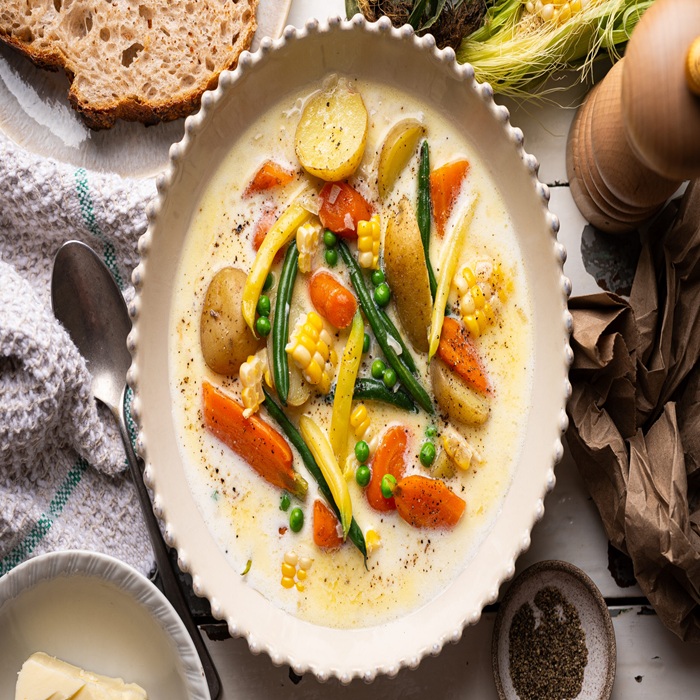
First, cook your vegetables. Bring a large pot of salted water to boil. Par-cook carrots and potatoes for five minutes until carrots and potatoes are fork tender, then blanch the peas and beans for about a minute in the same pot. Strain vegetables and set aside. In a heavy-bottomed pot or Dutch oven, melt butter over medium heat, add vegetables, and cook to warm through. Add milk and cream and bring the soup to a boil. Turn the heat down to low and season with salt and pepper. Add dill and chives and let simmer for at least 10 minutes. Serve warm.
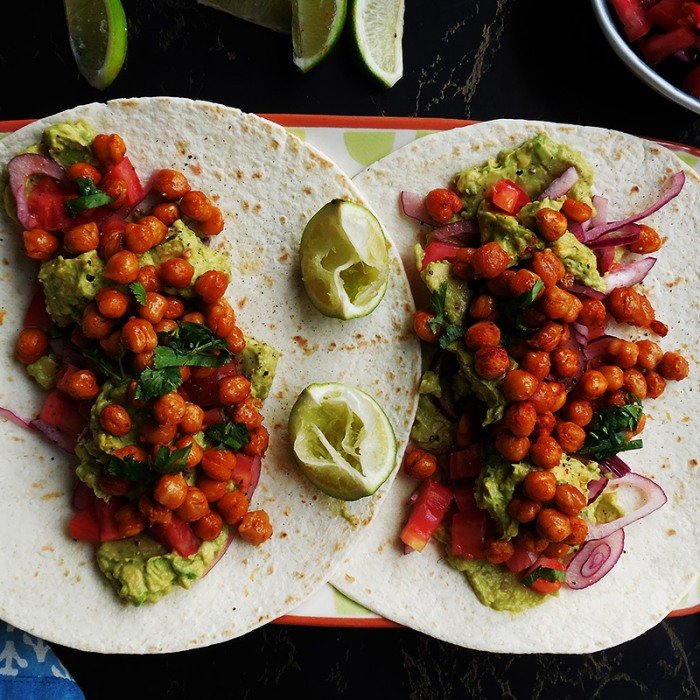
Heat oven to 200C/180C fan/gas 6 and line a baking tray with foil. Drain the chickpeas, pat dry and tip onto the prepared baking tray. Add the oil and paprika, toss to coat, then roast for 20-25 mins until browned and crisp, shaking halfway through cooking. Meanwhile, put the tomatoes and onion in a small bowl with the vinegar and set aside to pickle. Put the avocado in another bowl and mash with a fork, leaving some larger chunks. Stir in the lime juice and season well. Mix the soured cream with the harissa and set aside until ready to serve. Heat a griddle pan until nearly smoking. Add the tortillas , one at a time, charring each side until hot with griddle lines. Put everything on the table and build the fajitas : spread a little of the harissa cream over the tortilla, top with roasted chickpeas, guacamole, pickled salsa and coriander, if you like. Serve with the lime wedges for squeezing over.
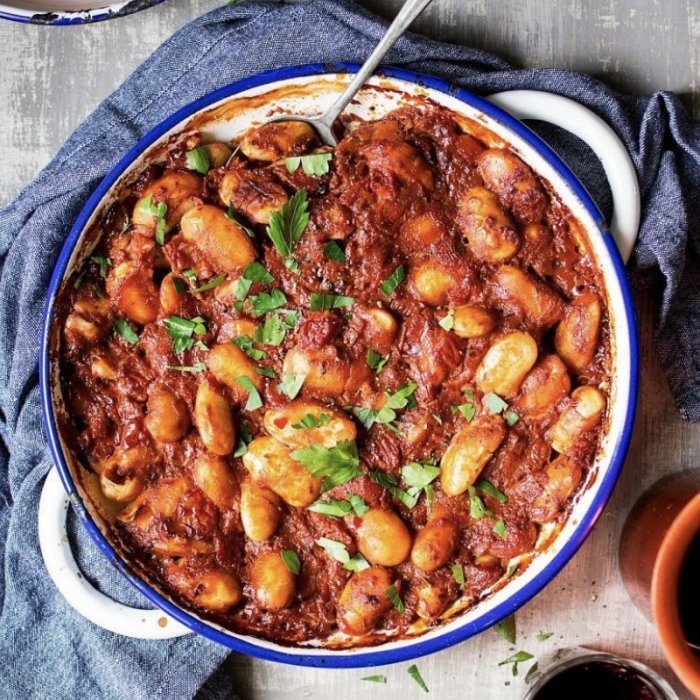
Soak the beans overnight in plenty of water. Drain, rinse, then place in a pan covered with water. Bring to the boil, reduce the heat, then simmer for approx 50 mins until slightly tender but not soft. Drain, then set aside. Heat oven to 180C/160C fan/gas 4. Heat the olive oil in a large frying pan, tip in the onion and garlic, then cook over a medium heat for 10 mins until softened but not browned. Add the tomato purée, cook for a further min, add remaining ingredients, then simmer for 2-3 mins. Season generously, then stir in the beans. Tip into a large ovenproof dish, then bake for approximately 1 hr, uncovered and without stirring, until the beans are tender. The beans will absorb all the fabulous flavours and the sauce will thicken. Allow to cool, then scatter with parsley and drizzle with a little more olive oil to serve.

step 1 Heat oven to 230C/fan 210C/gas 8. step 2 Drizzle a little sunflower oil evenly into two 4-hole Yorkshire pudding tins or two 12-hole non-stick muffin tins and place in the oven to heat through. step 3 To make the batter, tip 140g plain flour into a bowl and beat in 4 eggs until smooth. step 4 Gradually add 200ml milk and carry on beating until the mix is completely lump-free. Season with salt and pepper. step 5 Pour the batter into a jug, then remove the hot tins from the oven. Carefully and evenly pour the batter into the holes. step 6 Place the tins back in the oven and leave undisturbed for 20-25 mins until the puddings have puffed up and browned. step 7 Serve immediately. You can now cool them and freeze for up to 1 month.
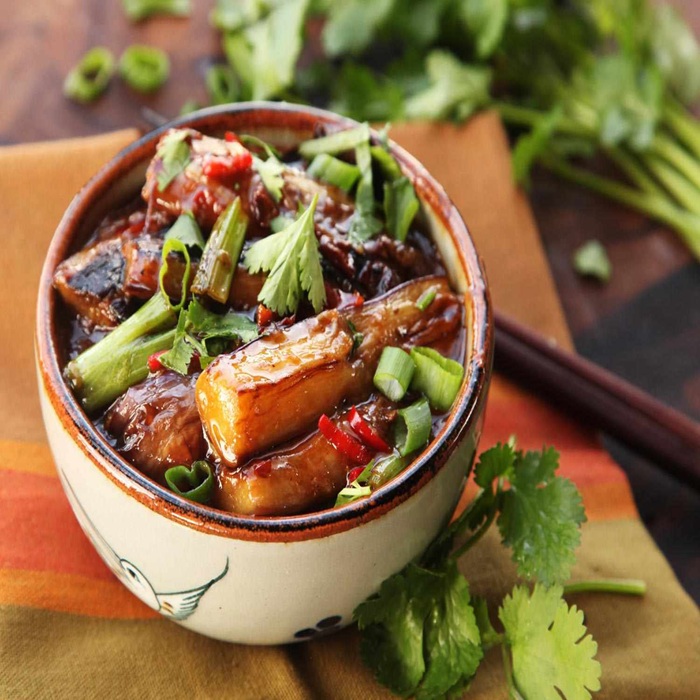
This recipe calls for asian eggplants, or Japanese eggplants. They are long and thin compared to a European or globe eggplant, and much more tender and delicate. If you can't find them you can substitute globe eggplant, but the dish is really best with the asian eggplant. *A lot of grocery stores have Asian ingredient aisles now. You should be able to find chili-bean paste, a mixture of preserved chilies mixed with mashed soybeans, there or at any Asian market. (Do not confuse with black bean paste or chili-garlic paste.) **Sichuan peppercorns are available at some stores and online for quite cheap. They aren't spicy like other peppers but rather have a citrusy flavor and induce a tingly, numbing sensation like a carbonated drink. Prep eggplant, chili sauce, cornstarch slurry, vinegar and scallions: Begin your mise en place. Quarter the eggplant lengthwise and chop into large batons and set aside. In a small bowl, mix together the chicken stock, sugar, and soy sauce and set it aside. In a second bowl, mix together the chili bean paste, garlic, ginger, and sichuan peppercorns and set it aside. In a third bowl, mix together the cornstarch with a tablespoon of water and set it aside. Lastly, in a fourth bowl, mix together the scallions and vinegar and set it aside. Sauté eggplant: Place the oil in a wok or large sauté pan over medium-high heat until the oil is almost smoking. Add the eggplant and sauté, allowing it to sit for a few seconds each time you move it to allow it to brown and blister. If the eggplant absorbs all the oil and some pieces don't get any then add a little more oil. Add the chili bean paste, garlic, ginger, and sichuan peppercorns and sauté: until fragrant, about 30 seconds. Add the chicken stock mixture: turn the heat to medium-low and simmer for 90 seconds. Add the cornstarch mixture: and stir together until the sauce thickens a bit. Add the scallions and vinegar: and cook for 15 seconds to diffuse their
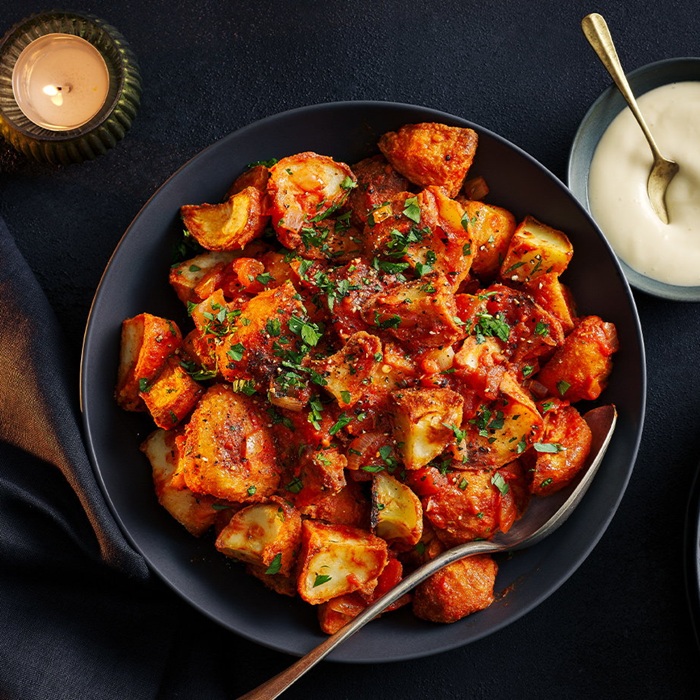
step 1 Heat the oil in a pan and fry the onion for about 5 mins until softened. Add the garlic, chopped tomatoes, tomato purée, sweet paprika, chilli powder, sugar and a pinch of salt, then bring to the boil, stirring occasionally. Lower to a simmer and cook for 10 mins until pulpy. Can be kept chilled for up to 24 hrs. step 2 Heat oven to 200C/180C fan/gas 6. Pat the potatoes dry with kitchen paper, then tip into a roasting tin and toss in the olive oil and some seasoning. Roast for 40-50 mins until crisp and golden. Tip the potatoes into serving dishes and spoon over the tomato sauce. Sprinkle with some fresh parsley to serve.
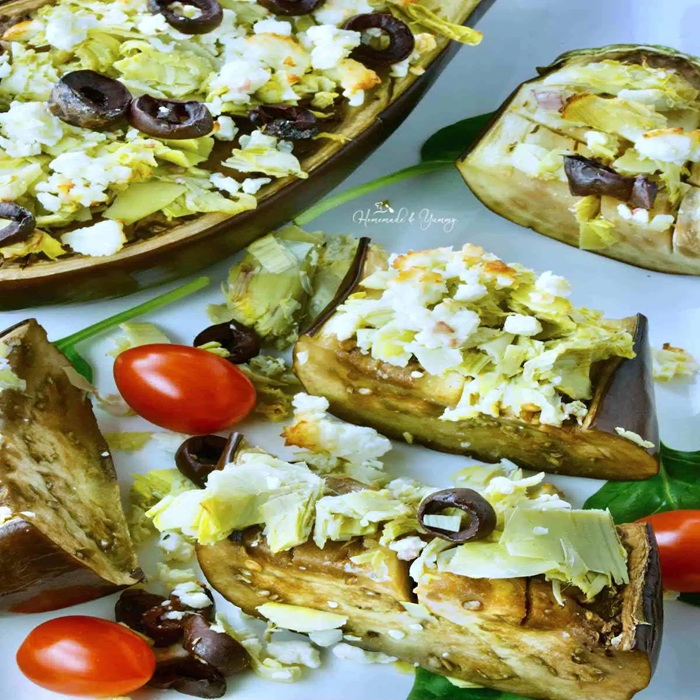
step 1 Heat oven to 200C/180C fan/gas 6. Brush the aubergine slices with 1 tbsp of the oil, then season. Arrange on a baking tray or sheet and roast for 20 mins until browned, popping the tomatoes on the tray for the final 5 mins. Tear the flatbread into pieces and place on a separate baking sheet. Brown in the oven for 8 mins, or until crisp, then remove. step 2 For the dressing, in a small bowl, mix the vinegar, mint, chopped shallots, chilli, remaining oil and some salt and pepper. step 3 Scatter the aubergine slices, tomatoes, sliced shallot and crisp flatbread into a serving bowl. Pour over the dressing, sprinkle with the goat’s cheese and scatter over a little rocket.