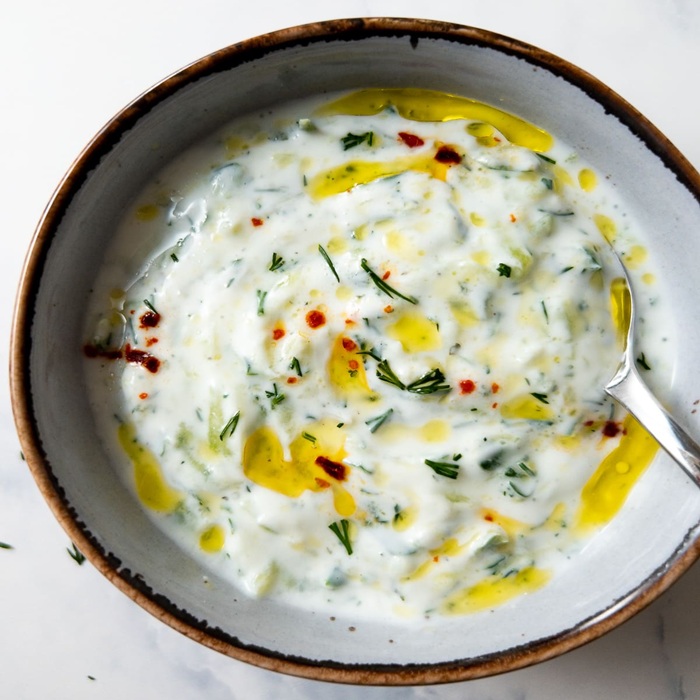
step 1 Put a sieve over a large bowl, line it with a thick sheet of non-dyed kitchen paper or a clean muslin cloth, and spoon in the yogurt. Cover with another sheet of kitchen paper and leave to strain in the fridge for a minimum of 12 hrs. step 2 Add the lemon juice, most of the olive oil and the dried mint to a bowl and stir well for the dried mint to soften and soak up the juices. Mix in the strained yogurt, then pour away the strained yogurt liquid and leave that bowl to one side. step 3 Halve the cucumber(s) lengthways and remove the seeds by running a teaspoon from the top to the bottom of the flesh, halve the cucumbers widthways to make them shorter and easier to handle, then coarsely grate each one into the bowl the yogurt was straining over. Using clean hands (or a clean muslin cloth), squeeze as much of the liquid out of the cucumber as possible. step 4 Add the strained, grated cucumber, garlic and ¾ tsp flaky salt to the rest of the ingredients and mix well. Garnish with a drizzle of extra virgin olive oil and a sprinkling of dried mint.
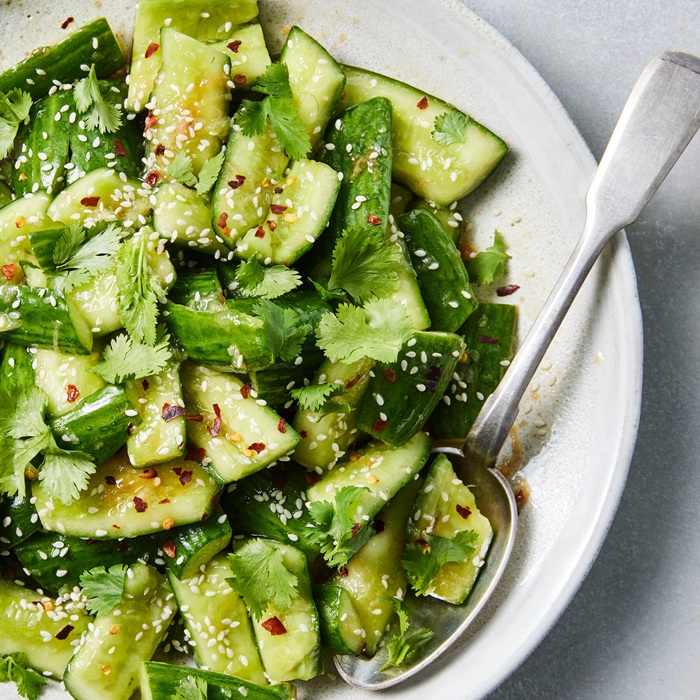
Prep the cucumbers: Peel the cucumbers. Cut them into quarters, lengthwise. (If the seeds are bitter, scrape out the seeds and discard.) Cut the cucumbers again, crosswise, into 1/2-inch thick pieces. Toss the salad: Place cucumbers into a serving bowl. Sprinkle with salt. Toss with sesame oil, seasoned rice vinegar, basil (if using), and chili flakes. Sprinkle with toasted sesame seeds if using.
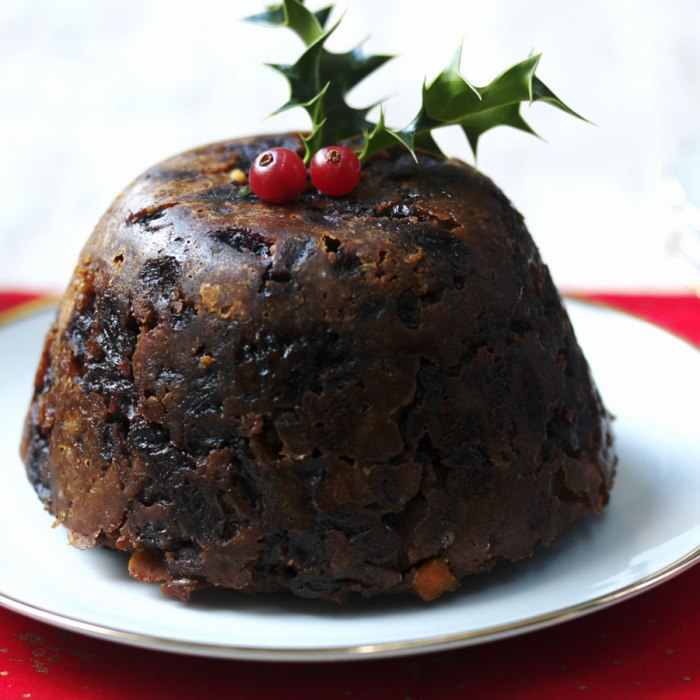
Get everything for the pudding prepared. Chop the almonds coarsely. Peel, core and chop the cooking apples. Sharpen your knife and chop the candied peel. (You can chop the almonds and apples in a food processor, but the peel must be done by hand.) Grate three quarters of the nutmeg (sounds a lot but it's correct). Mix the almonds, apples, candied peel, nutmeg, raisins, flour, breadcrumbs, light muscovado sugar, eggs and 2 tbsp brandy or cognac in a large bowl. Holding the butter in its wrapper, grate a quarter of it into the bowl, then stir everything together. Repeat until all the butter is grated, then stir for 3-4 mins – the mixture is ready when it subsides slightly after each stir. Ask the family to stir too, and get everyone to make a wish. Generously butter two 1.2 litre bowls and put a circle of baking parchment in the bottom of each. Pack in the pudding mixture. Cover with a double layer of baking parchment, pleating it to allow for expansion, then tie with string (keep the paper in place with a rubber band while tying). Trim off any excess paper. Now stand each bowl on a large sheet of foil and bring the edges up over the top, then put another sheet of foil over the top and bring it down underneath to make a double package (this makes the puddings watertight). Tie with more string, and make a handle for easy lifting in and out of the pan. Watch our video to see how to tie up a pudding correctly. Boil or oven steam the puddings for 8 hrs, topping up with water as necessary. Remove from the pans and leave to cool overnight. When cold, discard the messy wrappings and re-wrap in new baking parchment, foil and string. Store in a cool, dry place until Christmas. To make the brandy butter, cream the butter with the orange zest and icing sugar. Gradually beat in the brandy or cognac and chopped stem ginger. Put in a small bowl, fork the top attractively and put in the fridge to set. The butter will keep for a week in the fridge, or it can be
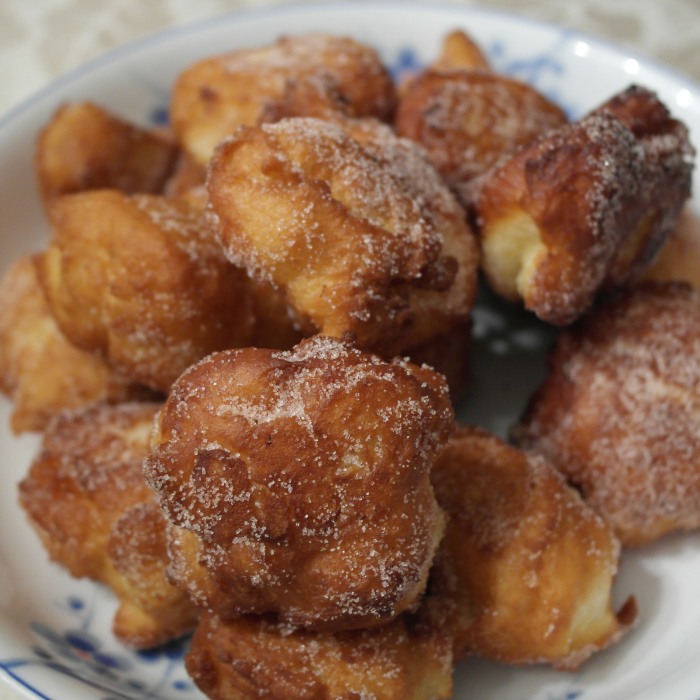
Sift together dry ingredients. Mix together wet ingredients and incorporate into dry. Stir until smooth. Drop by teaspoonfuls(no bigger) into hot oil (365 degrees, no hotter), turning after a few moments until golden brown on all sides. Remove and drain. Roll in cinnamon sugar while still warm and serve.
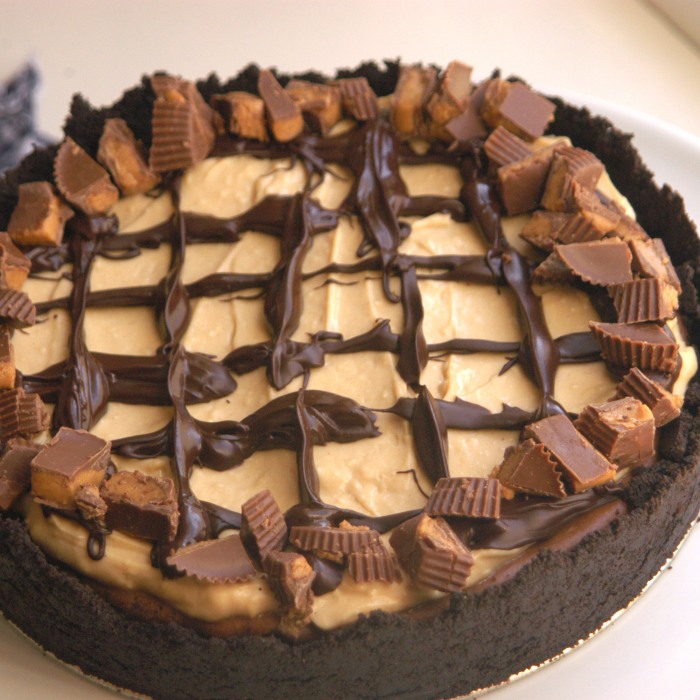
Oil and line a 20cm round loose- bottomed cake tin with cling film, making it as smooth as possible. Melt the butter in a pan. Crush the biscuits by bashing them in a bag with a rolling pin, then stir them into the butter until very well coated. Press the mixture firmly into the base of the tin and chill. Soak the gelatine in water while you make the filling. Tip the ricotta into a bowl, then beat in the peanut butter and syrup. Ricotta has a slightly grainy texture so blitz until smooth with a stick blender for a smoother texture if you prefer. Take the soaked gelatine from the water and squeeze dry. Put it into a pan with the milk and heat very gently until the gelatine dissolves. Beat into the peanut mixture, then tip onto the biscuit base. Chill until set. To freeze, leave in the tin and as soon as it is solid, cover the surface with cling film, then wrap the tin with cling film and foil. To defrost, thaw in the fridge overnight. To serve, carefully remove from the tin. Whisk the cream with the sugar until it holds its shape, then spread on top of the cheesecake and scatter with the peanut brittle.
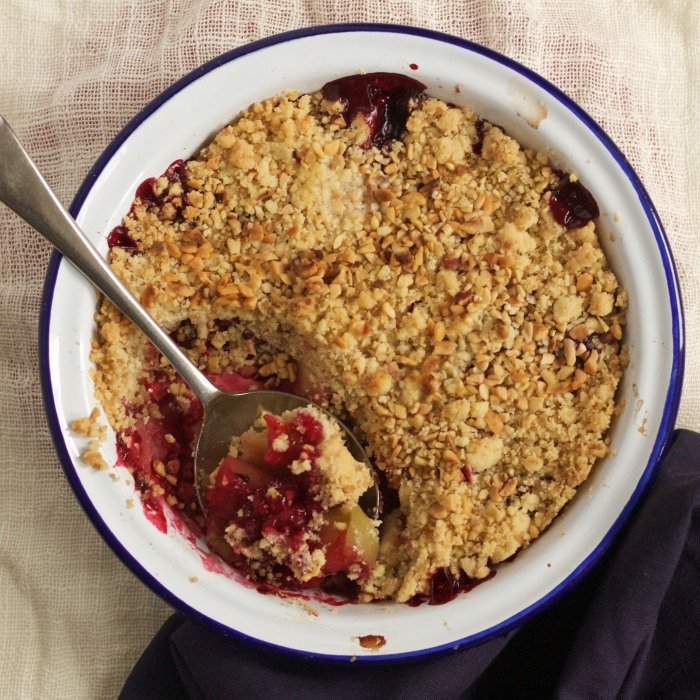
Heat oven to 190C/170C fan/gas 5. Tip the flour and sugar into a large bowl. Add the butter, then rub into the flour using your fingertips to make a light breadcrumb texture. Do not overwork it or the crumble will become heavy. Sprinkle the mixture evenly over a baking sheet and bake for 15 mins or until lightly coloured. Meanwhile, for the compote, peel, core and cut the apples into 2cm dice. Put the butter and sugar in a medium saucepan and melt together over a medium heat. Cook for 3 mins until the mixture turns to a light caramel. Stir in the apples and cook for 3 mins. Add the blackberries and cinnamon, and cook for 3 mins more. Cover, remove from the heat, then leave for 2-3 mins to continue cooking in the warmth of the pan. To serve, spoon the warm fruit into an ovenproof gratin dish, top with the crumble mix, then reheat in the oven for 5-10 mins. Serve with vanilla ice cream.

step 1 Combine the yeast, a pinch of the sugar and a couple tablespoons of lukewarm water in a small bowl. Stir to dissolve the yeast, then leave for 10 mins until foamy. step 2 Meanwhile, combine the flour, the remaining sugar and 2 tsp fine salt in a large bowl. Make a well in the centre, then add half the beaten egg, the yeast mixture and the oil. Pour in 200ml lukewarm water (it should feel slightly warm to the touch) and stir with a spoon, then mix using one hand, keeping the other clean while you bring the dough together. If there are a lot of very dry bits, gradually add a little water to just bring it together – you don't want it to get too wet and sticky. The dough should be moist, but not soggy. step 3 Once the dough has come together, turn it out onto a lightly floured surface. Knead using both hands for 10 mins until smooth and a bit springy. If it gets very sticky, add a very small amount of flour – as little as possible. A dough scraper is useful if the dough is sticking to the work surface. Stretch the sides of the dough down and pull together to form a ball. Lightly oil a bowl, then lightly roll the dough ball around the bowl so it's coated in the oil. Cover with a clean tea towel and leave in a warm place for 1 hr, or until dough has doubled in size. step 4 Line a baking sheet with baking parchment. Turn the dough out onto a clean work surface and divide into three equal pieces, weighing for accuracy, if you like. Roll each piece into a long sausage shape about 25cm long, tapering them slightly at both ends. Lay the pieces out in front of you, parallel to one another with a couple centimetres between each. Bring the sausages together at the top end, then plait them down the length, tucking in the ends when you reach the bottom. Carefully transfer the loaf to the prepared baking sheet and loosely cover with a clean tea towel. Leave to rise until puffy and billowy, about 40 mins. step 5 Meanwhile, heat the oven to 200C/180C fan/gas 6.
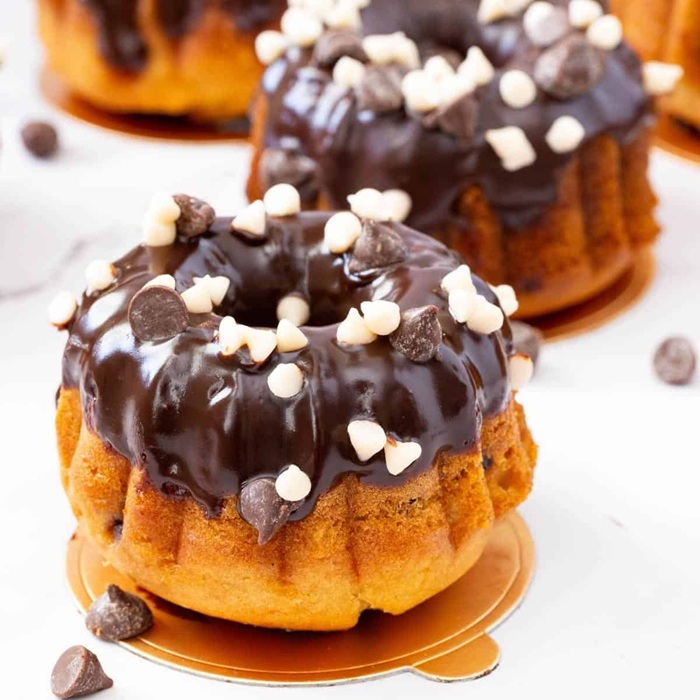
step 1 Heat the oven to 180C/160C fan/gas 4. Melt 25g butter and generously brush into the holes of a mini bundt tins. Tip a little flour into each hole and shake to coat, then tip out the excess. Beat the butter, caster sugar and a pinch of salt together using an electric whisk. Add the eggs, one at a time, beating well after each addition. Combine the flour and baking powder in a separate bowl, then sift this into the wet ingredients and stir until smooth. Combine the cocoa powder and milk in a small bowl until smooth. step 2 Spoon 1 tbsp of the plain batter into each hole of the bundt tin. Mix the remaining plain batter with the cocoa powder mixture, then divide this between the holes. Bake for 15-18 mins, or until a skewer inserted into the cakes comes out clean. Leave to cool in the tin for 5 mins, then turn out onto a wire rack and leave to cool completely. Dust with icing sugar to serve. step 3 Pour 1 tablespoon of light batter into each mold. Mix the remaining batter with the stirred cocoa mixture and then fill the molds with a tablespoon. step 4 Bake the mini Bundt cakes in the preheated oven for 15-18 minutes , depending on the size of the molds. After 15 minutes of baking time, use a toothpick to test with a skewer and, if necessary, bake for another 3 minutes. Let the mini Bundt cakes cool down completely in the tin. Then carefully remove from the mold. Dust with some icing sugar and serve. Enjoy your meal!
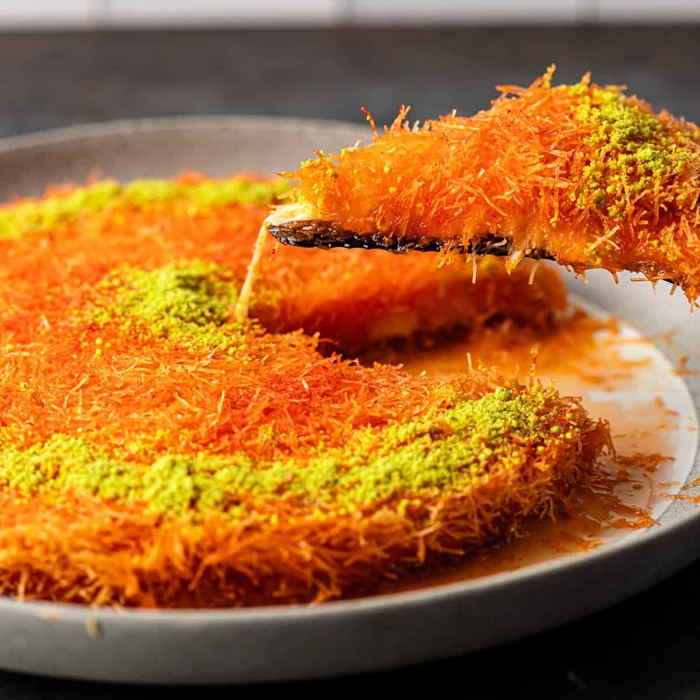
1 Take kanfhe in a bowl and roughly cut them. Pour melted butter, yellow food color and mix well with your hands. In a separate bowl mix milk, cream cheese, sugar, cornstarch well. 2 Turn on the flame and boil the liquid, when it gets thick turn off the flame let it cool down a little bit. Add mozzarella in it and mix it well. Now make a base with half of the kanfhe in a dish, gently press it to level the dough well. Pour the cheese mixture on the top and level it with a spoon. 3 Cover it with the other half of the kanfhe. Put the dish in a preheated oven at 200 degree for about 20-25 minutes. It's ready when kunafa is golden and crunchy in the surface. 4 Boil water in a pan and dissolve sugar in it for 4–5 minutes. OR cook it until slightly thicken and keep on stirring. Add lemon juice with rose water, mix well. Evenly pour the syrup over the kunafa as soon as it comes out of the oven. Your kunafa is ready to serve.
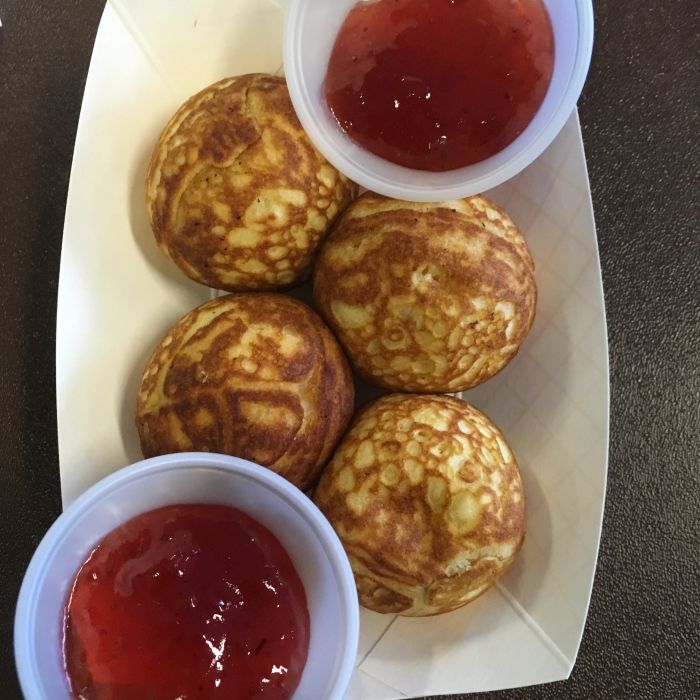
Whisk the flour, salt, sugar, baking soda, and cardamom together in a large bowl. ▢ Separate the eggs and add the egg yolks to the flour mixture. Pour in the buttermilk (or cultured milk) and whisk the batter together until smooth. Cover and refrigerate for about 30 minutes. ▢ Use a hand (or stand) mixer to beat the egg whites until stiff. Carefully fold into the æbleskiver batter. ▢ Heat the pan on medium heat. Once hot, brush the pan with butter and fill each æbleskive hole almost full with the batter. ▢ Once the edges become firm use a knitting needle or wooden skewer to turn the æbleskiver about 1/4. Continue turning until you get round pancake spheres. They should be golden brown. ▢ Remove the æbleskiver from the pan and serve with powdered sugar and jam.
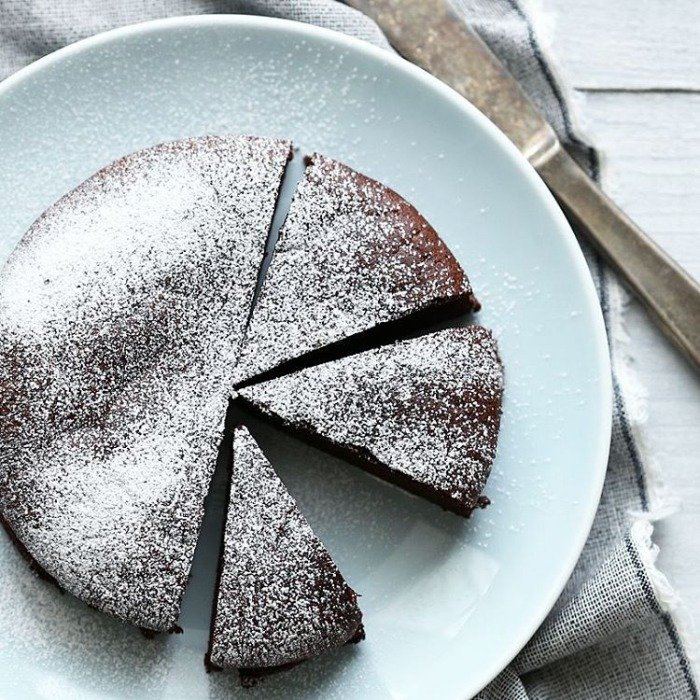
Preheat the oven to 180°C/350°F/Gas Mark 4. Grease and line the base of an 8 in round spring form cake tin with baking parchment Break the chocolate into a heatproof bowl and place over a saucepan of gently simmering water and stir until it melts. (or melt in the microwave for 2-3 mins stirring occasionally) Place the butter and sugar in a mixing bowl and cream together with a wooden spoon until light and fluffy. Gradually beat in the eggs, adding a little flour if the mixture begins to curdle. Fold in the remaining flour with the cooled, melted chocolate and milk. Mix until smooth. Spread the mixture into the cake tin and bake for 50-55 mins or until firm in the centre and a skewer comes out cleanly. Cool for 10 minutes, then turn out and cool completely.
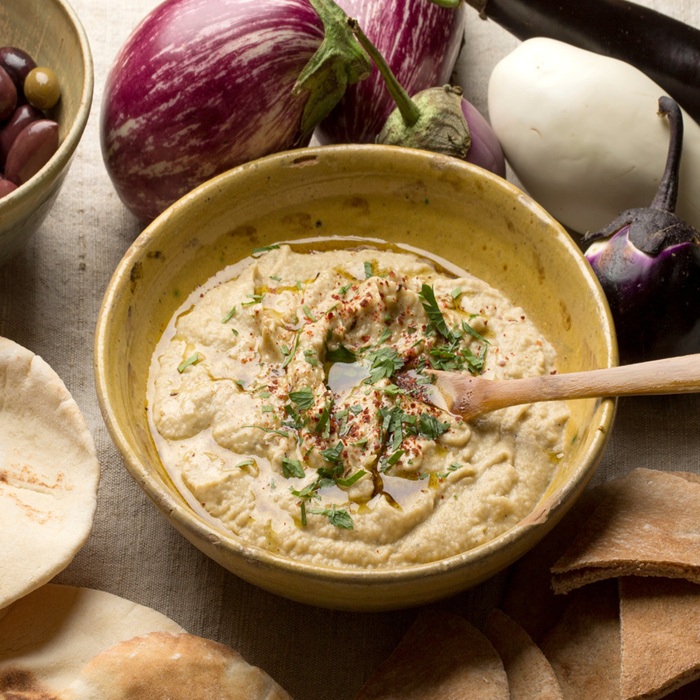
step 1 Heat grill to very hot. Slice the aubergines in half lengthways, then grill for 25 mins, turning occasionally, until soft – the skin will remain firm, but the flesh will soften. Lift the aubergines off the grill and leave until cool enough to handle. step 2 Using a sharp knife, score the grilled flesh and scoop out the flesh with a spoon. Tip into a bowl and mash with a fork until you get a thick pulp. Beat in the lemon juice and garlic. Add the yogurt and dill, and season. Serve while still warm.

step 1 Tip the flours into a food processor. Add the yeast, sugar and 1tsp salt, then mix well. Pour in 350ml warm water and the oil, then process to a soft dough. Mix for 1 min, then leave until doubled in size, about 1 hour. step 2 Pulse the dough a couple of times just to knock out the air, then tip onto a floured surface. Cut the dough in half and roll out one half to a rectangle about 20 x 40cm. Trim the edges using a large sharp knife, then cut into eight 10cm squares. Line a large tray or two baking sheets with non-stick paper and arrange the bread rectangles over the tray in one layer. Repeat with the other half of the dough. Leave in a warm place for about 30 mins until the dough is just starting to rise. step 3 Place bread directly onto the BBQ racks and cook for a couple of mins until they puff up, then flip over and cook on the other side. Tip into a basket and serve with the dips.
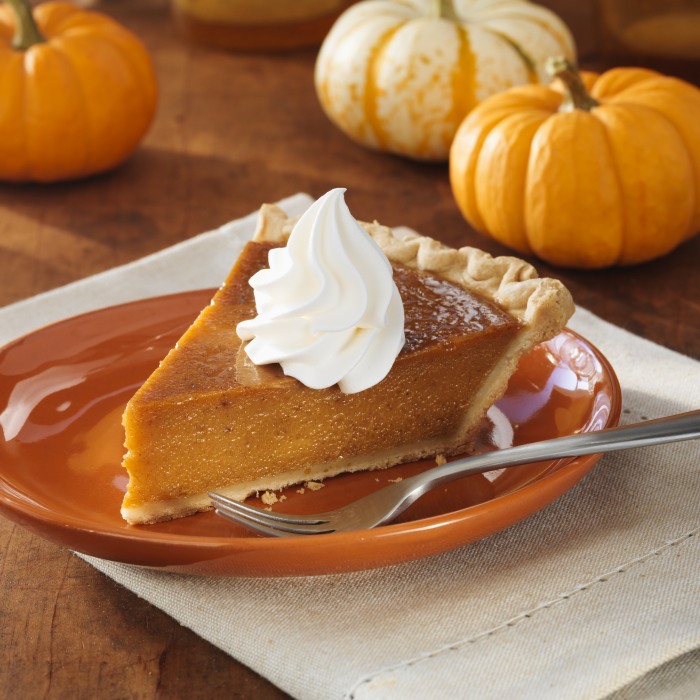
Place the pumpkin in a large saucepan, cover with water and bring to the boil. Cover with a lid and simmer for 15 mins or until tender. Drain pumpkin; let cool. Heat oven to 180C/160C fan/gas 4. Roll out the pastry on a lightly floured surface and use it to line a 22cm loose-bottomed tart tin. Chill for 15 mins. Line the pastry with baking parchment and baking beans, then bake for 15 mins. Remove the beans and paper, and cook for a further 10 mins until the base is pale golden and biscuity. Remove from the oven and allow to cool slightly. Increase oven to 220C/200C fan/gas 7. Push the cooled pumpkin through a sieve into a large bowl. In a separate bowl, combine the sugar, salt, nutmeg and half the cinnamon. Mix in the beaten eggs, melted butter and milk, then add to the pumpkin purée and stir to combine. Pour into the tart shell and cook for 10 mins, then reduce the temperature to 180C/160C fan/gas 4. Continue to bake for 35-40 mins until the filling has just set. Leave to cool, then remove the pie from the tin. Mix the remaining cinnamon with the icing sugar and dust over the pie. Serve chilled.
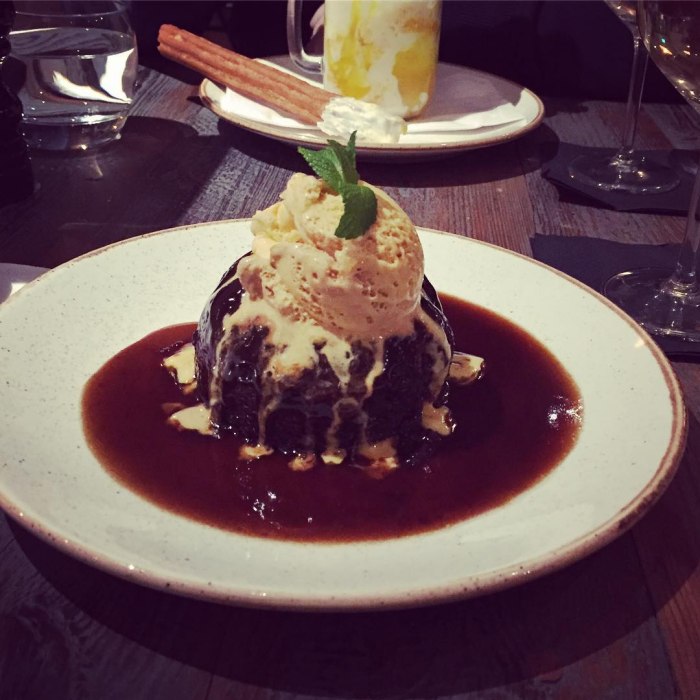
Stone and chop the dates quite small, put them in a bowl, then pour the boiling water over. Leave for about 30 mins until cool and well-soaked, then mash a bit with a fork. Stir in the vanilla extract. Butter and flour seven mini pudding tins (each about 200ml/7fl oz) and sit them on a baking sheet. Heat oven to 180C/fan 160C/gas 4. While the dates are soaking, make the puddings. Mix the flour and bicarbonate of soda together and beat the eggs in a separate bowl. Beat the butter and sugar together in a large bowl for a few mins until slightly creamy (the mixture will be grainy from the sugar). Add the eggs a little at a time, beating well between additions. Beat in the black treacle then, using a large metal spoon, gently fold in one-third of the flour, then half the milk, being careful not to overbeat. Repeat until all the flour and milk is used. Stir the soaked dates into the pudding batter. The mix may look a little curdled at this point and will be like a soft, thick batter. Spoon it evenly between the tins and bake for 20-25 mins, until risen and firm. Meanwhile, put the sugar and butter for the sauce in a medium saucepan with half the cream. Bring to the boil over a medium heat, stirring all the time, until the sugar has completely dissolved. Stir in the black treacle, turn up the heat slightly and let the mixture bubble away for 2-3 mins until it is a rich toffee colour, stirring occasionally to make sure it doesn’t burn. Take the pan off the heat and beat in the rest of the cream. Remove the puddings from the oven. Leave in the tins for a few mins, then loosen them well from the sides of the tins with a small palette knife before turning them out. You can serve them now with the sauce drizzled over, but they’ll be even stickier if left for a day or two coated in the sauce. To do this, pour about half the sauce into one or two ovenproof serving dishes. Sit the upturned puddings on the sauce, then pour the rest of the sauce over them. Cover with a loose ten
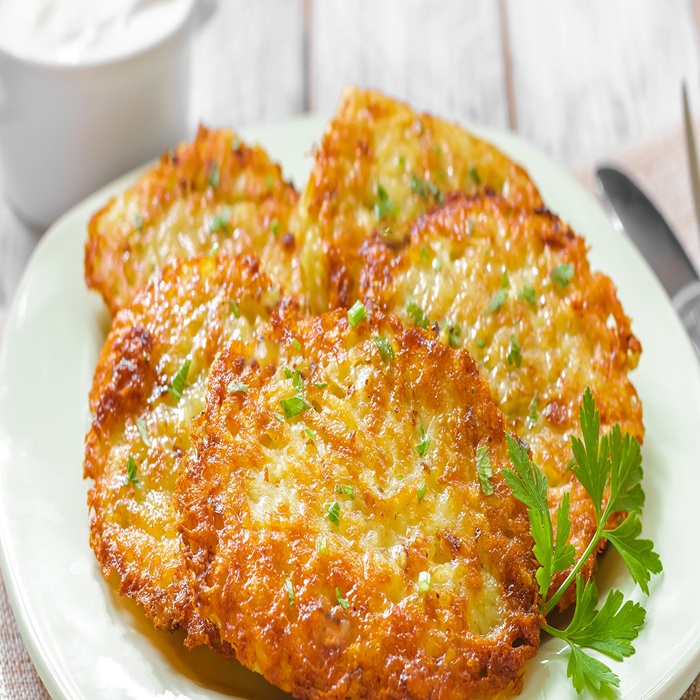
1. Prepare the Potatoes Start by peeling and finely grating the potatoes. To ensure extra crispiness, use a clean kitchen towel to squeeze out as much moisture as possible. 2. Mix the Ingredients In a large mixing bowl, combine the grated potatoes, chopped onion, minced garlic, eggs, flour, marjoram, salt, and black pepper. Stir well until the mixture forms a thick, consistent batter. 3. Heat the Oil In a large frying pan, heat a generous amount of oil over medium heat. The oil should be hot but not smoking. 4. Fry the Pancakes Spoon portions of the batter into the pan, flattening each into a thin pancake. Fry until golden brown and crispy on one side, then flip and cook the other side until equally golden and crispy. 5. Drain & Serve Transfer the cooked pancakes onto a plate lined with paper towels to remove excess oil. Serve immediately while hot, with sour cream, garlic dip, or as a side dish.
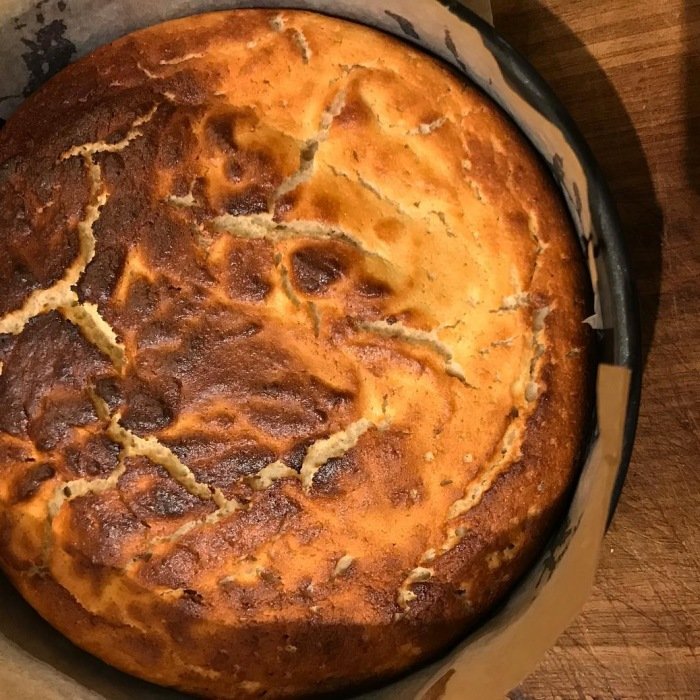
Mash the ricotta and beat well with the egg yolks, stir in the flour, sugar, cinnamon, grated lemon rind and the rum and mix well. You can do this in a food processor. Beat the egg whites until stiff, fold in and pour into a buttered and floured 25cm cake tin. Bake in the oven at 180ºC/160ºC fan/gas 4 for about 40 minutes, or until it is firm. Serve hot or cold dusted with icing sugar.
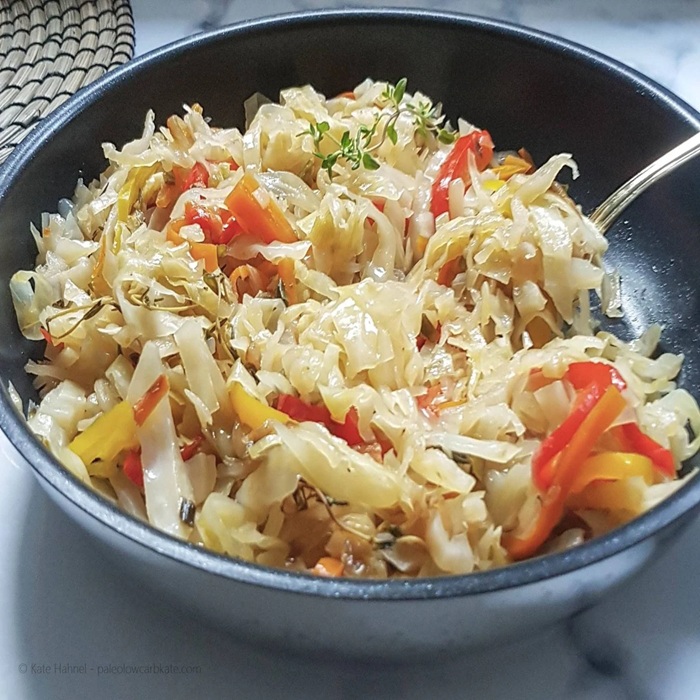
Add all the ingredients to a large pan over medium heat and cover with a lid. Cook on medium heat for 10 minutes, stirring occasionally. After 10 minutes, reduce the heat to low and continue to cook for an additional 5 minutes, until the cabbage is soft and tender. Remove from the heat and remove the stalks of thyme before serving.
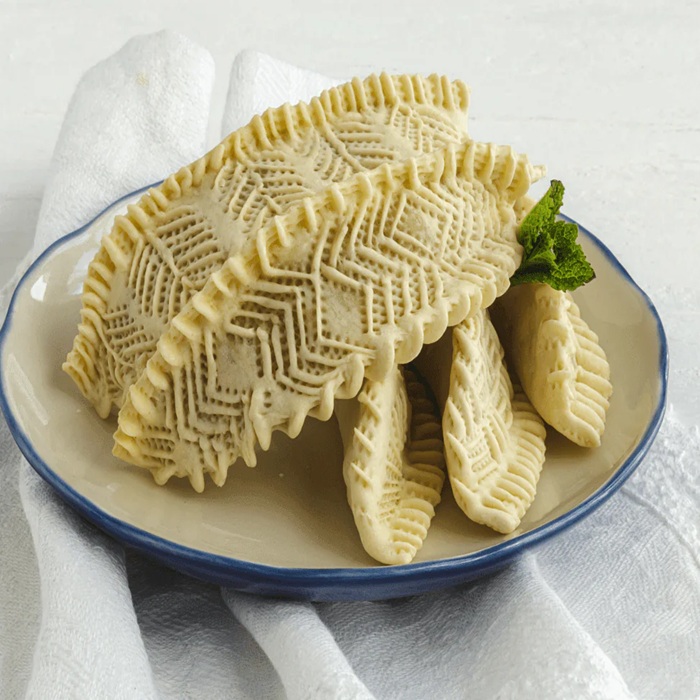
Preheat oven to 300 degrees F (150 degrees C). Line a baking sheet with parchment paper. Spread almonds over the baking sheet. Bake in the preheated oven until almonds are fragrant and roasted, 20 to 25 minutes. Prepare pastry dough while almonds are roasting. Combine flour, 1/2 cup plus 1 tablespoon butter, and salt in a bowl and rub together until the mixture resembles breadcrumbs. Add egg, oil, and 1 1/2 tablespoons orange blossom water; knead everything into a smooth pastry dough. Add a little water, 1 teaspoon at a time, if dough is too dry. Shape pastry dough into a ball, wrap in plastic wrap, and set aside for 30 minutes. Remove almonds from oven and cool slightly, about 5 minutes. Place almonds in the bowl of a food processor; process until finely and evenly ground. Add 3/4 cup plus 1 tablespoon sugar, cinnamon, egg, and 1 tablespoon orange blossom water in that order to the food processor, pulsing after each addition until mixture is evenly combined and resembles a paste. Remove small walnut-sized portions of filling with greased hands. Roll them into small logs with thin ends. Set aside. Preheat oven to 325 degrees F (165 degrees C). Line a baking sheet with parchment paper. Roll out half of the pastry dough on a lightly floured surface until very thin. Place one of the almond paste logs on the edge of the pastry, fold pastry over the filling, covering it completely, and seal the edges. Mold with your fingers into a crescent shape. Using a pastry cutter, cut around the crescent, and transfer to the prepared baking sheet. Repeat with remaining dough and filling. Bake in the preheated oven until gazelle horns are lightly golden and baked through, about 20 minutes. They should not get too dark. Let cool slightly, about 3 minutes. Heat honey in a small saucepan over low-medium heat. Remove from heat and stir in 1 tablespoon orange blossom water. Dip gazelle horns into the honey and place on a serving plate. Sprinkle with crushed pistach
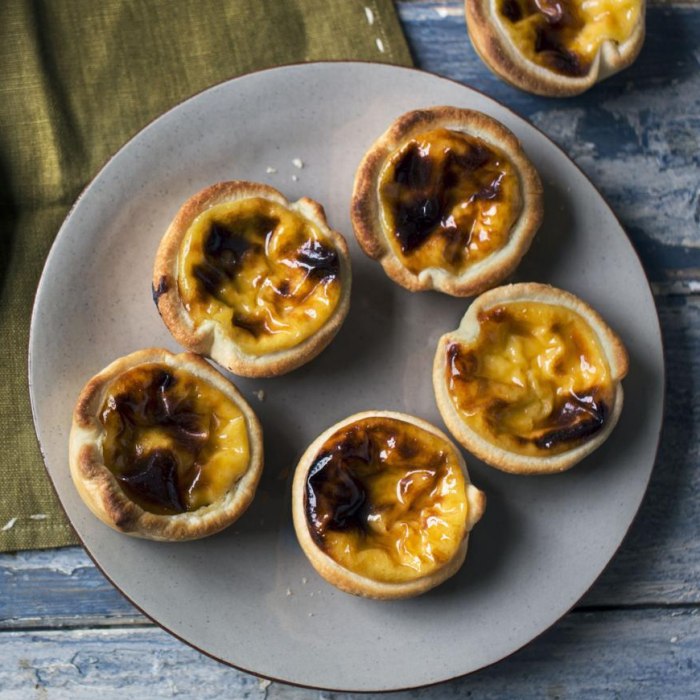
STEP 1 Roll the pastry Mix the flour and icing sugar, and use this to dust the work surface. Roll the pastry out to make a 45 x 30cm rectangle. Roll up lengthways to create a long sausage shape. STEP 2 Cutting pastry into rounds Cut the pastry into 24 wheels, about 1-2cm thick. STEP 3 Roll out each pastry portion Roll each wheel lightly with the rolling pin to fit 2 x 12-hole non-stick fairy cake tins. STEP 4 Press pastry into the tin Press the pastry circles into the tins and mould into the tins to make thin cases. Chill until needed. STEP 5 Make the infused syrup Heat the oven to 220C/fan 200C/gas 7. Make a sugar syrup by bringing the sugar, 200ml water, lemon zest and cinnamon stick to the boil. Reduce until syrupy, allow to cool, then remove the cinnamon and lemon. Whisk the eggs, egg yolks and cornflour until smooth in another large pan. STEP 6 Making custard Heat the milk and vanilla pod seeds in a separate pan until just below the boil. Gradually pour the hot milk over the eggs and cornflour, then cook on a low heat, continually whisking. STEP 7 Add syrup to custard Add the cooled sugar syrup to the custard and whisk until thickened slightly. STEP 8 Pour custard into the tins Pour the custard through a sieve. Pour into the pastry cases and bake for 15 minutes until the pastry is golden and the custard has darkened. STEP 9 cool and dust with icing sugar Cool completely in the tins then sift over icing sugar and ground cinnamon to serve.
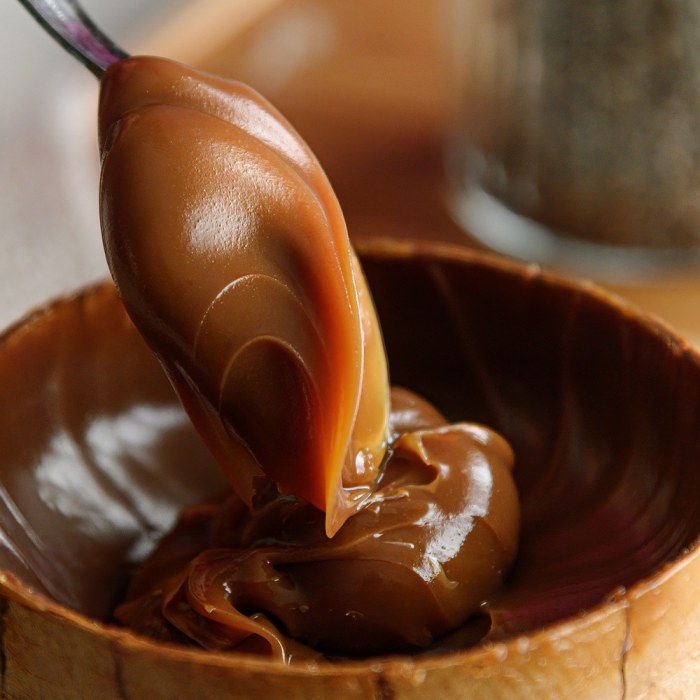
Combine Ingredients: In a large, heavy-bottomed pot, mix the milk, sugar, and baking soda. Cook over low heat, stirring constantly to prevent burning. Thicken: Continue to cook, stirring frequently, until the mixture becomes thick and caramel-colored, about 1-2 hours. Flavor: Stir in the vanilla extract. Cool: Let the dulce de leche cool, then transfer to a jar. It will thicken further as it cools. Pro Tips: Stir continuously and keep the heat low to prevent the milk from burning and sticking to the bottom of the pan. A drop of vanilla extract added at the end of cooking enhances the flavor.
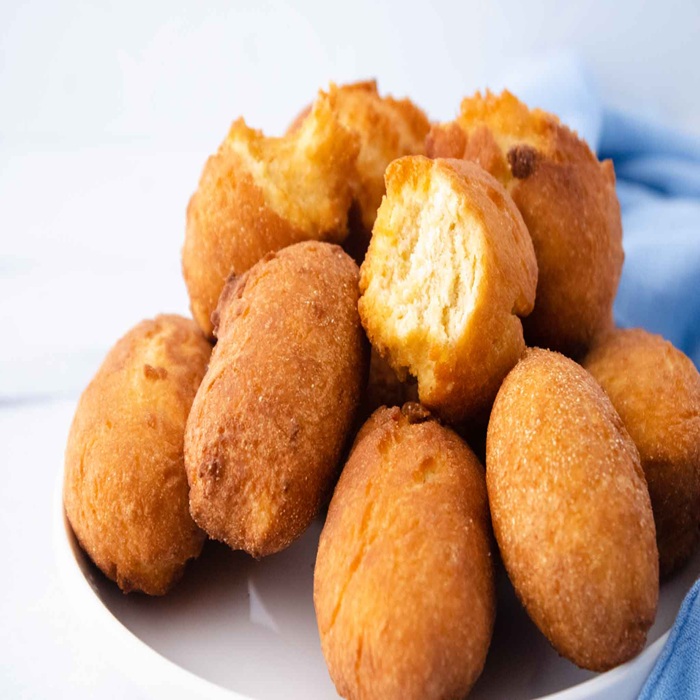
Heat a heavy bottom pot of oil that has at least 3 inches of oil in it or use a deep fryer if you have one. Turn the heat over medium heat until the temperature reaches 350 degrees Fahrenheit. Add the all-purpose flour, cornmeal, granulated sugar, baking powder, and salt to a large bowl and stir to combine. Add the vanilla extract and milk and stir until the dough comes together. Then use your hands to lightly form the mixture into a ball. Pinch off pieces of dough and roll them into long oval shapes. Make about 12 dumplings. Once the oil has reached the temperature of 350 degrees Fahrenheit, fry the dough on all sides, until golden brown. This should take about 4-6 minutes. Remove dough and drain off any excess grease. Serve and enjoy.
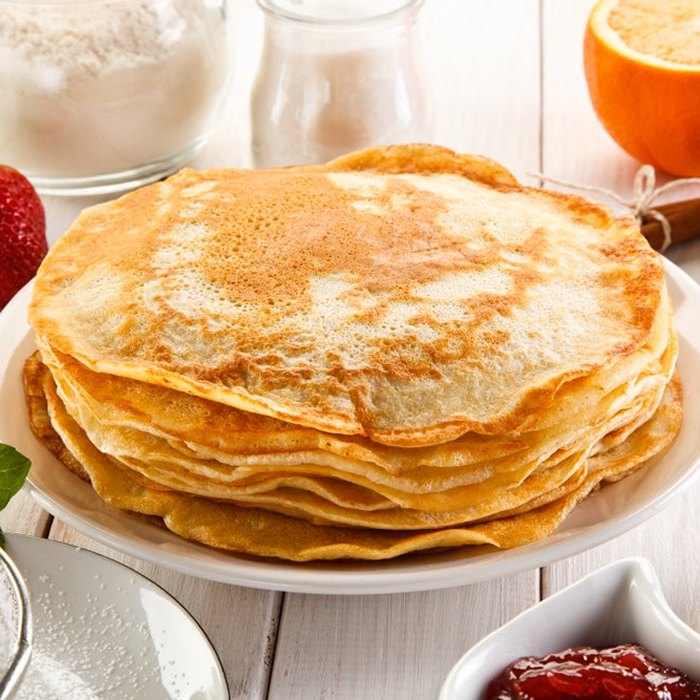
In a large bowl, whisk together 1/2 cup buckwheat flour, 2/3 cup all-purpose flour, 1/2 teaspoon salt, and 1 teaspoon yeast. Make a well in the center and pour in 1 cup warm milk, whisking until the batter is smooth. Cover the bowl and let the batter rise until doubled, about 1 hour. Enrich and Rest the Batter Stir 2 tablespoons melted butter and 1 egg yolk into the batter. In a separate bowl, whisk 1 egg white until stiff, but not dry. Fold the whisked egg white into the batter. Cover the bowl and let the batter stand 20 minutes. Pan-Fry the Blini Heat butter in a large nonstick skillet over medium heat. Drop quarter-sized dollops of batter into the pan, being careful not to overcrowd the pan. Cook for about 1 minute or until bubbles form. Turn and cook for about 30 additional seconds. Remove the finished blini onto a plate and cover them with a clean kitchen towel to keep warm. Add more butter to the pan and repeat the frying process with the remaining batter.
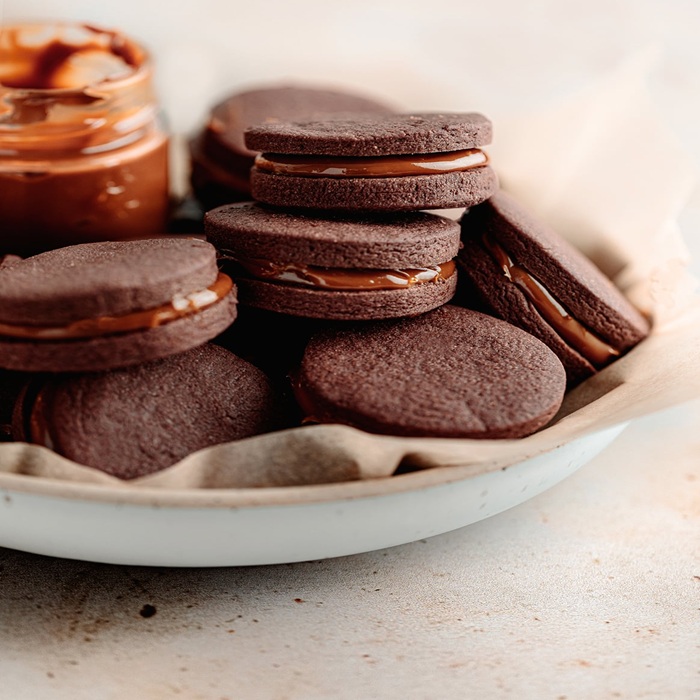
For the cookies cream the butter with the sugar for a few minutes. Then add the egg and honey and mix well. Add flour, cornstarch, cocoa, baking soda and baking powder and mix until you get a dough. Wrap in plastic wrap and chill for at least half an hour or overnight. 2 Line two baking sheets with parchment paper, preheat oven to 200 degrees Celsius. 3 Divide dough into two parts, put one part back in the fridge before using. Roll out second part to about 2 millimeters and cut out round cookies with 5-6 centimeters in diameter. This can be done with a cookie cutter or glass. You should get 30 cookies in total or even more, I get about 40. Bake one baking sheet at the time for about 8-10min. Let cookies cool. 4 For the filling look for two cookies of the same size and place about one teaspoon of dulce de leche onto the bottom one before sandwiching together. 5 Chop semi-sweet chocolate and melt with butter and orange zest on low heat. Dunk each sandwich cookie into the chocolate and let cool off on parchment paper before serving.