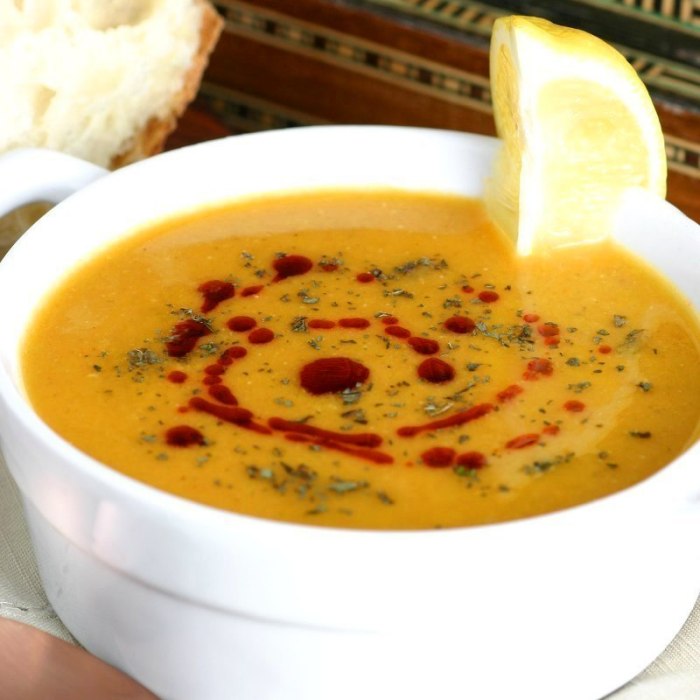
Pick through your lentils for any foreign debris, rinse them 2 or 3 times, drain, and set aside. Fair warning, this will probably turn your lentils into a solid block that you’ll have to break up later In a large pot over medium-high heat, sauté the olive oil and the onion with a pinch of salt for about 3 minutes, then add the carrots and cook for another 3 minutes. Add the tomato paste and stir it around for around 1 minute. Now add the cumin, paprika, mint, thyme, black pepper, and red pepper as quickly as you can and stir for 10 seconds to bloom the spices. Congratulate yourself on how amazing your house now smells. Immediately add the lentils, water, broth, and salt. Bring the soup to a (gentle) boil. After it has come to a boil, reduce heat to medium-low, cover the pot halfway, and cook for 15-20 minutes or until the lentils have fallen apart and the carrots are completely cooked. After the soup has cooked and the lentils are tender, blend the soup either in a blender or simply use a hand blender to reach the consistency you desire. Taste for seasoning and add more salt if necessary. Serve with crushed-up crackers, torn up bread, or something else to add some extra thickness. You could also use a traditional thickener (like cornstarch or flour), but I prefer to add crackers for some texture and saltiness. Makes great leftovers, stays good in the fridge for about a week.
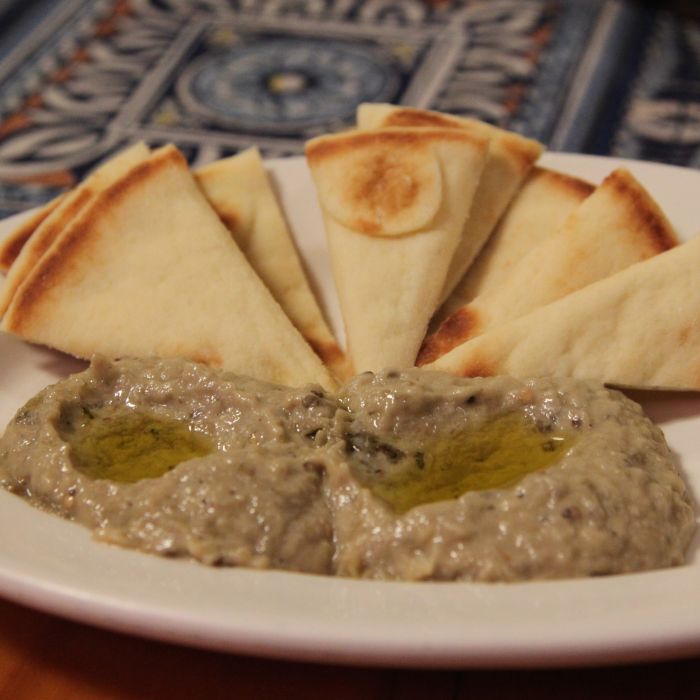
Preheat an outdoor grill for medium-high heat and lightly oil the grate. Prick the surface of the skin of eggplants several times with the tip of a knife. Place eggplants directly on grill. Turn frequently with tongs while skin chars. Cook until eggplants have collapsed and are very soft, 25 to 30 minutes. Transfer to a bowl and cover tightly with aluminum foil and allow to cool, about 15 minutes. When eggplants are cool enough to handle, split them in half and scrape flesh into a colander placed over a bowl. Drain 5 or 10 minutes. Transfer eggplant to mixing bowl. Add crushed garlic and salt; mash until creamy but with a little texture, about 5 minutes. Whisk in lemon juice, tahini, olive oil, and cayenne pepper. Stir in yogurt. Cover bowl with plastic wrap and refrigerate until completely chilled. Stir in mint and parsley, and taste to adjust seasonings before serving.
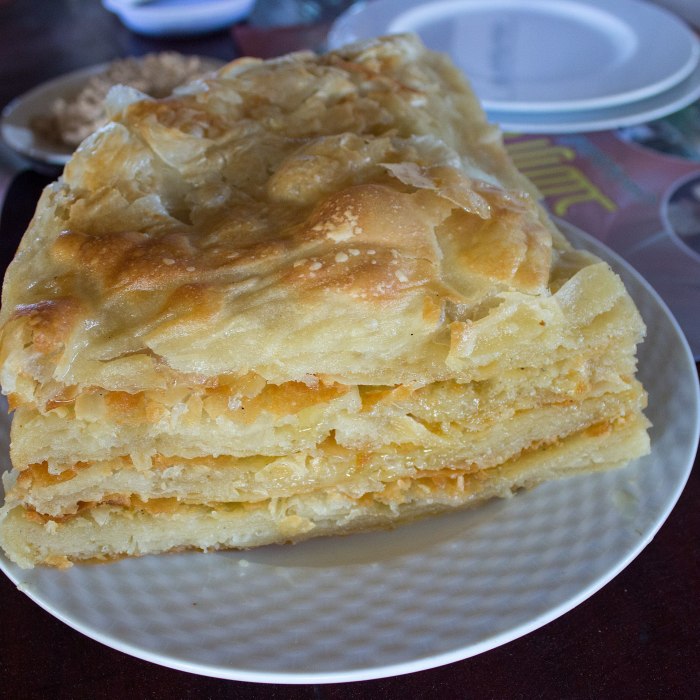
Mix the flour and salt then pour one cup of water and start kneading. If you feel the dough is still not coming together or too dry, gradually add the remaining water until you get a dough that is very elastic so that when you pull it and it won’t be torn. Let the dough rest for just 10 minutes then divide the dough into 6-8 balls depending on the size you want for your feteer. Warm up the butter/ghee or oil you are using and pour into a deep bowl. Immerse the dough balls into the warm butter. Let it rest for 15 to 20 minutes. Preheat oven to 550F. Stretch the first ball with your hands on a clean countertop. Stretch it as thin as you can, the goal here is to see your countertop through the dough. Fold the dough over itself to form a square brushing in between folds with the butter mixture. Set aside and start making the next ball. Stretch the second one thin as we have done for the first ball. Place the previous one on the middle seam side down. Fold the outer one over brushing with more butter mixture as you fold. Set aside. Keep doing this for the third and fourth balls. Now we have one ready, place on a 10 inch baking/pie dish seam side down and brush the top with more butter. Repeat for the remaining 4 balls to make a second one. With your hands lightly press the folded feteer to spread it on the baking dish. Place in preheated oven for 10 minutes when the feteer starts puffing turn on the broiler to brown the top. When it is done add little butter on top and cover so it won’t get dry.
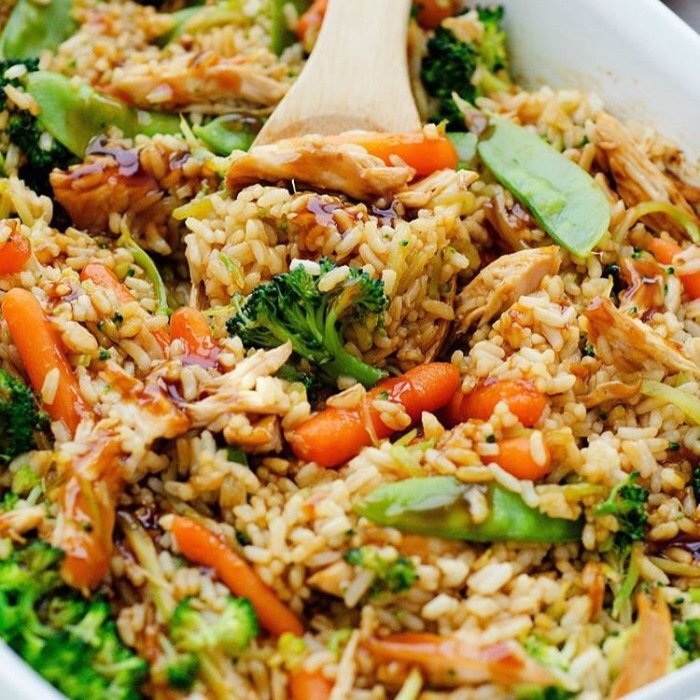
Preheat oven to 350° F. Spray a 9x13-inch baking pan with non-stick spray. Combine soy sauce, ½ cup water, brown sugar, ginger and garlic in a small saucepan and cover. Bring to a boil over medium heat. Remove lid and cook for one minute once boiling. Meanwhile, stir together the corn starch and 2 tablespoons of water in a separate dish until smooth. Once sauce is boiling, add mixture to the saucepan and stir to combine. Cook until the sauce starts to thicken then remove from heat. Place the chicken breasts in the prepared pan. Pour one cup of the sauce over top of chicken. Place chicken in oven and bake 35 minutes or until cooked through. Remove from oven and shred chicken in the dish using two forks. *Meanwhile, steam or cook the vegetables according to package directions. Add the cooked vegetables and rice to the casserole dish with the chicken. Add most of the remaining sauce, reserving a bit to drizzle over the top when serving. Gently toss everything together in the casserole dish until combined. Return to oven and cook 15 minutes. Remove from oven and let stand 5 minutes before serving. Drizzle each serving with remaining sauce. Enjoy!
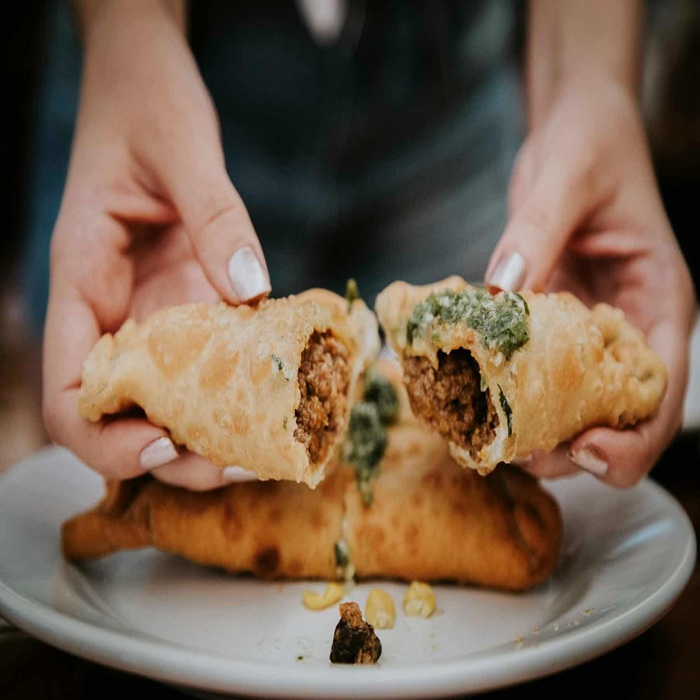
Season meat with Adobo. In skillet, heat oil on medium high. Cook meat until pink is gone. Stir in onion, pepper, garlic, alcaparras, tomato sauce and Sazón. Cook, stirring often until most of the liquid has evaporated (about 20 minutes). Cool. Prepared dough should be moist and should hold together, but it should not stick to your fingers. Start with about ½ cup of dough and roll into a ball between palms of your hands. Working on a sheet of non-stick parchment paper, form the ball into a 5-inch circle about ⅛ inch thick. Place a generous tbsp. of filling on one half of circle and using parchment paper close dough over to form a semi-circle. To seal and trim edges of the empanada, press lip of inverted bowl over semi-circle shaped patty. Repeat for all the Empanadas. In large skillet on medium high, heat ½ inch of oil until hot but not smoking. Cook empanadas in batches, turning once or twice until lightly browned. Drain on paper towel. Do not over crowd skillet or let oil get too hot.
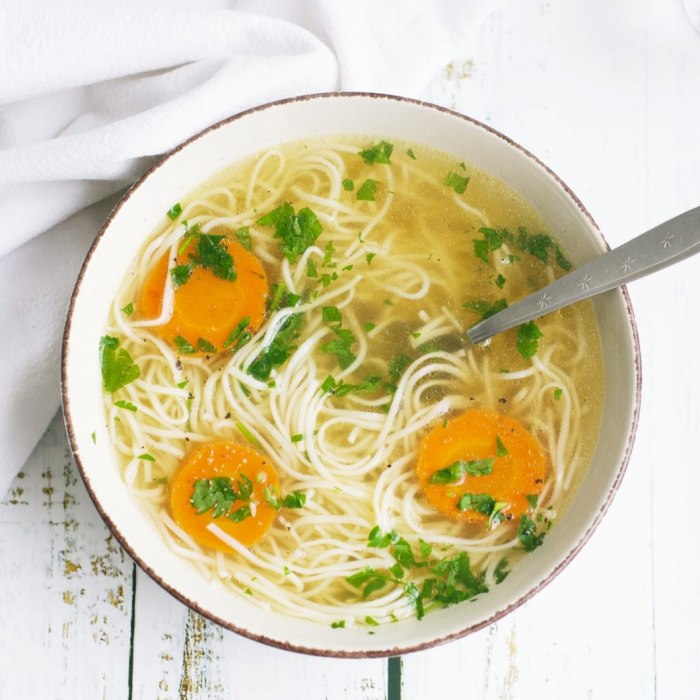
Add chicken to a large Dutch oven or stock pot Cover with water Bring to a boil and simmer for 2 to 2 1/2 hours, skimming any impurities off the top to insure a clear broth If your pot is big enough, add the vegetables and spices for the last hour of the cooking time My Dutch oven wasn’t big enough to hold everything, just the chicken and other bones filled the pot, so I cooked the meat/bones for the full cooking time, then removed them, and cooked the vegetables and spices separately Strain everything out of the broth Bone the chicken, pulling the meat into large chunks Slice the carrots Return the chicken and carrots to the broth Cook noodles according to package instructions if you’re using them Add noodles to bowl and then top with hot soup
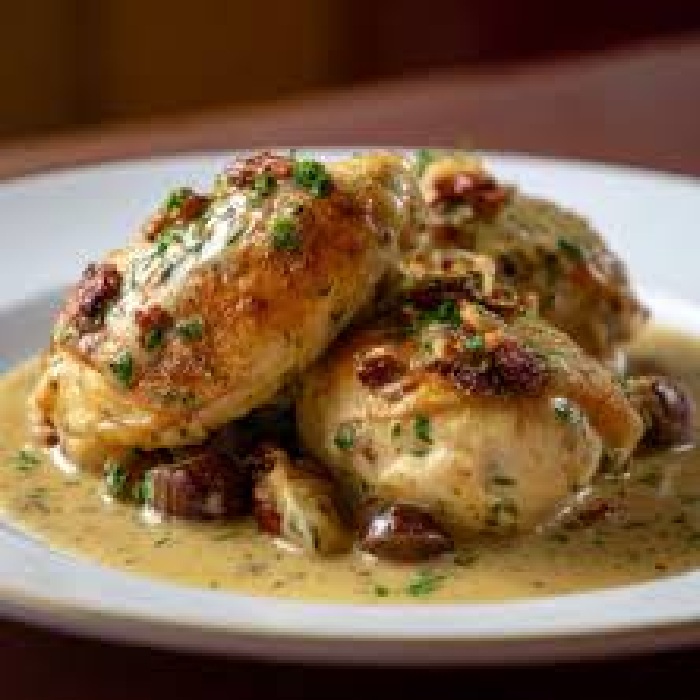
step 1 Heat oven to 200C/180C fan/gas 6. In a roasting tin, toss together the chicken, cumin, paprika, 1 tbsp olive oil and seasoning. Cook for 40 mins until the chicken is crisp and cooked through. step 2 Meanwhile, tear up 1 pitta bread and place in a small bowl. Pour over a couple of tbsp chicken stock and leave to soak. Dry-fry the walnuts in a frying pan for about 3 mins until golden and toasted. Set aside. Heat the remaining oil in the pan and cook the onion and garlic until softened. Place the softened pitta bread, onion mixture and most of the nuts into a blender. Pour over the rest of the chicken stock and whizz together until a rough paste forms. Return the mixture to the pan. Add the cream and lemon juice, season and keep warm. step 3 When the chicken is cooked, arrange on a platter. Stir the coriander through the sauce and spoon into a bowl. Roughly chop the remaining walnuts and scatter over the chicken. Toast the pittas, cut into wedges and serve alongside
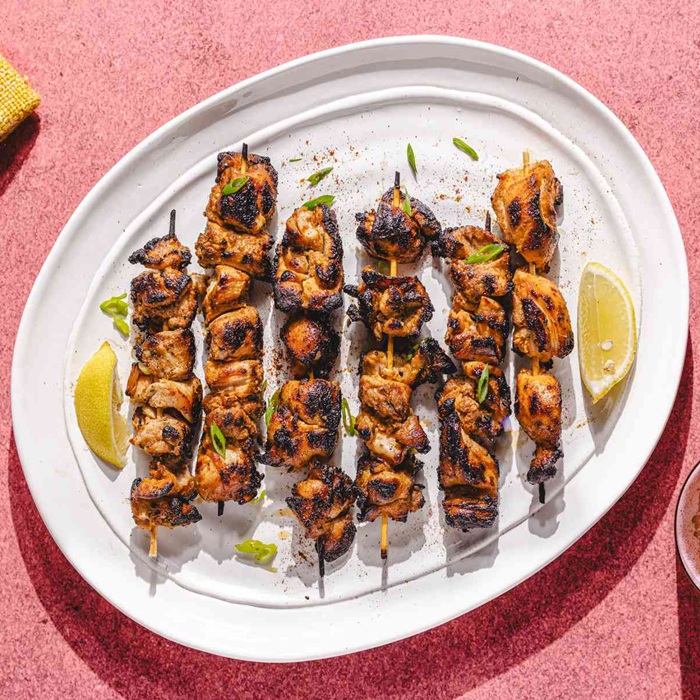
step 1 You need 15 skewers: if wooden, soak in water for 10 mins. Cut chicken into 3cm pieces and place in a bowl. Add 1 tbsp olive oil, the spices, garlic and vinegar, toss well and season. You can do this up to a day before and refrigerate. step 2 Thread 2-3 pieces on each skewer. Pour remaining oil in a frying pan or rub onto a griddle pan. Get the pan hot and sear the chicken for 3-4 mins on each side – you may have to do this in batches, keeping the cooked skewers warm in a low oven. Serve with smoky aïoli if you like.
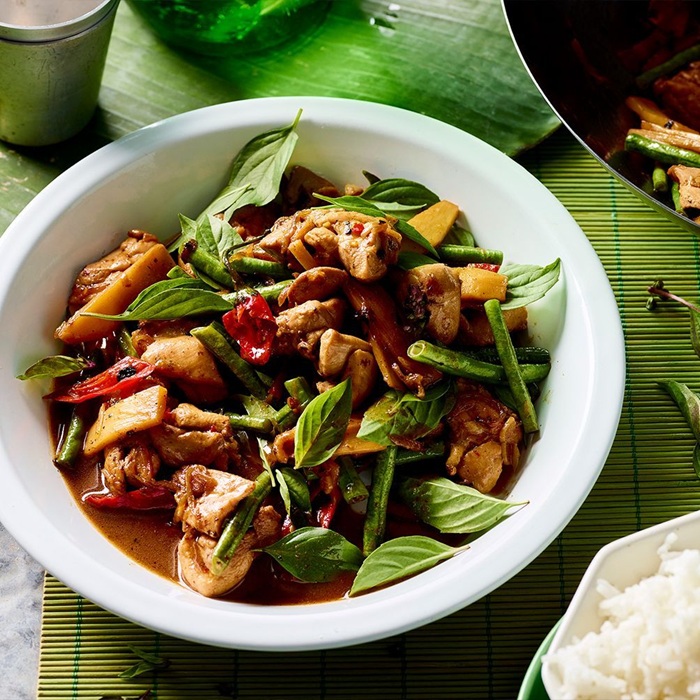
Heat a wok or large frying pan until it is very hot, then add 1 tbsp of the oil. When it is very hot, add the chicken and stir-fry over a high heat for 8-10 minutes, until browned all over. Using a slotted spoon, take the chicken from the pan and set aside. step 2 Reheat the wok and add the remaining oil. Toss in the garlic and shallots and stir fry for 3 minutes, until golden brown. step 3 Return the chicken to the wok and add the chillies, fish sauce, dark soy sauce and sugar. Stir fry over a high heat for a further 8-10 minutes or until the chicken is cooked through. Stir in the basil leaves and serve at once.
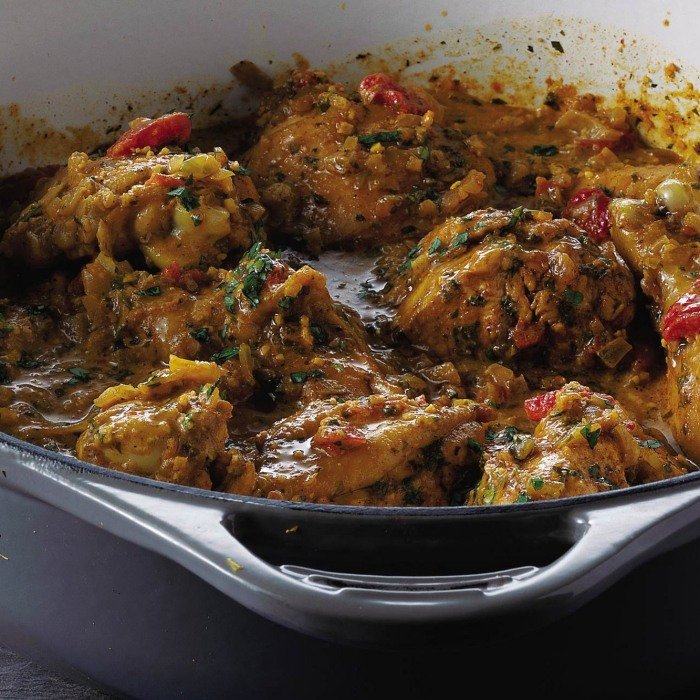
Finely slice a quarter of the chilli, then put the rest in a food processor with the ginger, garlic, coriander stalks and one-third of the leaves. Whizz to a rough paste with a splash of water if needed. Heat the oil in a frying pan, then quickly brown the chicken chunks for 1 min. Stir in the paste for another min, then add the peanut butter, stock and yogurt. When the sauce is gently bubbling, cook for 10 mins until the chicken is just cooked through and sauce thickened. Stir in most of the remaining coriander, then scatter the rest on top with the chilli, if using. Eat with rice or mashed sweet potato.
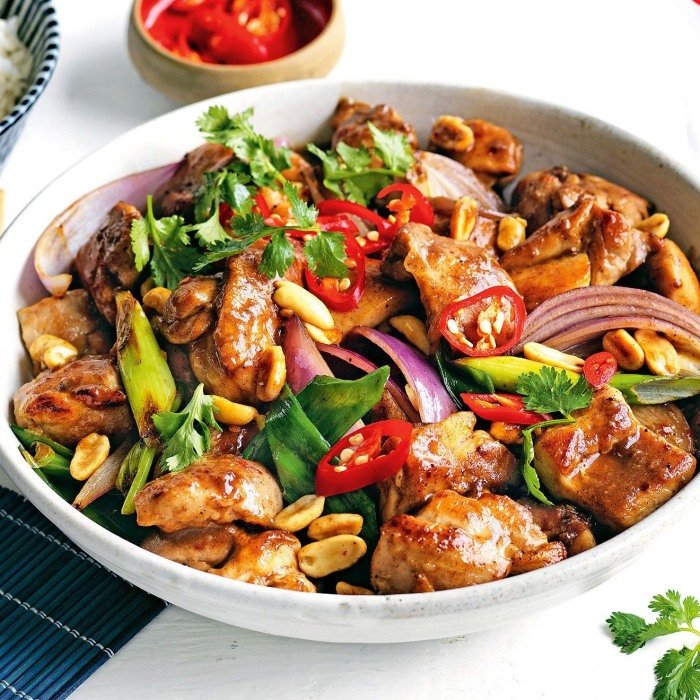
Combine the sake or rice wine, soy sauce, sesame oil and cornflour dissolved in water. Divide mixture in half. In a glass dish or bowl, combine half of the sake mixture with the chicken pieces and toss to coat. Cover dish and place in refrigerator for about 30 minutes. In a medium frying pan, combine remaining sake mixture, chillies, vinegar and sugar. Mix together and add spring onion, garlic, water chestnuts and peanuts. Heat sauce slowly over medium heat until aromatic. Meanwhile, remove chicken from marinade and sauté in a large frying pan until juices run clear. When sauce is aromatic, add sautéed chicken and let simmer together until sauce thickens.
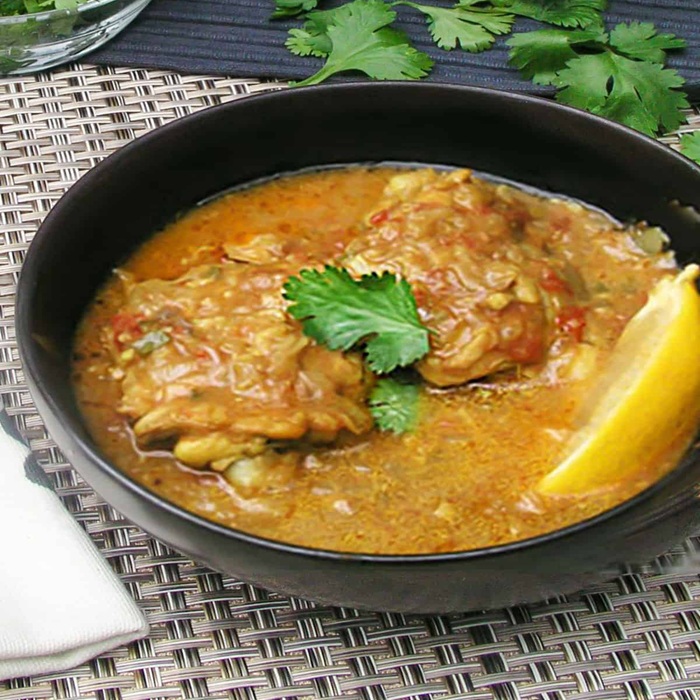
Cut the chicken up into bite size pieces. Peel and cut the onions, mince the garlic. Assemble the rest of the ingredients and you are ready to start cooking. Make the Dish Heat up a fry pan over medium heat. Add the oil and when hot, sauté the onion until translucent. Remove from pan and transfer to a blender or food processor. Add tomatoes, garlic, turmeric, cumin, sugar, ginger paste, coconut milk, water and blend smooth. In the same pan you cooked the onion, add the chicken and brown all sides. This should take about 3 minutes. Add the blender ingredients and bay leaves to the pan, bring to a simmer and cook until the chicken is white inside and the liquid is creamy. (15 to 20 minutes) Remove the bay leaves and serve with white rice.
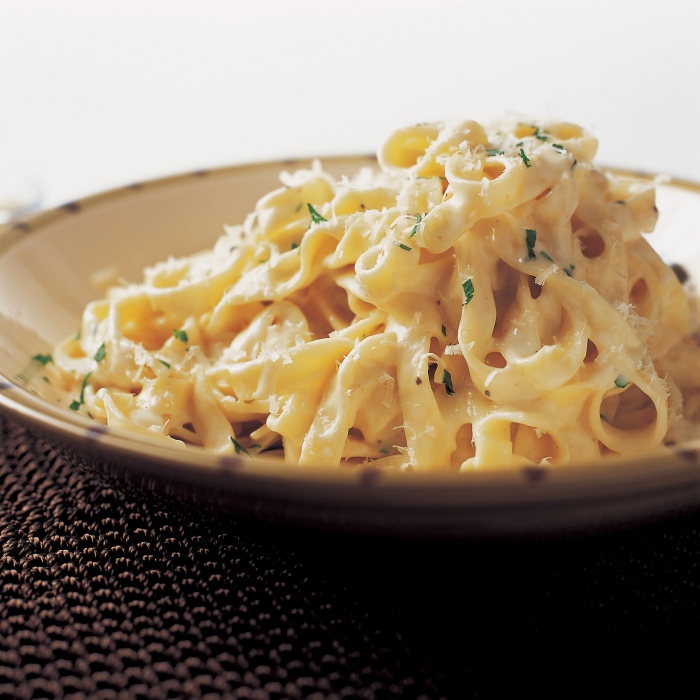
In a medium saucepan, stir the clotted cream, butter and cornflour over a low-ish heat and bring to a low simmer. Turn off the heat and keep warm. Meanwhile, put the cheese and nutmeg in a small bowl and add a good grinding of black pepper, then stir everything together (don’t add any salt at this stage). Put the pasta in another pan with 2 tsp salt, pour over some boiling water and cook following pack instructions (usually 3-4 mins). When cooked, scoop some of the cooking water into a heatproof jug or mug and drain the pasta, but not too thoroughly. Add the pasta to the pan with the clotted cream mixture, then sprinkle over the cheese and gently fold everything together over a low heat using a rubber spatula. When combined, splash in 3 tbsp of the cooking water. At first, the pasta will look wet and sloppy: keep stirring until the water is absorbed and the sauce is glossy. Check the seasoning before transferring to heated bowls. Sprinkle over some chives or parsley, then serve immediately.
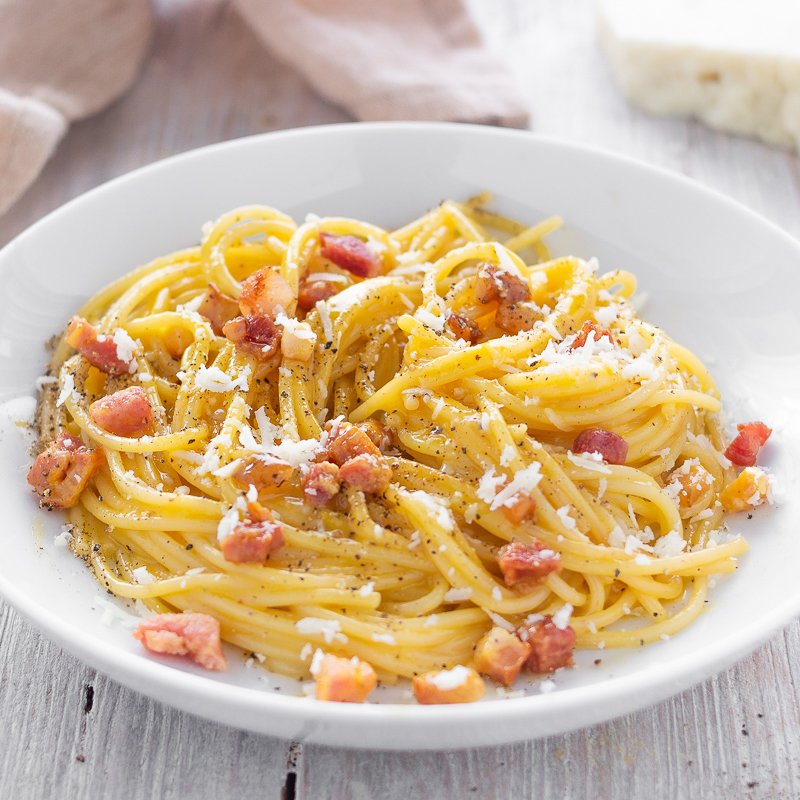
STEP 1 Put a large saucepan of water on to boil. STEP 2 Finely chop the 100g pancetta, having first removed any rind. Finely grate 50g pecorino cheese and 50g parmesan and mix them together. STEP 3 Beat the 3 large eggs in a medium bowl and season with a little freshly grated black pepper. Set everything aside. STEP 4 Add 1 tsp salt to the boiling water, add 350g spaghetti and when the water comes back to the boil, cook at a constant simmer, covered, for 10 minutes or until al dente (just cooked). STEP 5 Squash 2 peeled plump garlic cloves with the blade of a knife, just to bruise it. STEP 6 While the spaghetti is cooking, fry the pancetta with the garlic. Drop 50g unsalted butter into a large frying pan or wok and, as soon as the butter has melted, tip in the pancetta and garlic. STEP 7 Leave to cook on a medium heat for about 5 minutes, stirring often, until the pancetta is golden and crisp. The garlic has now imparted its flavour, so take it out with a slotted spoon and discard. STEP 8 Keep the heat under the pancetta on low. When the pasta is ready, lift it from the water with a pasta fork or tongs and put it in the frying pan with the pancetta. Don’t worry if a little water drops in the pan as well (you want this to happen) and don’t throw the pasta water away yet. STEP 9 Mix most of the cheese in with the eggs, keeping a small handful back for sprinkling over later. STEP 10 Take the pan of spaghetti and pancetta off the heat. Now quickly pour in the eggs and cheese. Using the tongs or a long fork, lift up the spaghetti so it mixes easily with the egg mixture, which thickens but doesn’t scramble, and everything is coated. STEP 11 Add extra pasta cooking water to keep it saucy (several tablespoons should do it). You don’t want it wet, just moist. Season with a little salt, if needed. STEP 12 Use a long-pronged fork to twist the pasta on to the serving plate or bowl. Serve immediately with a little sprinkling of the re
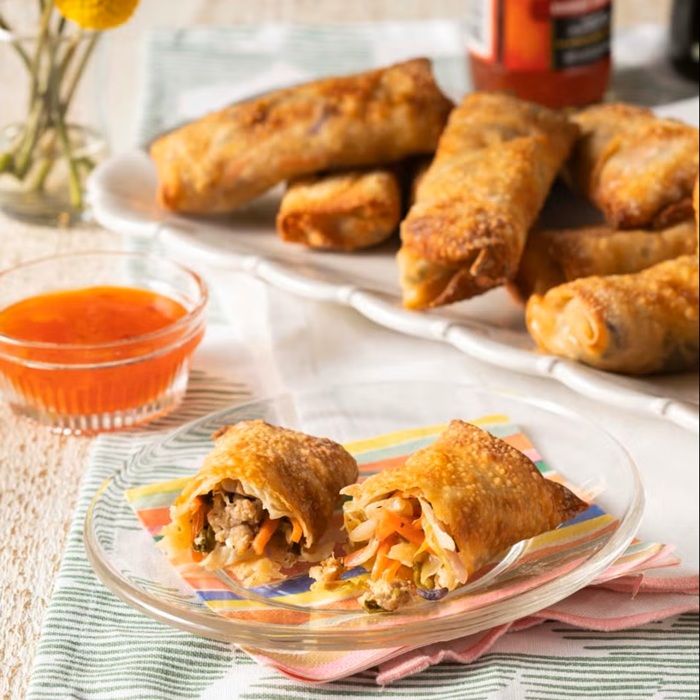
Alternative Pan Fry Method: If you don’t have access to an air fryer, you can make these egg rolls using a traditional pan fry method. Add enough oil to a medium skillet with high walls so the oil is about 1/2 inch up the side of the skillet. Heat oil on medium high heat until it reaches 350°F. Add egg rolls and fry for 3 to 4 minutes, flip, and fry for another 3 to 4 minutes until golden brown. Remove and let them drain and cool on a few paper towels. Cook the filling: In a large skillet over medium heat, add the olive oil along with the ground pork or chicken. Break apart the meat with a spatula or wooden spoon as it cooks. Cook until the meat is cooked through, 6 to 8 minutes. Add garlic, ginger, carrot, scallions, and cabbage. Continue to cook until cabbage wilts down and is soft, another 3 to 4 minutes, stirring regularly. Season the filling with soy sauce and rice wine vinegar, and take off the heat to cool. (This filling can be made in advance.) Assemble the egg rolls: Place a single egg roll wrapper on a dry surface with one point of the square facing you (like a diamond). Place about 1/4 cup of the egg roll filling mixture in the middle of the wrapper. Dip your fingers in water and run around the edges of the wrapper. Then fold the edges of the wrapper over the center and start rolling the egg roll away from you to form a tight cylinder. Place on a plate and repeat until you are out of filling. You should get at least a dozen egg rolls. Air fry the egg rolls: Place the egg rolls in the basket of your air fryer. Spray or brush them lightly with oil. Add as many as you can without stacking the egg rolls, making sure they don’t touch. Air needs to circulate around them. Brush the egg rolls lightly with oil. Place the basket in the air fryer and turn the air fryer to 350°F. Cook for 6 to 7 minutes, then flip the egg rolls, spray or brush with oil a second time on the bottom side, and cook for another 4 to 5 minutes. Finished egg rolls sh
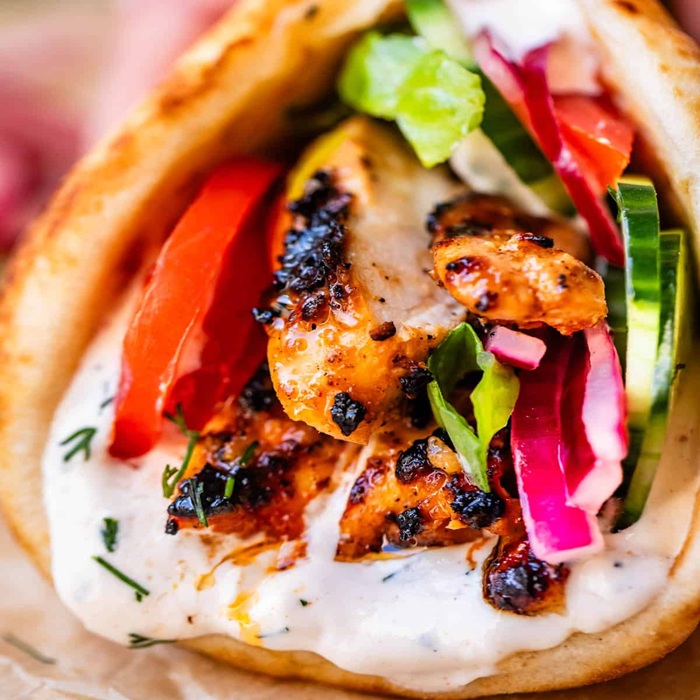
1 Start by cutting your chicken up into reasonably small slices. Grab your ziplock bag and dump the freshly sliced chicken inside. 2 Add garlic, coriander, cumin, cardomom, cayenne pepper, paprika, salt, pepper, lemon juice and olive oil to the bag. Close the bag and mix thoroughly. Place in fridge for 10-12 hours (shorter is fine but longer is better). 3 Once ready to cook, heat your fry pan to medium-high and add a tiny bit of olive oil. Fry one side of all of your flatbreads until slightly toasty. Remove from pan, add enough oil to coat the fry pan. Put crumble fries into air fryer on 180 for 15 minutes shaking occasionally. 4 The pan should be pretty hot by now, add the chicken in 2 batches (unless you have a big fry pan) to avoid overcrowding. The chicken should get a nice sear and darker colour which is perfect. Cook for a further 5-8 minutes or until cooked through. Repeat with next chicken batch. 5 While chicken is cooking, place your Greek yoghurt into a bowl. Combine garlic, finely chopped mint and parsley, squeeze or so of lemon and cumin. Combine and add salt to taste. In a small bowl, combine 1tsp garlic powder, paprika, cumin, onion powder, oregano, dried parsley, cayenne pepper (optional) mix and leave aside for fries. 6 Season fries immediately once cooked and add salt to taste. Once the chicken is complete, serve immediately by laying out your flatbread, spreading the sauce evenly over the bread, add lettuce, onion, tomato, fries, chicken, feta and more sauce on top. Serve immediately.
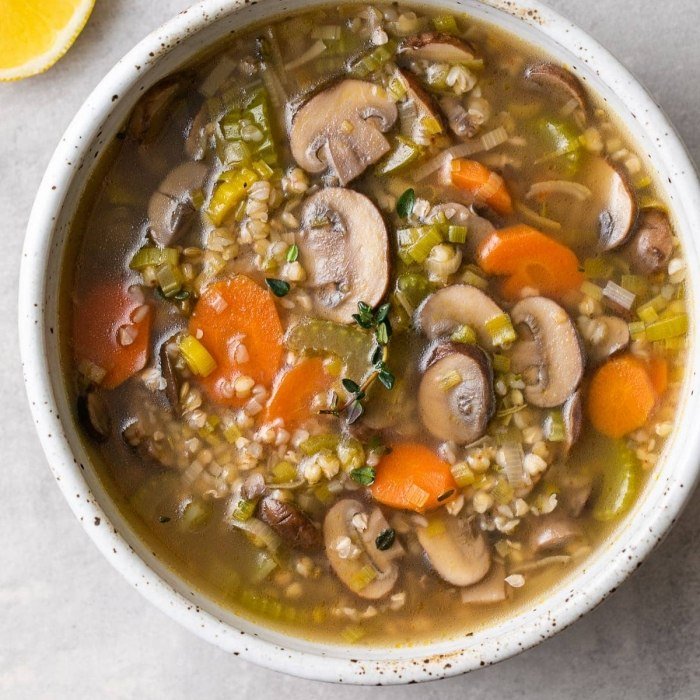
Chop the onion and garlic, slice the mushrooms and wash the buckwheat. Heat the oil and lightly sauté the onion. Add the mushrooms and the garlic and continue to sauté. Add the salt, vegetable seasoning, buckwheat and the bay leaf and cover with water. Simmer gently and just before it is completely cooked, add pepper, sour cream mixed with flour, the chopped parsley and vinegar to taste.
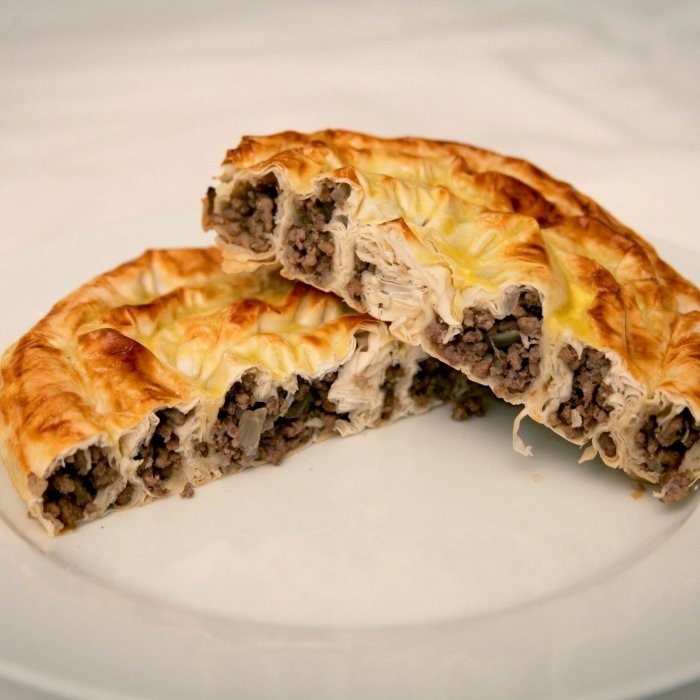
Fry the finely chopped onions and minced meat in oil. Add the salt and pepper. Grease a round baking tray and put a layer of pastry in it. Cover with a thin layer of filling and cover this with another layer of filo pastry which must be well coated in oil. Put another layer of filling and cover with pastry. When you have five or six layers, cover with filo pastry, bake at 200ºC/392ºF for half an hour and cut in quarters and serve.
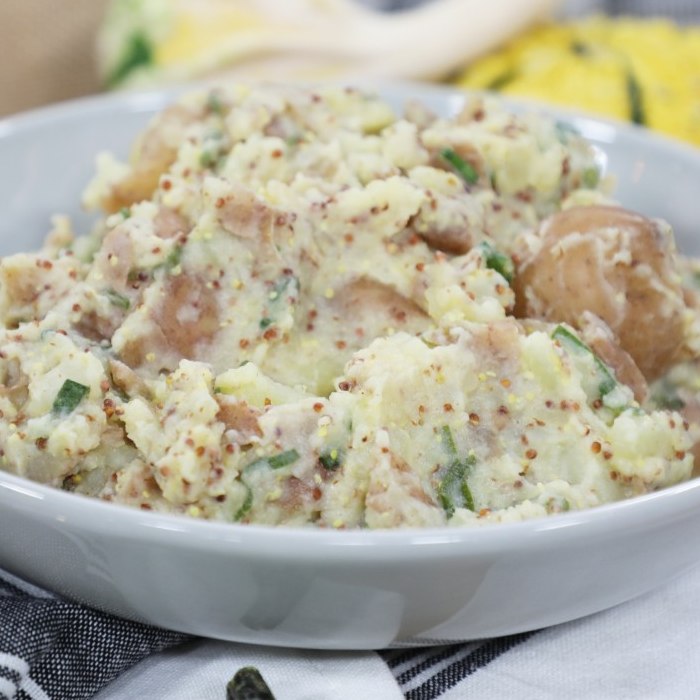
STEP 1 Boil the potatoes for 15 mins or until tender. Drain, then mash. STEP 2 Heat the milk and half the butter in the corner of the pan, then beat into the mash, along with the wholegrain mustard. STEP 3 Gently fry the spring onions in the remaining butter for 2 mins until just soft but still a perky green. Fold into the mash and serve. Great with gammon or to top a fish pie.
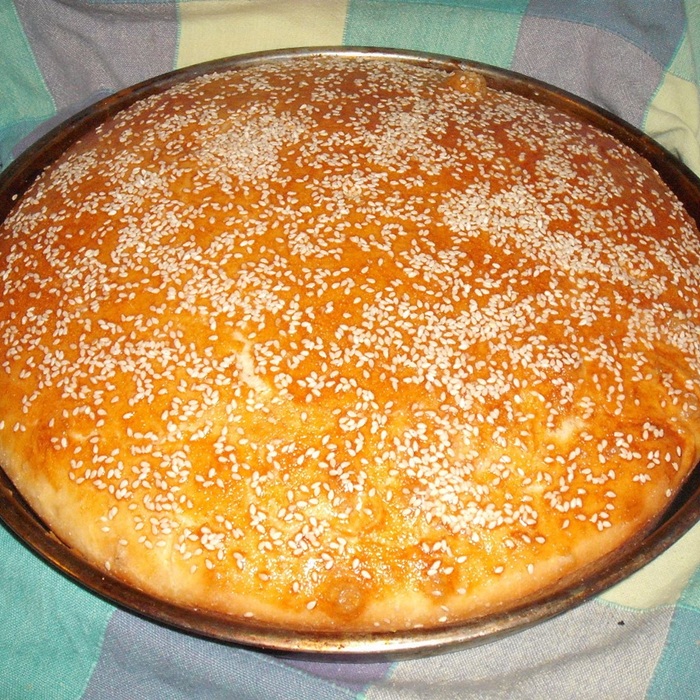
Mix 1/2 cup plus 2 tablespoons semolina, 2 tablespoons sesame seeds, sugar, yeast, and salt together in a large bowl. Whisk in oil, egg, and egg white. Stir in warm milk slowly until a liquid dough forms. Cover the bowl with a plate or plastic wrap; let stand at room temperature until frothy, about 1 hour. Stir in 2 3/4 cups flour with a wooden spoon until a sticky dough forms. Cover again and allow to rest for 30 minutes. Line a baking sheet with parchment paper or a baking mat. Sprinkle 1 tablespoon flour over the dough and your hands. Mix dough, adding flour as needed, 1 tablespoon at a time, until it pulls away from the sides of the bowl. Shape into a round loaf and place on the prepared baking sheet. Cover loosely with a towel and let rise for 1 hour in a warm place until loaf doubles in volume. Preheat oven to 400 degrees F (200 degrees C). Beat egg yolk and water in a bowl with a fork; brush over the entire surface of the loaf. Sprinkle 1 tablespoon sesame seeds on top. Bake in the preheated oven until loaf is golden brown, about 20 to 25 minutes.
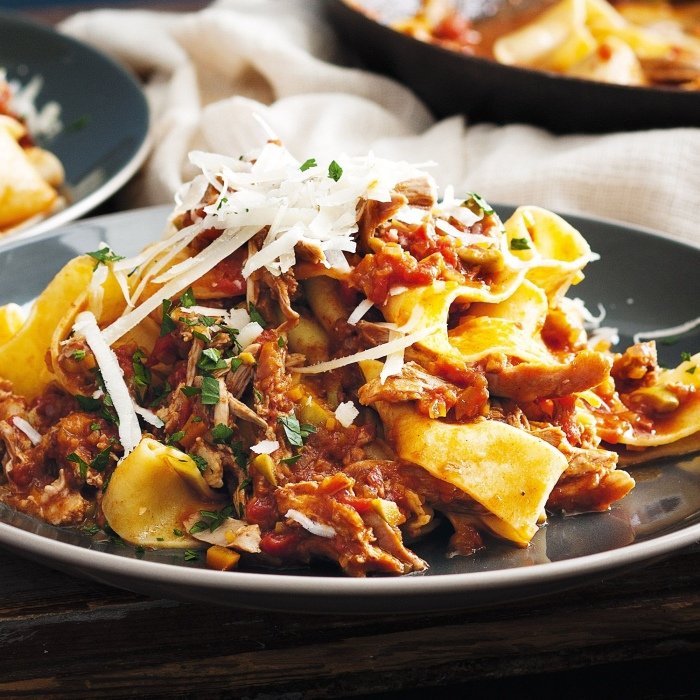
Heat the oil in a large pan. Add the duck legs and brown on all sides for about 10 mins. Remove to a plate and set aside. Add the onions to the pan and cook for 5 mins until softened. Add the garlic and cook for a further 1 min, then stir in the cinnamon and flour and cook for a further min. Return the duck to the pan, add the wine, tomatoes, stock, herbs, sugar and seasoning. Bring to a simmer, then lower the heat, cover with a lid and cook for 2 hrs, stirring every now and then. Carefully lift the duck legs out of the sauce and place on a plate – they will be very tender so try not to lose any of the meat. Pull off and discard the fat, then shred the meat with 2 forks and discard the bones. Add the meat back to the sauce with the milk and simmer, uncovered, for a further 10-15 mins while you cook the pasta. Cook the pasta following pack instructions, then drain, reserving a cup of the pasta water, and add the pasta to the ragu. Stir to coat all the pasta in the sauce and cook for 1 min more, adding a splash of cooking liquid if it looks dry. Serve with grated Parmesan, if you like.
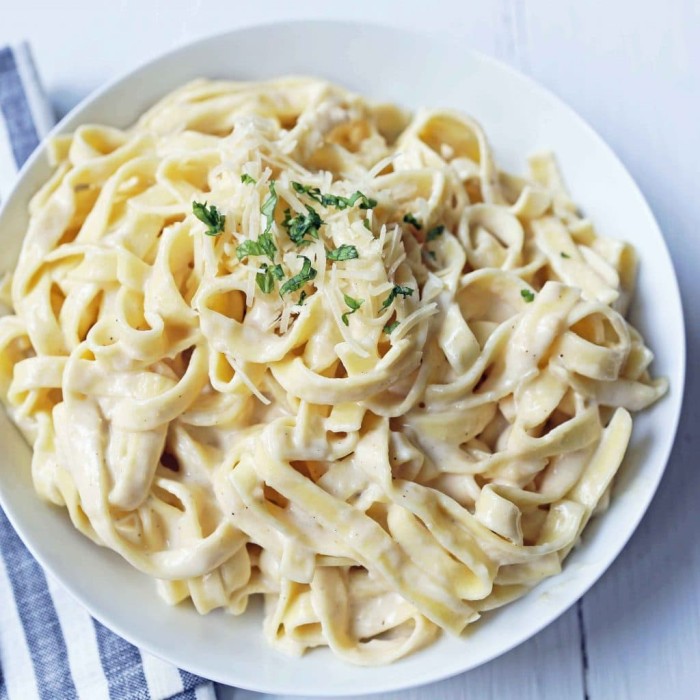
Cook pasta according to package instructions in a large pot of boiling water and salt. Add heavy cream and butter to a large skillet over medium heat until the cream bubbles and the butter melts. Whisk in parmesan and add seasoning (salt and black pepper). Let the sauce thicken slightly and then add the pasta and toss until coated in sauce. Garnish with parsley, and it's ready.
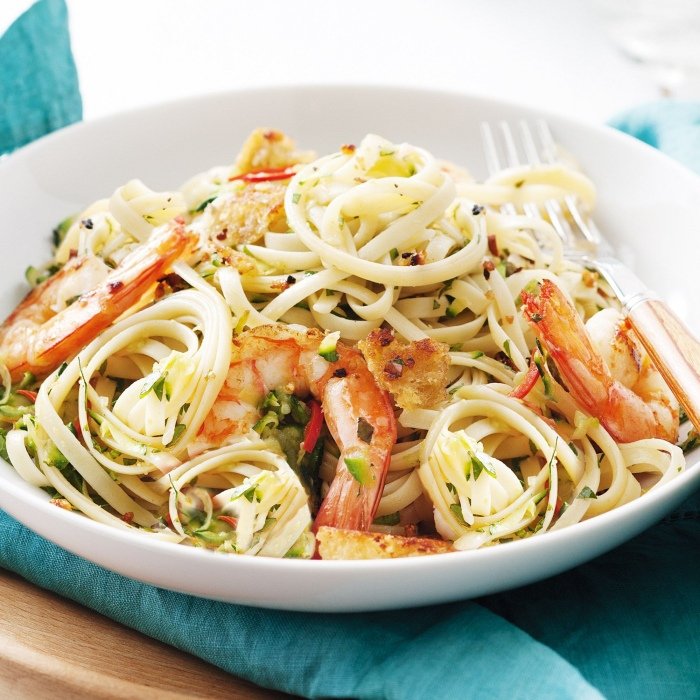
Mix the dressing ingredients in a small bowl and season with salt and pepper. Set aside. Cook the pasta according to the packet instructions. Add the sugar snap peas for the last minute or so of cooking time. Meanwhile, heat the oil in a wok or large frying pan, toss in the garlic and chilli and cook over a fairly gentle heat for about 30 seconds without letting the garlic brown. Tip in the prawns and cook over a high heat, stirring frequently, for about 3 minutes until they turn pink. Add the tomatoes and cook, stirring occasionally, for 3 minutes until they just start to soften. Drain the pasta and sugar snaps well, then toss into the prawn mixture. Tear in the basil leaves, stir, and season with salt and pepper. Serve with salad leaves drizzled with the lime dressing, and warm crusty bread.
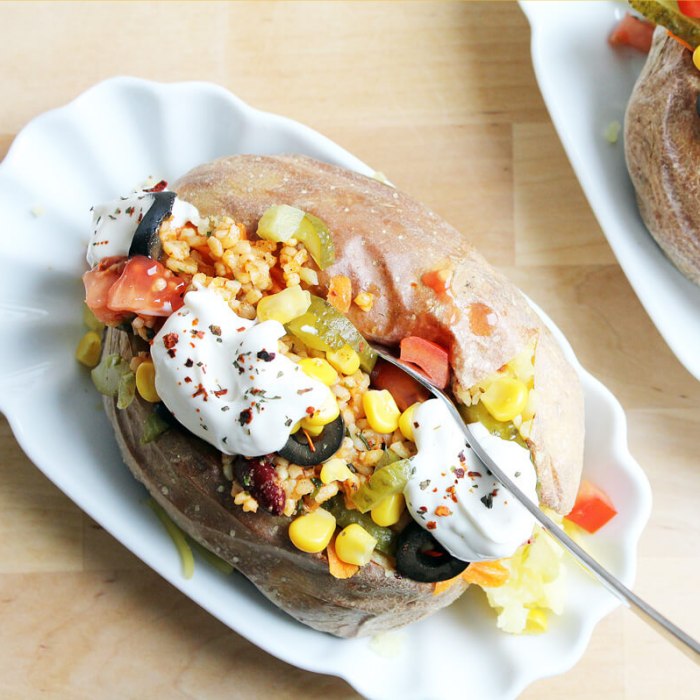
If you order kumpir in Turkey, the standard filling is first, lots of butter mashed into the potato, followed by cheese. There’s then a row of other toppings that you can just point at to your heart’s content – sweetcorn, olives, salami, coleslaw, Russian salad, allsorts – and you walk away with an over-stuffed potato because you got ever-excited by the choices on offer. Grate (roughly – you can use as much as you like) 150g of cheese. Finely chop one onion and one sweet red pepper. Put these ingredients into a large bowl with a good sprinkling of salt and pepper, chilli flakes (optional).