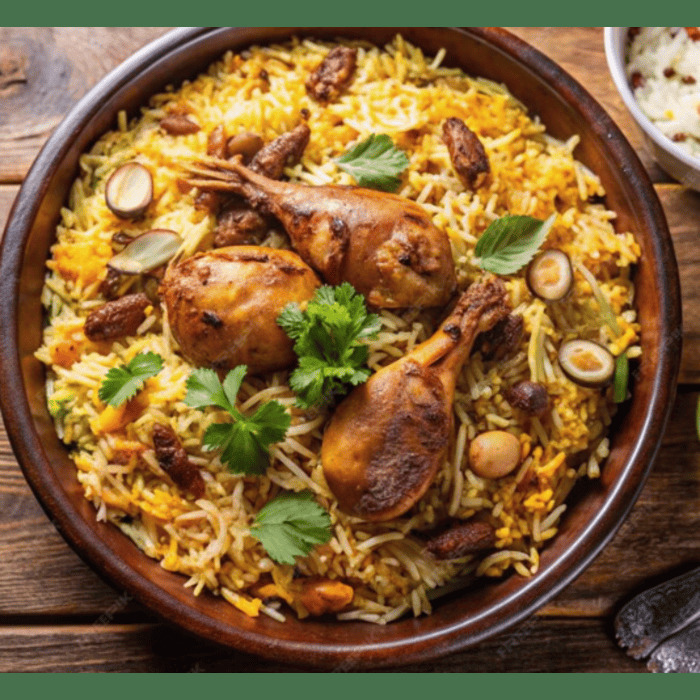
1. Clean and cut the chicken; marinate briefly with salt, turmeric and a little oil. 2. Rinse and soak basmati rice 20–30 minutes. 3. In a large pot, heat ghee/oil. Fry chopped onion until golden. Add minced garlic and green chillies and fry 1–2 min. 4. Add whole spices (cardamom, cloves, cinnamon, bay leaves) and ground spices (coriander, cumin). Stir until fragrant. 5. Add chicken pieces, brown lightly and add enough water/chicken stock to cover. Simmer until chicken is nearly cooked. 6. Remove chicken; measure remaining liquid and add soaked rice. Bring to a boil, then reduce heat, cover and cook rice until almost done. 7. Return the chicken to the rice pot on top, cover tightly and steam on low for 10–15 min so flavors meld. 8. (Optional) For authentic smoky aroma: heat a small charcoal until red hot, place it on a small foil cup in the centre of the pot, add a tsp of butter/oil on the coal then cover immediately to trap smoke for 5–10 minutes. Remove coal. 9. Garnish with fried onions, chopped coriander and serve with chutney or raita.
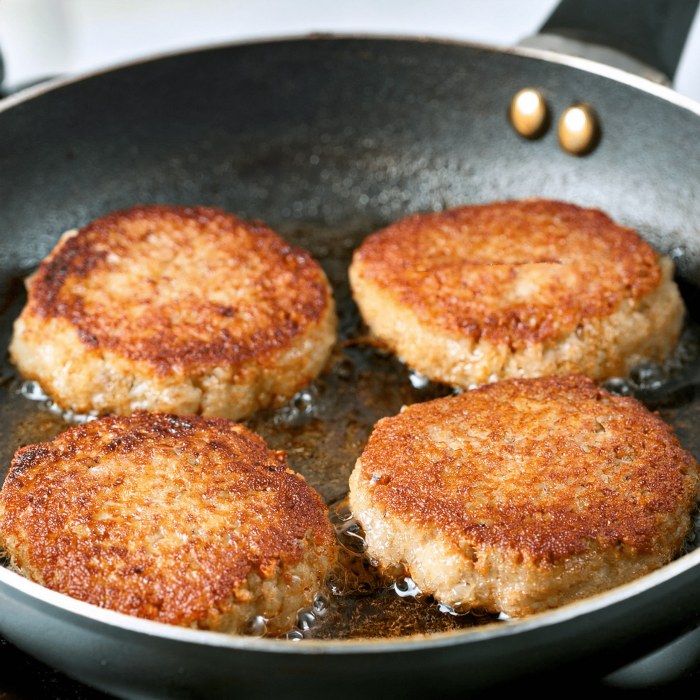
Grate half an onion and set aside. Slice the rest of the onions and fry in butter on low/medium heat until caramelized. ▢ In a bowl, mix together ground beef, grated onion, salt, pepper, nutmeg, potato/corn starch, and water. ▢ Form into a sausage and cut 6 patties. Using a knife make a light grid pattern in each patty. ▢ Brown both sides of the karbonader in butter on high heat, then turn down to low heat and fry for another 2 – 3 minutes. ▢ Serve the karbonader and onions with potatoes, stewed peas, and brown sauce for dinner, or on a slice of bread for lunch or a snack.
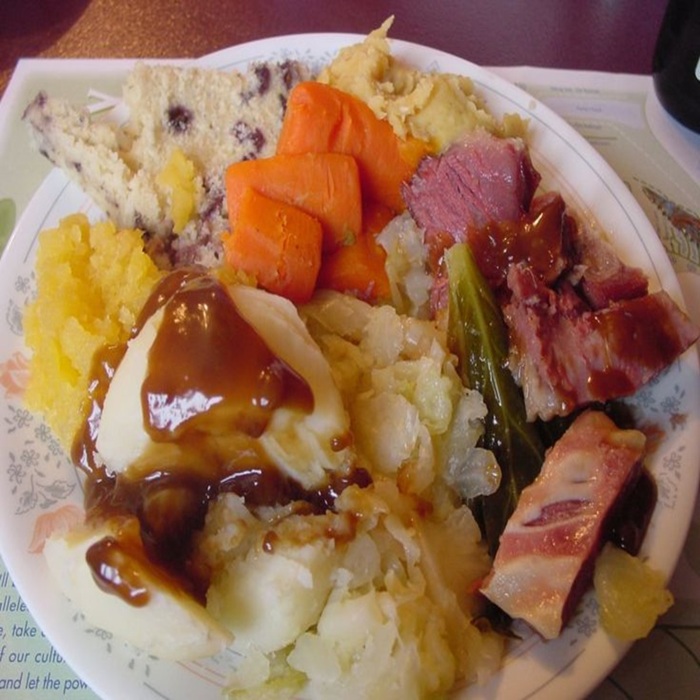
The night before, break salt beef into big chunks and soak in water overnight, at least 8-10 hours. Put split peas into a bowl and cover with water to soak overnight. Drain the salt beef and place it into a large stockpot. Cover with fresh water, at least 6-7 litres. Place the split peas into a pease pudding canvas bag or triple layer of cheesecloth and tie, making sure to leave room for peas to expand inside the bag. Put the bag inside the pot, tying the strings to the outside handle so it doesn't stick to the bottom of the pot with the salt beef. Bring to a boil, then lower the heat and simmer for 2 hours. Remove the peas pudding bag and empty contents into a bowl, mixing with butter and pepper for taste. Set aside. Add your cabbage to the pot and boil for 20 more minutes. Then add turnip, carrots and potatoes then boil for 20 more, or until vegetables are tender. Remove salt beef and vegetables from the pot and put them on a platter. Use the cooking liquid in two ways; as a pot liquor which some people like to drink or reduce it to make a jus or gravy to pour over the meal.
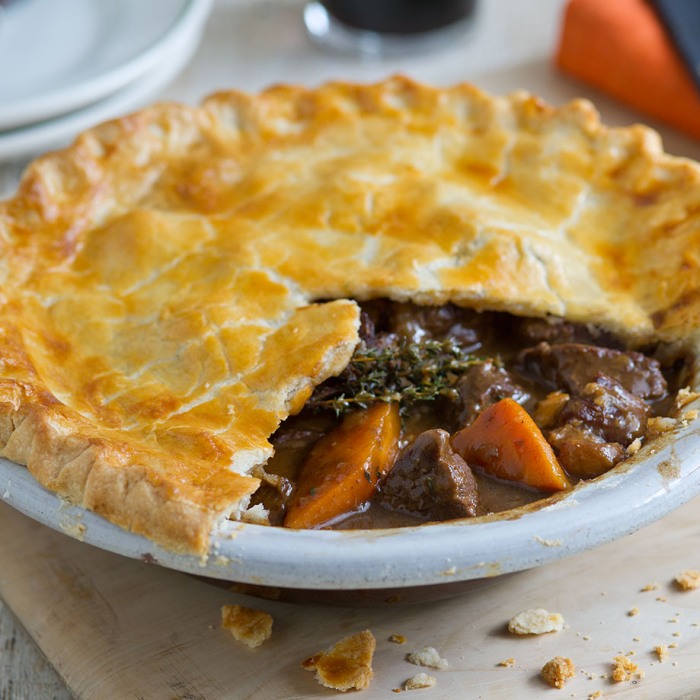
Preheat the oven to 150C/300F/Gas 2. Toss the beef and flour together in a bowl with some salt and black pepper. Heat a large casserole until hot, add half of the rapeseed oil and enough of the beef to just cover the bottom of the casserole. Fry until browned on each side, then remove and set aside. Repeat with the remaining oil and beef. Return the beef to the pan, add the wine and cook until the volume of liquid has reduced by half, then add the stock, onion, carrots, thyme and mustard, and season well with salt and pepper. Cover with a lid and place in the oven for two hours. Remove from the oven, check the seasoning and set aside to cool. Remove the thyme. When the beef is cool and you're ready to assemble the pie, preheat the oven to 200C/400F/Gas 6. Transfer the beef to a pie dish, brush the rim with the beaten egg yolks and lay the pastry over the top. Brush the top of the pastry with more beaten egg. Trim the pastry so there is just enough excess to crimp the edges, then place in the oven and bake for 30 minutes, or until the pastry is golden-brown and cooked through. For the green beans, bring a saucepan of salted water to the boil, add the beans and cook for 4-5 minutes, or until just tender. Drain and toss with the butter, then season with black pepper. To serve, place a large spoonful of pie onto each plate with some green beans alongside.

Heat a heavy bottom pot of oil that has at least 3 inches of oil in it or use a deep fryer if you have one. Turn the heat over medium heat until the temperature reaches 350 degrees Fahrenheit. Add the all-purpose flour, cornmeal, granulated sugar, baking powder, and salt to a large bowl and stir to combine. Add the vanilla extract and milk and stir until the dough comes together. Then use your hands to lightly form the mixture into a ball. Pinch off pieces of dough and roll them into long oval shapes. Make about 12 dumplings. Once the oil has reached the temperature of 350 degrees Fahrenheit, fry the dough on all sides, until golden brown. This should take about 4-6 minutes. Remove dough and drain off any excess grease. Serve and enjoy.

In a large bowl, whisk together 1/2 cup buckwheat flour, 2/3 cup all-purpose flour, 1/2 teaspoon salt, and 1 teaspoon yeast. Make a well in the center and pour in 1 cup warm milk, whisking until the batter is smooth. Cover the bowl and let the batter rise until doubled, about 1 hour. Enrich and Rest the Batter Stir 2 tablespoons melted butter and 1 egg yolk into the batter. In a separate bowl, whisk 1 egg white until stiff, but not dry. Fold the whisked egg white into the batter. Cover the bowl and let the batter stand 20 minutes. Pan-Fry the Blini Heat butter in a large nonstick skillet over medium heat. Drop quarter-sized dollops of batter into the pan, being careful not to overcrowd the pan. Cook for about 1 minute or until bubbles form. Turn and cook for about 30 additional seconds. Remove the finished blini onto a plate and cover them with a clean kitchen towel to keep warm. Add more butter to the pan and repeat the frying process with the remaining batter.

Preheat an oven to 450 degrees F (230 degrees C). Place the whole peppers on aluminum foil. Bake until the skin is spotted black and the peppers are soft, 30 to 45 minutes, turning the peppers once if necessary. Remove peppers from the oven and set aside to cool for 10 minutes. Peel off the skin and remove the stem and seeds. Chop the roasted peppers into half-inch pieces. Heat the olive oil in a skillet over medium heat. Stir in the onion and cook, stirring frequently, until the onion has softened and turned translucent, about 5 minutes. Add the garlic, salt, and pepper; stir in the chopped peppers and tomato. Cook over medium heat, stirring occasionally, until the tomato is soft and the mixture is well incorporated, about 5 minutes.

step 1 To make the filling, heat the olive oil in a pan until it starts to shimmer. Add the leek and sauté until soft but not coloured. Stir in the ham with a wooden spoon, fry for 1 min, then stir in the flour and fry over a medium heat, stirring occasionally, until the mixture is golden but not burnt – this will take about 5 mins. step 2 Meanwhile, combine the stock and milk in a small pan and heat until steaming but not boiling. Season with a few scrapes of nutmeg. Gradually add the liquid, a few tbsp at a time, stirring constantly. step 3 Once you’ve incorporated all the milk stock, continue to cook the filling over a medium heat for about 10 mins or until it thickens and leaves the sides of the pan when you stir it. step 4 Season with black pepper, taste and adjust the salt if necessary – the ham can be very salty to start with. The filling is now done: it has to be really thick because you don’t want the croquetas to turn into pancakes. step 5 Smooth the mixture onto a baking tray (30 x 20cm is fine). Once it has stopped steaming, cover with cling film to stop it drying out. Leave to cool before putting it in the fridge for 1 hr. step 6 When you're ready for the next stage, line up three bowls: the first filled with the flour, the second with beaten egg and the third with breadcrumbs. Take the ham mixture out of the fridge. Put a little bit of olive oil on your hands to make it easier to roll the croquetas. step 7 Roll a spoonful of the mixture between your palms. The size and shape of the croquetas is up to you, but the easiest is a walnut-sized ball. Then begin coating as follows. step 8 Dunk the croquetas into the flour – you want a dusting – followed by the egg, then the breadcrumbs. Put them on a tray and, when you’ve used up all the mixture, place in the fridge for 30 mins. step 9 If you have a deep-fat fryer, heat the oil to 180C and fry for a couple of mins. If not, heat the oil in a deep, heavy-bottomed saucepan until

Combine garlic, chile pepper, cumin, paprika, black pepper, cayenne, and salt in a mortar; grind with a pestle until it forms a paste. Add olive oil and mix dersa well. Heat a large saucepan over medium heat and stir-fry dersa until fragrant, 2 to 4 minutes. Add potato halves and stir to combine with the dersa. Stir in tomato paste. Pour in enough water to just cover the potatoes and bring to a boil. Reduce heat and simmer until potatoes are tender, about 40 minutes. Ladle potatoes into a serving bowl. Spoon any remaining sauce over the potatoes.
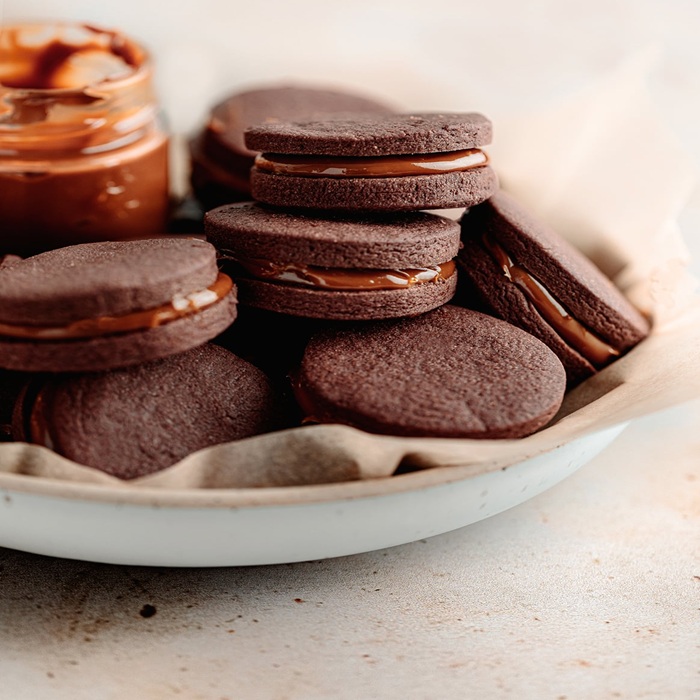
For the cookies cream the butter with the sugar for a few minutes. Then add the egg and honey and mix well. Add flour, cornstarch, cocoa, baking soda and baking powder and mix until you get a dough. Wrap in plastic wrap and chill for at least half an hour or overnight. 2 Line two baking sheets with parchment paper, preheat oven to 200 degrees Celsius. 3 Divide dough into two parts, put one part back in the fridge before using. Roll out second part to about 2 millimeters and cut out round cookies with 5-6 centimeters in diameter. This can be done with a cookie cutter or glass. You should get 30 cookies in total or even more, I get about 40. Bake one baking sheet at the time for about 8-10min. Let cookies cool. 4 For the filling look for two cookies of the same size and place about one teaspoon of dulce de leche onto the bottom one before sandwiching together. 5 Chop semi-sweet chocolate and melt with butter and orange zest on low heat. Dunk each sandwich cookie into the chocolate and let cool off on parchment paper before serving.

Heat the oil in a frying pan that has a lid, then soften the onions, chilli, garlic and coriander stalks for 5 mins until soft. Stir in the tomatoes and sugar, then bubble for 8-10 mins until thick. Can be frozen for 1 month. Using the back of a large spoon, make 4 dips in the sauce, then crack an egg into each one. Put a lid on the pan, then cook over a low heat for 6-8 mins, until the eggs are done to your liking. Scatter with the coriander leaves and serve with crusty bread.
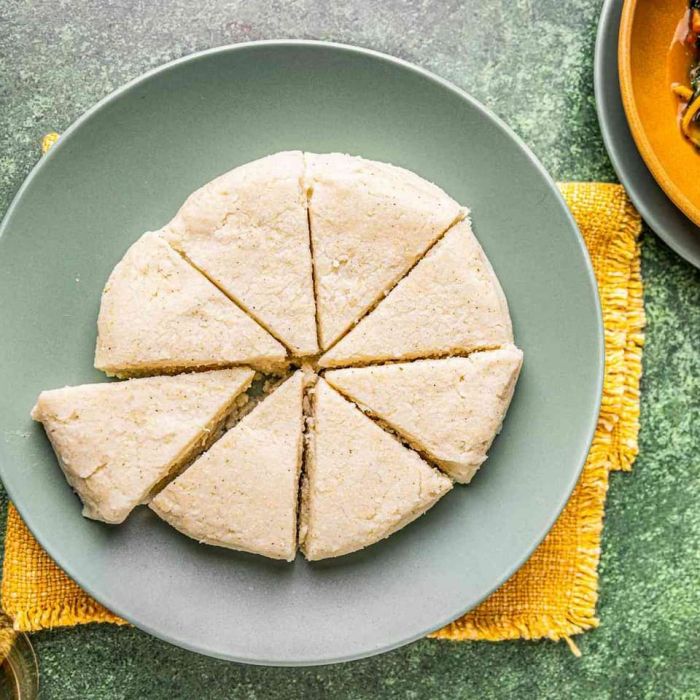
Bring the water to a boil in a medium saucepan. Reduce the heat to low, and stirring constantly with a whisk, slowly add the cornmeal to the boiling water. The ugali will begin to thicken quite quickly. Continue cooking on low heat, stirring constantly with a sturdy wooden spoon, until the ugali begins to pull away from the sides of the pan, hold together, and takes on the aroma of roasted corn. Turn it out immediately onto a serving plate. If you would like, using a spoon or spatula, quickly shape it into a thick disk or round. The ugali will continue to firm as it cools and will be thick enough to cut with a knife (similar to firm polenta).
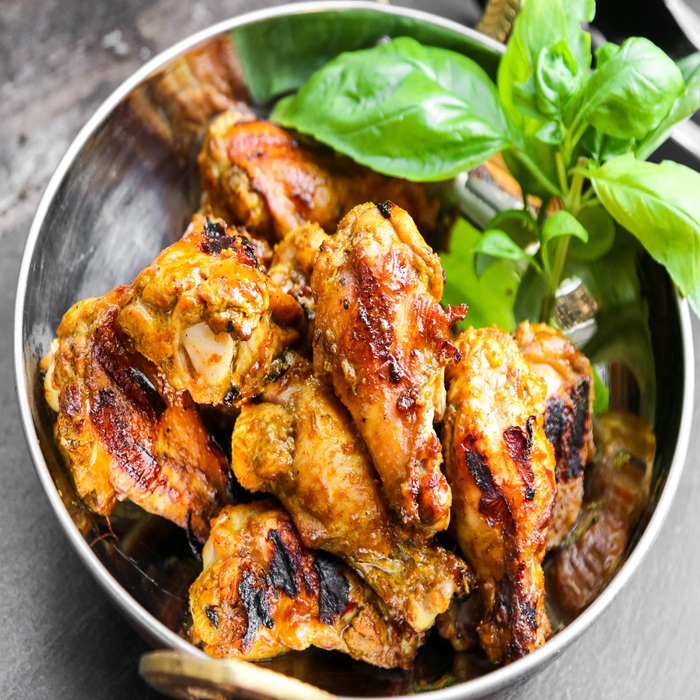
step 1 Heat oven to 200C/180C fan/gas 6 and line a baking tray with foil. Mix the chilli sauce with the orange zest and juice, garlic, curry paste and ¼ tsp salt. Add the chicken and coat really well. step 2 Arrange the drumsticks on the foil, spaced apart. Coat the chicken with any marinade left in the bowl, then roast for 35-40 mins until tender. Wrap in foil or pack into a food container.
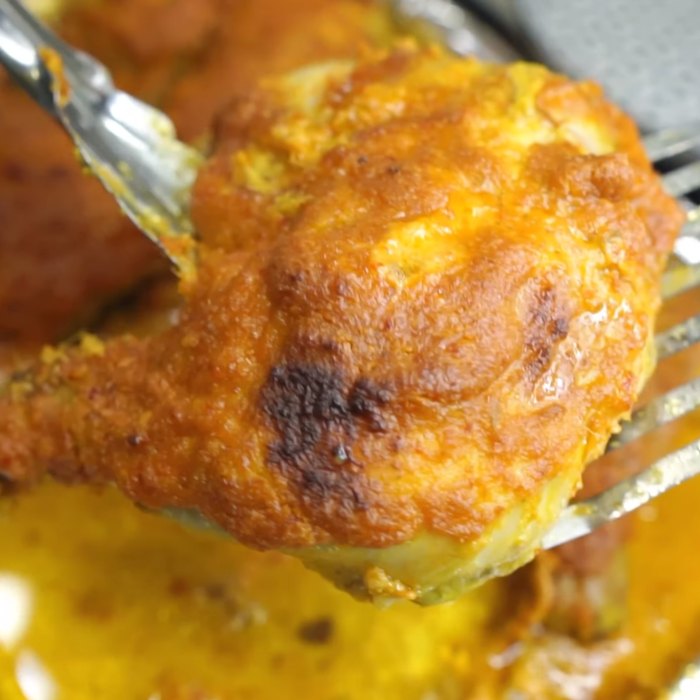
In a blender, add the ingredients for the spice paste and blend until smooth. Over medium heat, pour the spice paste in a skillet or pan and fry for 10 minutes until fragrant. Add water or oil 1 tablespoon at a time if the paste becomes too dry. Don't burn the paste. Lower the fire slightly if needed. Add the cloves, cardamom, tamarind pulp, coconut milk, water, sugar and salt. Turn the heat up and bring the mixture to boil. Turn the heat to medium low and simmer for 10 minutes. Stir occasionally. It will reduce slightly. This is the marinade/sauce, so taste and adjust seasoning if necessary. Don't worry if it's slightly bitter. It will go away when roasting. When the marinade/sauce has cooled, pour everything over the chicken and marinate overnight to two days. Preheat the oven to 425 F. Remove the chicken from the marinade. Spoon the marinade onto a greased (or aluminum lined) baking sheet. Lay the chicken on top of the sauce (make sure the chicken covers the sauce and the sauce isn't exposed or it'll burn) and spread the remaining marinade on the chicken. Roast for 35-45 minutes or until internal temp of the thickest part of chicken is at least 175 F. Let chicken rest for 5 minutes. Brush the chicken with some of the oil. Serve chicken with the sauce over steamed rice (or coconut rice).
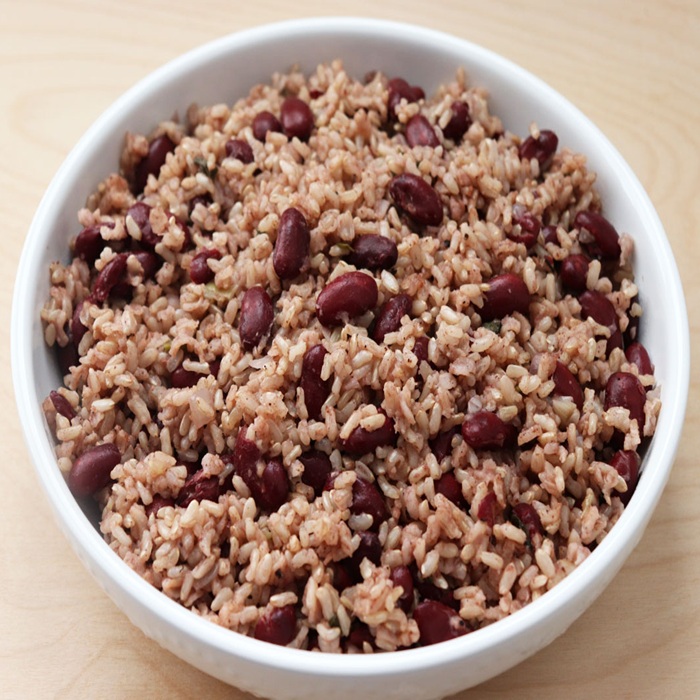
Instructions Set Instant Pot to "Sauté." Once Hot, add olive oil. Then add yellow onion and stir until softened, about 3 minutes. Add garlic and green onions and stir for about 30 more seconds. Press “Cancel” on the Instant Pot. Add rice, coconut milk, water, salt, allspice, and black pepper and stir. Pour undrained kidney beans on top of the rice mixture. Do not stir. Lay sprigs of thyme on top. Cover the Instant Pot, ensuring the valve is set to “Sealing.” Press “Manual” or “Pressure Cook” on the Instant Pot and set for High pressure for 6 minutes. Once the pressure cooking time is done, allow it to natural release for 10 minutes, then quick release any remaining pressure by moving valve to "Venting" Open lid and remove thyme sprigs. Fluff rice with fork and Enjoy! Stove Top Instructions Heat olive oil in a large pot over medium heat. Add yellow onion and stir until softened, about 3 minutes. Add garlic and green onions and stir for about 30 more seconds. Add rice, undrained kidney beans, coconut milk, water, salt, allspice, and black pepper and stir until combined. Lay thyme on top. Bring mixture to a simmer. Cover with a lid and reduce heat to low. Allow to cook for 18 minutes over low heat, then remove from heat. Leave the lid on for an additional 5 minutes. Open the lid and remove the thyme. Fluff rice with fork. Enjoy.
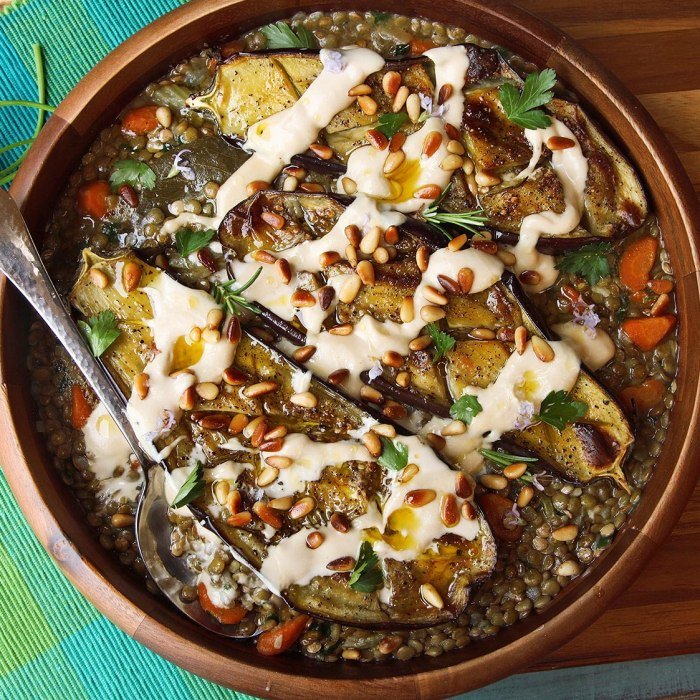
For the Lentils: Adjust oven rack to center position and preheat oven to 450°F to prepare for roasting eggplant. Meanwhile, heat 2 tablespoons olive oil in a medium saucepan over medium heat until shimmering. Add carrots, celery, and onion and cook, stirring, until softened but not browned, about 4 minutes. Add garlic and cook, stirring, until fragrant, about 30 seconds. Add lentils, bay leaves, stock or water, and a pinch of salt. Bring to a simmer, cover with the lid partially ajar, and cook until lentils are tender, about 30 minutes. (Top up with water if lentils are at any point not fully submerged.) Remove lid, stir in vinegar, and reduce until lentils are moist but not soupy. Season to taste with salt and pepper, cover, and keep warm until ready to serve. 2. For the Eggplant: While lentils cook, cut each eggplant in half. Score flesh with the tip of a paring knife in a cross-hatch pattern at 1-inch intervals. Transfer to a foil-lined rimmed baking sheet, cut side up, and brush each eggplant half with 1 tablespoon oil, letting each brushstroke be fully absorbed before brushing with more. Season with salt and pepper. Place a rosemary sprig on top of each one. Transfer to oven and roast until completely tender and well charred, 25 to 35 minutes. Remove from oven and discard rosemary. 3. To Serve: Heat 2 tablespoons olive oil and pine nuts in a medium skillet set over medium heat. Cook, tossing nuts frequently, until golden brown and aromatic, about 4 minutes. Transfer to a bowl to halt cooking. Stir half of parsley and rosemary into lentils and transfer to a serving platter. Arrange eggplant halves on top. Spread a few tablespoons of tahini sauce over each eggplant half and sprinkle with pine nuts. Sprinkle with remaining parsley and rosemary, drizzle with additional olive oil, and serve.
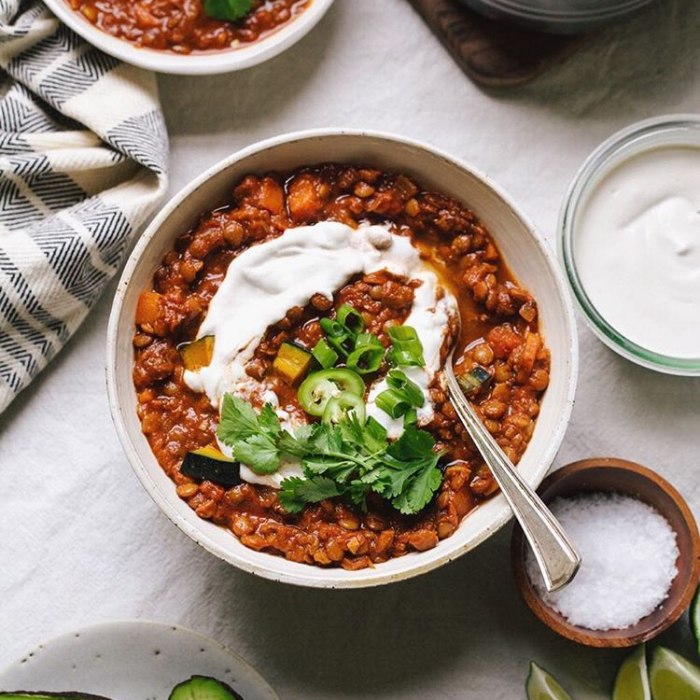
Begin by roasting the squash. Slice it into thin crescents and drizzle with a little oil and sprinkle with sea salt. I added a fresh little sage I had in the fridge, but it’s unnecessary. Roast the squash a 205 C (400 F) for 20-30 minutes, flipping halfway through, until soft and golden. Let cool and chop into cubes. Meanwhile, rinse the lentils and cover them with water. Bring them to the boil then turn down to a simmer and let cook (uncovered) for 20-30 minutes, or until tender. Drain and set aside. While the lentils are cooking heat the 1 Tbsp. of oil on low in a medium pot. Add the onions and leeks and sauté for 5 or so minutes, or until they begin to soften. Add the garlic next along with the cumin and coriander, cooking for a few more minutes. Add the remaining spices – paprika, cinnamon, chilli, cocoa, Worcestershire sauce, salt, and oregano. Next add the can of tomatoes, the water or stock, and carrots. Let simmer, covered, for 20 minutes or until the veg is tender and the mixture has thickened up. You’ll need to check on the pot periodically for a stir and a top of of liquid if needed. Add the lentils and chopped roasted squash. Let cook for 10 more minutes to heat through. Serve with sliced jalapeno, lime wedges, cilantro, green onions, and cashew sour cream. SIMPLE CASHEW SOUR CREAM 1 Cup Raw Unsalted Cashews Pinch Sea Salt 1 tsp. Apple Cider Vinegar Water Bring some water to the boil, and use it to soak the cashews for at least four hours. Alternatively, you can use cold water and let the cashews soak overnight, but I’m forgetful/lazy, so often use the boil method which is much faster. After the cashews have soaked, drain them and add to a high speed blender. Begin to puree, slowly adding about 1/2 cup fresh water, until a creamy consistency is reached. You may need to add less or more water to reach the desired consistency. Add a pinch of sea salt and vinegar (or lemon juice).

▢ Heat the milk until it's lukewarm. Add the yeast and dissolve. ▢ Add the sugar, cardamom, vanilla, and about 2/3 of the flour. ▢ Mix the dough together either by hand or in a mixer with a dough hook, slowly adding the rest of the flour. You might need a bit more or less flour to form dough that isn't too sticky to knead. When the dough forms a nice ball, add the softened butter and continue to knead the dough for about ten minutes. ▢ Roll the dough into a cylinder and cut into six equal parts. Roll each piece into a round bun and set them in a greased muffin/cake tin. Cover and let rise until doubled in size (about an hour).
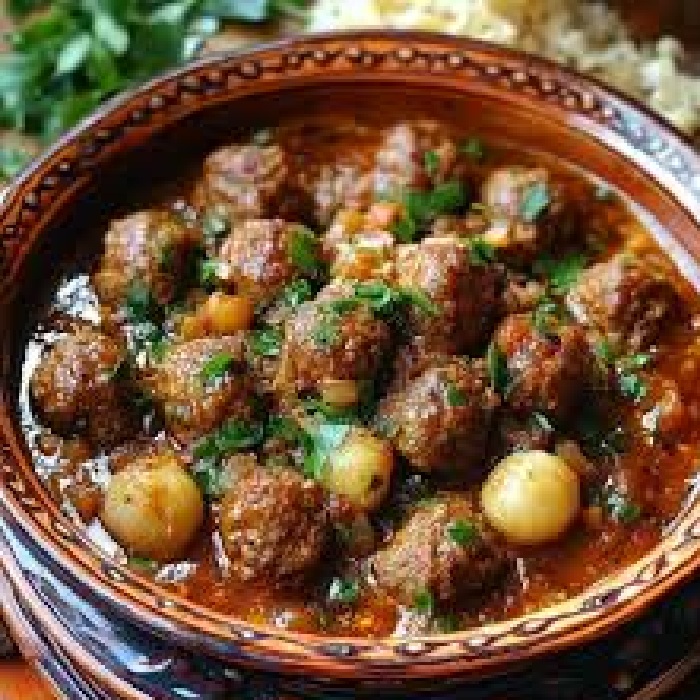
Combine ground beef with 1/2 of the minced garlic and 1 tablespoon chopped onion in a large bowl. Mix with your hands until fully incorporated. Shape meat mixture into 1 1/2-inch oblong patties; you should have 12 to 14 meatballs. Heat a large skillet over medium-high heat. Brown patties in batches in the hot skillet until crispy on both sides and no longer pink in the center, about 10 minutes. Set meatballs aside in a rimmed serving dish. Reduce heat to medium and stir remaining chopped onion into drippings in the skillet. Season with salt and pepper. Cook, stirring constantly, until onion has softened and turned translucent, about 5 minutes. Stir in remaining garlic and cook for 30 seconds. Stir in Roma tomatoes, dried parsley, and ras el hanout. Pour in water. Cook until tomatoes are soft, about 5 minutes. Pour tomato sauce over meatballs to serve.

Put the flour, eggs, milk, 1 tbsp oil and a pinch of salt into a bowl or large jug, then whisk to a smooth batter. Set aside for 30 mins to rest if you have time, or start cooking straight away. Set a medium frying pan or crêpe pan over a medium heat and carefully wipe it with some oiled kitchen paper. When hot, cook your pancakes for 1 min on each side until golden, keeping them warm in a low oven as you go. Serve with lemon wedges and sugar, or your favourite filling. Once cold, you can layer the pancakes between baking parchment, then wrap in cling film and freeze for up to 2 months.
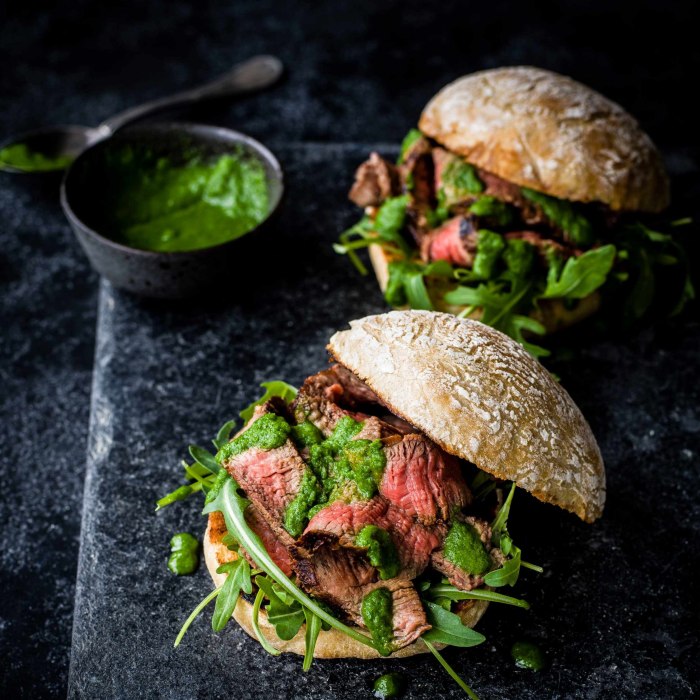
STEP 1 Rub the garlic over the steaks then put in a sandwich bag and tip in the olive oil, sherry vinegar and parsley stalks. Smoosh everything together, then use a rolling pin to bash the steaks a few times. Leave for 1-2 hours. STEP 2 To make the sauce, put all the ingredients into a blender with 1 tbsp water and whizz until as smooth as possible. This will make more than you’ll need for the recipe but will keep for a week in an airtight jar. STEP 3 Heat a griddle or frying pan to high. Brush away the garlic and parsley stalks from the steaks and season well. Sear the steaks for 2 minutes on each side then rest on a plate. Put the ciabatta halves onto the plate, toasted-side down, to soak up any juices. STEP 4 Slice the steaks then stuff into the rolls with the green sauce and rocket.
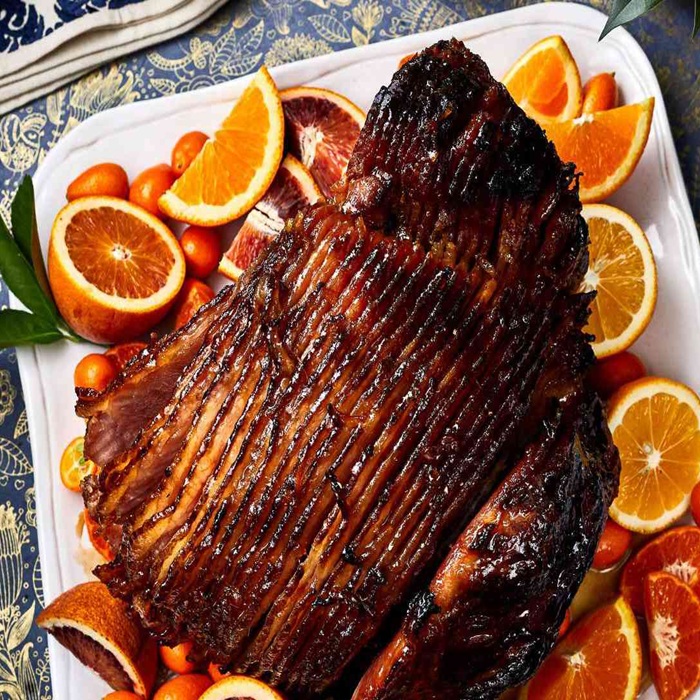
step 1 Heat the oven to 200C/180C fan/gas 6. Bash the garlic, sage, lemon zest, salt and pepper together using a pestle and mortar until the mixture becomes a paste. Stir in the oil, then spread the mixture over the pork shoulder, avoiding the skin on top. Score the skin using a sharp knife, then rub a large pinch of salt into the skin. Tie the pork together using kitchen string. step 2 Line a large baking tray with a double layer of foil and put the pork on top, skin-side up. Bring the sides of the foil up around the pork to create a parcel, then pour the wine into the tray around the sides. Transfer to the oven and reduce the temperature to 140C/120C fan/gas 1. Roast for 4-5 hrs, or until a meat thermometer inserted into the thickest part of the pork reads 70C. step 3 Turn the oven up to 240C/220C fan/gas 9. Carefully spoon the pork roasting juices from the pan into a saucepan and cook over a medium heat for 10-15 mins, or until reduced by a third. Season to taste. step 4 Meanwhile, arrange the foil around the meat so only the skin is exposed, then return to the oven for 10-15 mins until the skin is puffed up and browned all over. Leave to rest for 20 mins before slicing. Serve with the sauce drizzled over.
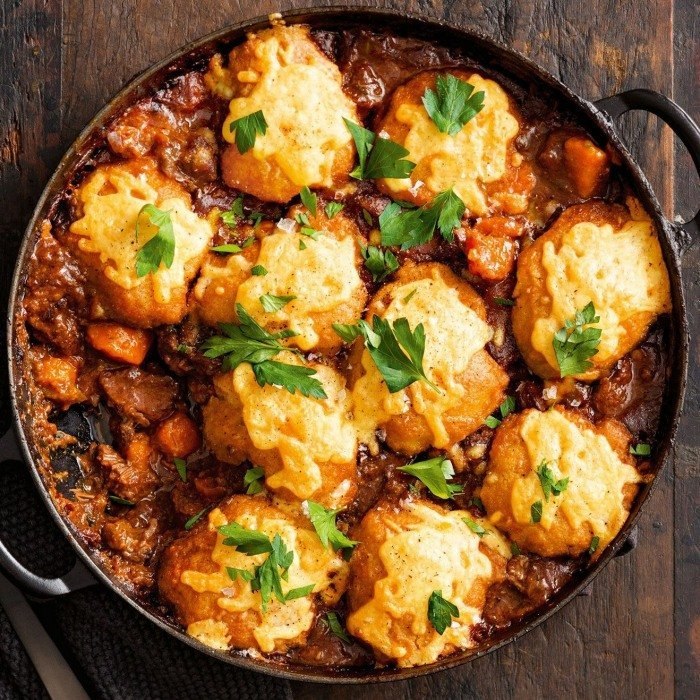
Preheat the oven to 180C/350F/Gas 4. For the beef stew, heat the oil and butter in an ovenproof casserole and fry the beef until browned on all sides. Sprinkle over the flour and cook for a further 2-3 minutes. Add the garlic and all the vegetables and fry for 1-2 minutes. Stir in the wine, stock and herbs, then add the Worcestershire sauce and balsamic vinegar, to taste. Season with salt and freshly ground black pepper. Cover with a lid, transfer to the oven and cook for about two hours, or until the meat is tender. For the dumplings, sift the flour, baking powder and salt into a bowl. Add the suet and enough water to form a thick dough. With floured hands, roll spoonfuls of the dough into small balls. After two hours, remove the lid from the stew and place the balls on top of the stew. Cover, return to the oven and cook for a further 20 minutes, or until the dumplings have swollen and are tender. (If you prefer your dumplings with a golden top, leave the lid off when returning to the oven.) To serve, place a spoonful of mashed potato onto each of four serving plates and top with the stew and dumplings. Sprinkle with chopped parsley.
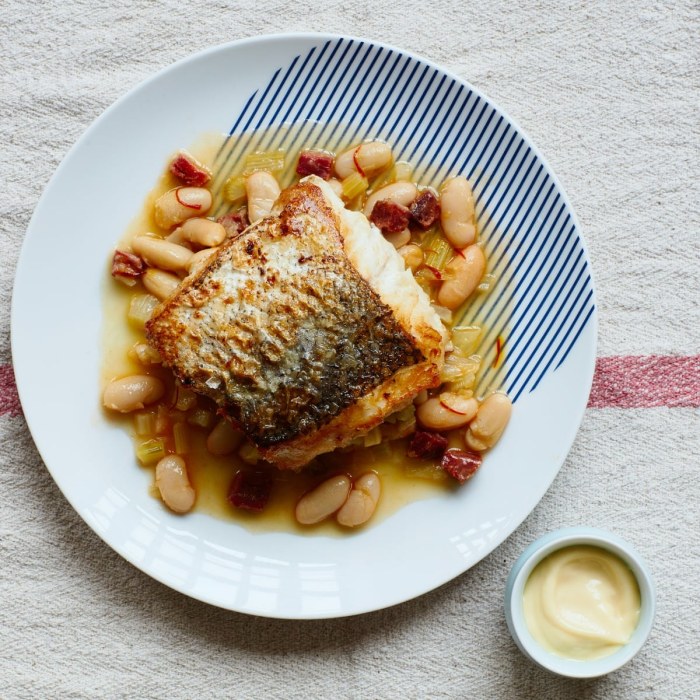
step 1 Drain the beans, then tip into a large pan with 2 litres of water. Simmer with the whole garlic cloves, bay leaves and thyme for 30 mins or until cooked and tender. Remove from the heat and set aside. step 2 Meanwhile, heat 2 tbsp oil in a frying pan. Fry the bread with the remaining garlic clove. When golden and crisp, scoop out and drain on kitchen paper. Add the chorizo to the pan, fry until crisp, tip out and keep warm with the bread. step 3 Add another 2 tbsp oil and the onion to the pan, and cook for 5 mins until softened. Stir in the paprika. Drain the beans and add to the onions with the chicken stock and 2 tsp salt. Cook for 5-10 mins. Stir through the parsley and keep warm. step 4 Season the hake and heat the remaining 2 tbsp oil in the frying pan. Put the hake, skin-side down, in the pan and cook for 3-5 mins over a mediumhigh heat to crisp up the skin. Flip the fish over and cook for a further 3-5 mins until cooked through. Spoon the white bean mix into bowls, place the hake on top and finish with the fried bread, chorizo and a little more thyme.