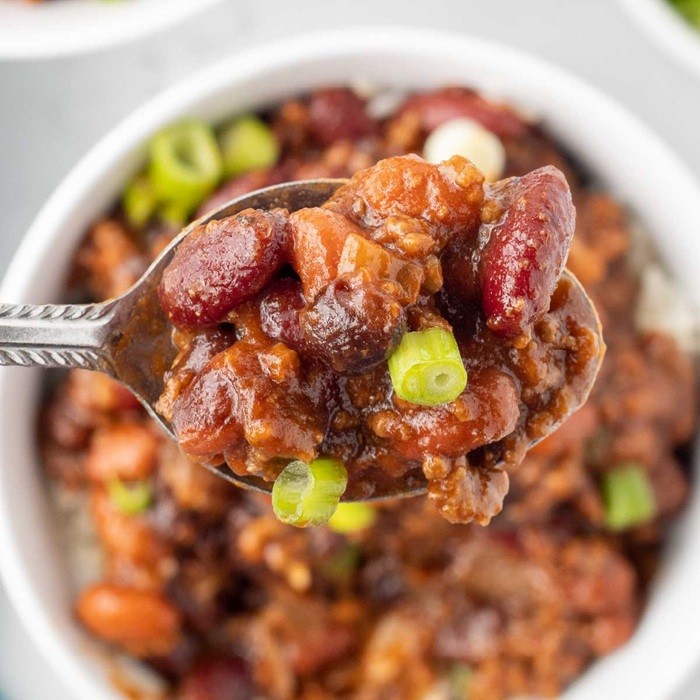
Cover the diced salt beef with water and bring to a boil. Repeat as necessary, draining and replacing water to eliminate some of the brine. In a separate pan, place beans in water, add coconut milk, bay leaves, pimento seeds, whole garlic, whole scotch bonnet pepper and scallions. Slowly bring to a boil and simmer for about 2 hours, or until beans are tender. Add salt beef, onions, thyme and crushed garlic and simmer for another 20 minutes. Adjust seasonings if necessary. Remove the bay leaves and scotch bonnet pepper, being careful not to burst the pepper. Serve with white rice and your choice of salad or vegetables.

Cut the breadfruit, remove the seeds in the core, and peel. Boil in salted water with a little onion and oil, over high heat until tender and drain. Meanwhile, melt the butter in a frying pan and lightly brown the onion rings. Add the garlic, tomatoes, parsley, lime juice, salt, and pepper. Continue to sauté for a couple of minutes. Add the water, bring to the boil and simmer for 5-10 minutes. Slice the cooled breadfruit and place it in a serving dish. Pour the butter sauce over the breadfruit. Garnish with chopped fresh parsley. Serves 4

Cut the cheese and long strips and place in your fridge to prevent it becoming soft. Mix flour, butter and egg in a bowl, and add sugar, salt and olive oil to taste into the mix. Then gradually add milk and knead well for a suitable consistency. Stretch out the dough with a rolling pin and cut into long strips (2 to 3 cm) and then roll the strips of dough around the cheese strips forming a spiral. Make sure the dough covers the cheese fully so that it doesn't melt out while frying. Roll the cheese & dough strips through flour to prevent them from sticking while frying. Heat oil in a frying pan until hot before placing the cheese sticks, and fry until golden in color.
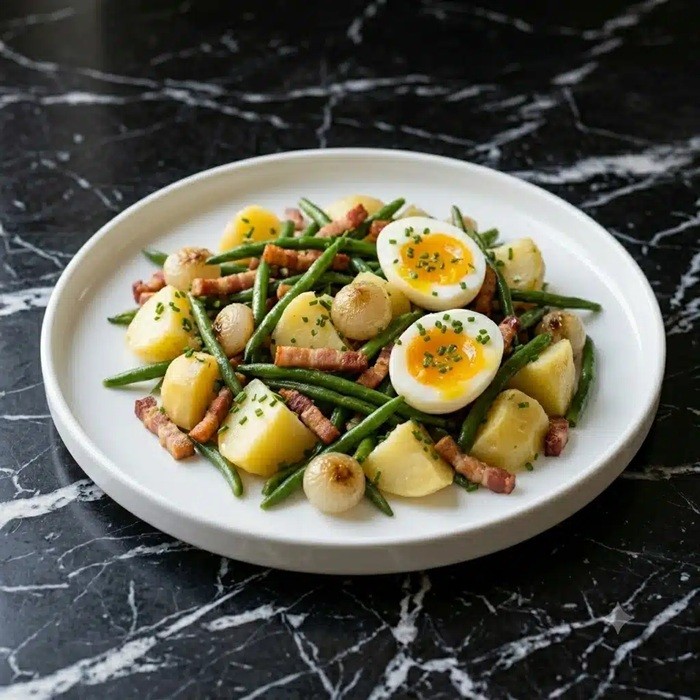
Scrub the potatoes well but don't peel them. Cut them into bite-size pieces. Add them to a large pan water and a pinch of salt. Bring it to a good boil. Cook the potatoes until tender and then remove them using a slotted spoon. Keep the potatoes at room temperature. Trim and clean the green beans. Add them to the pan of hot water you boiled the potatoes in. Cook the green beans until nearly tender (keep them crunchy). Strain and refresh them immediately under cold running tap water to stop the cooking process. Add the bacon to a large non-stick pan and place it over medium heat. Cook the bacon for a couple of minutes until cooked through. Then take the pan off the heat and let the bacon cool down a little. Combine the olive oil, vinegar and mustard. Transfer the cooked potatoes, green beans, bacon, chopped onion, parsley and vinaigrette. Season with pepper and salt. Stir well. Check the seasoning and add extra vinegar, pepper or salt to taste. Transfer the salad to a large serving bowl or 2 deep plates and garnish with the boiled eggs. Serve lukewarm.
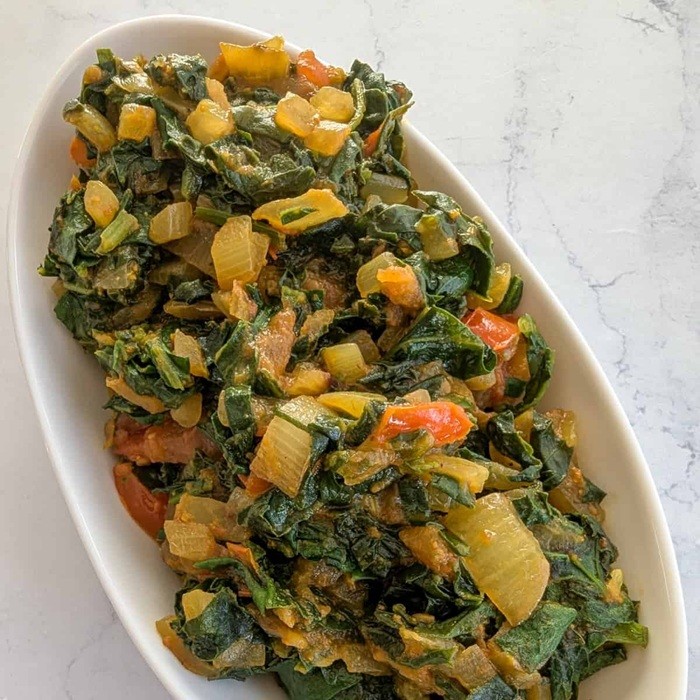
Heat the oil in a skillet over medium heat. When hot, add the diced onion and cook until lightly browned. Add the curry powder and salt to taste and toast for a few seconds. Add the chopped tomatoes and the water, stir well, and cook until the tomatoes begin to break down, 5-7 minutes. Add in the chopped (or baby) spinach and cook for 7-10 minutes more, until soft and wilted.

step 1 Put all the ingredients in a blender or food processor and mix into a sauce. Add seasoning, then pour into a serving bowl.
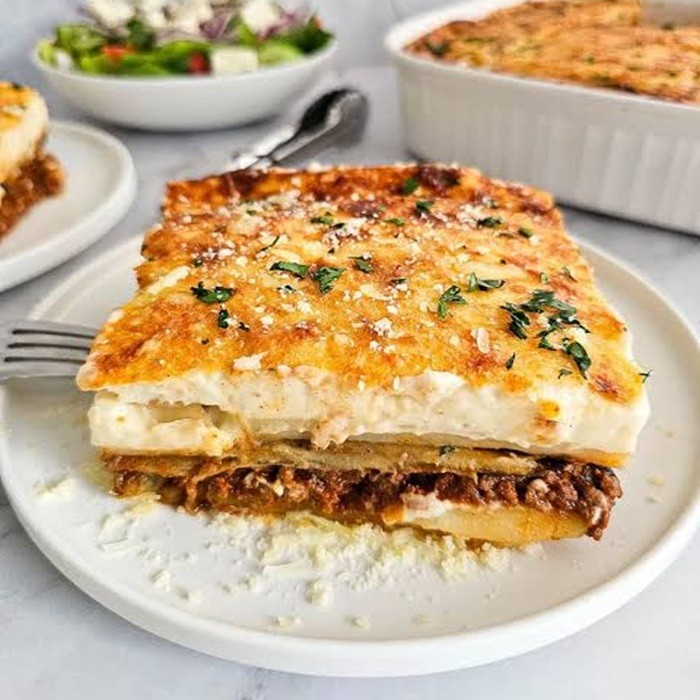
Preheat oven to 350 F. Heat oil in a skillet. Add the ground meat and cook, breaking it down with a wooden spoon for 6-7 minutes, until browned. Add onion and garlic. Add carrots (optional).Add salt, black pepper, dried mint, summer savory, thyme (optional), tomato sauce and tomato paste. Cook for 2-3 minutes, stirring frequently. Grease a 9×9 or 9×13 baking dish with oil. Add in the drained potatoes and meat mixture. Stir to evenly distribute the meat into the potatoes. Add cold water to the baking dish, so it just covers the top of the potatoes. Bake for 40-50 minutes, until the water is absorbed by the potatoes and they are fully cooked. In the mean time prepare the Bechamel sauce (or the Bulgarian Style Topping). For the Bechamel: In a bowl, swish egg yolks. Set aside. Melt butter in a saucepan. add flour. Cook for 3 minutes on medium heat, stirring frequently. Slowly add the milk, whisking to incorporate. Add salt and nutmeg. Cook for 3 minutes, until thickened. Let the mixture cool for 5 minutes. Add in the egg yolks (with feta). Let the sauce stand at room temperature, while the potatoes and meat are cooking. Pour the sauce over the cooked potatoes. Top with cheese. Bake for 15 minutes, until golden. You can broil for 1-2 minutes, if the top is not getting to the desired golden color. For the Bulgarian Moussaka topping: In a bowl beat together eggs, yogurt, milk, flour, then add salt and baking soda. Pour over the moussaka . Top with cheese. Bake for 10-15 minutes, until golden.
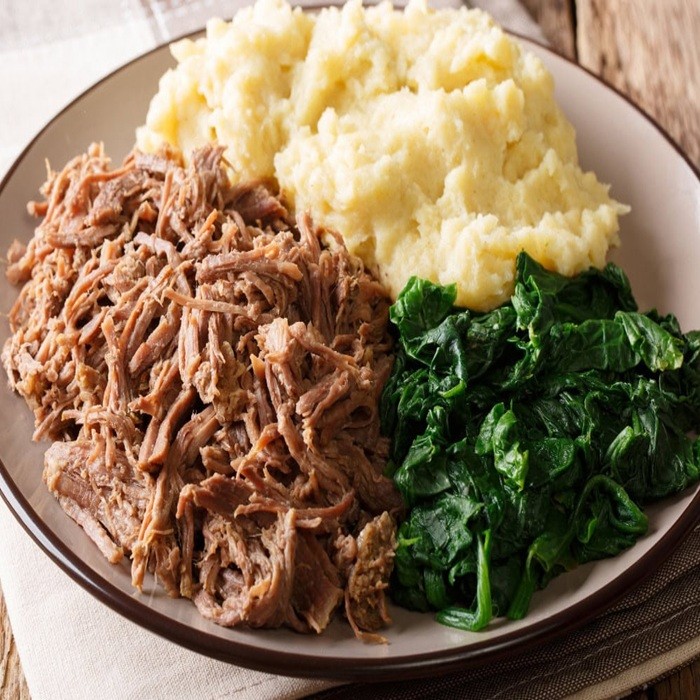
Pre heat the oven to 160 degrees Celsius. Cut the meat into large chunks then brown in a dish suitable for slow cooking in the oven such as a cast iron casserole dish. Add the whole peeled onion, salt, cracked black pepper, water and bay leaves. Bring to the boil then cover and place into the oven for 4 hours. After 4 hours, remove from oven and place onto the stove burner in order to cook off most of the remaining liquid. Use a wooden spoon to pound or mash up the meat, the meat should fall apart quite easily. and will appear shredded. You may brown the meat further if desired. Check seasoning then serve with polenta or the more traditional thick cornmeal porridge known as pap or sadza, and a side of green vegetables.
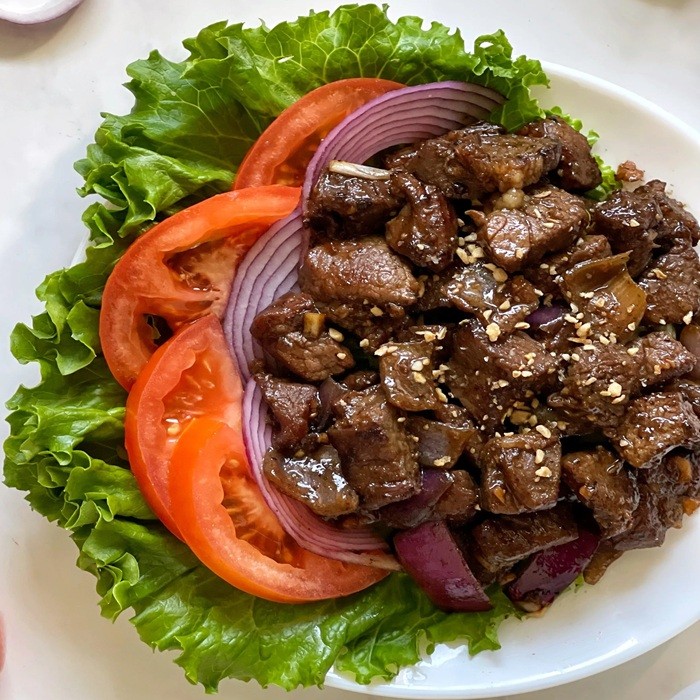
Fry the eggs sunny-side up and set aside. Finely chop the garlic. Wash the lettuce leaves and drain well. Thinly slice the onion and tomatoes. Cut the beef tenderloin into 2–3 cm cubes. Marinate with sea salt, palm sugar, Chinese cooking wine, oyster sauce, soy sauce, and sesame oil. Mix well. Heat a frying pan on high heat with cooking oil. Add chopped garlic and stir until the garlic browns lightly. Add the marinated beef (with all the marinade) and cook for 5–7 minutes, depending on how rare you want the beef. Dry roast the black Kampot peppercorns in a frying pan over medium-low heat for 2–3 minutes until fragrant. Grind the roasted pepper, place it in a bowl, then add sea salt and lime juice. Mix well. On a serving plate, arrange a bed of lettuce, then layer tomatoes, then onions. Spoon the cooked beef over the vegetables and place fried eggs on top. Serve with the Kampot pepper sauce and fragrant steamed rice. Sear hot and fast, Lok Lak is at its best when the beef stays tender and juicy, with a bold, bright dipping sauce to cut through the richness.

Bring the stock to a rolling boil in a big, deep pan. Slip in the cobs, leave to cook for about five minutes, then turn off the heat and leave the corn to sit in the stock as it cools. Put a heavy-based dry frying pan on a high heat and, once hot, lay the drained corn in the pan and char for a couple of minutes on each side – you’ll probably need to cook them two or three at a time, so you don’t overcrowd the pan. Put the coconut milk, lime juice and chillies in a small saucepan, season lightly, then bring up to a gentle simmer. Stir in the butter, turn off the heat and set aside. For the topping, toast the coconut flakes in a hot dry frying pan – coconut burns very easily, so keep them moving and keep your eye on them. As soon as the coconut has a golden, burnished, toasted colour, tip it into a bowl, leave to cool, then mix with the crispy shallots and herbs, and season to taste. To serve, spoon some of the coconut milk mixture over each cob, sprinkle with the toasted coconut mix and lime zest, and tuck in.
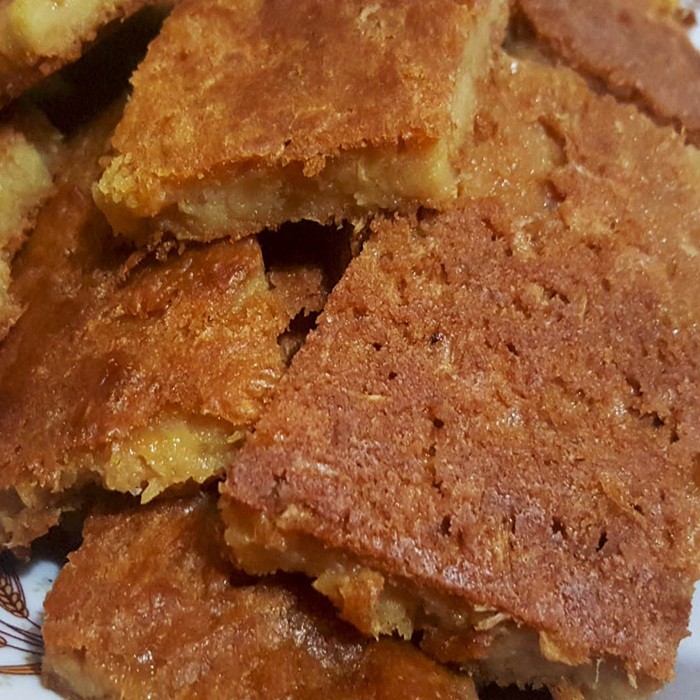
1 Preparation In a mixing bowl mix together the summer squash, sugar, eggs and baking soda. Add the flour and continue to mix, you are looking for a thick sticky mixture. Add a bit more flour if the mixture is still thin and slightly runny. 2 In a large round baking tray (about 2 inches deep) rub some olive oil over the base and edges. 3 Scoop the mixture onto the tray and spread out evenly, then pour a small amount of olive oil onto you hand and rub it in circles gently over the top of the mixture. This should flatten it and leave it with a slightly shiny glossing. 4 Cooking Bake in the oven for 40 minutes on 180 degrees – the top should be a golden brown once cooked. 5 Serving Leave to cool before slicing into squares and serving.
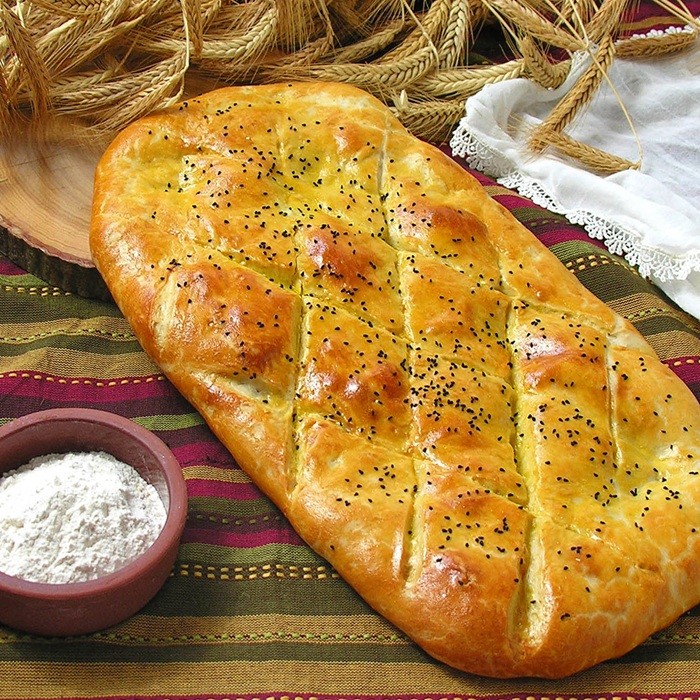
First a quick note about tandoori bread (or tandoori anything, really). The name comes from the clay oven, or "tandoor" that it is traditionally cooked in, and you will never be able to duplicate the flavor of any tandoori recipe without one of those ovens, no matter how hard you try. Now, a tandoor oven is actually a part of my dream kitchen (I love naan bread and tandoori chicken) but I don't have one in my current kitchen, so this bread just goes in a plain oven, which makes it not very authentic. However, this is how an Azerbaijani stranded in the US would make a tandoori bread, so I guess I don't feel too bad about including it in my meal. The ingredients for this bread are roughly similar to the ingredients for a basic french bread, but the shape is different and it is topped with poppy seeds which actually makes it quite beautiful in appearance. In fact this bread is quite possibly the most beautiful thing I've ever baked (my cakes certainly don't fall into that category). So as always I used my bread machine, but this time I didn't proof the yeast first. I just put it in the little yeast dispenser at the top of my machine, then added the water, flour and salt to the bucket. I put it on the dough cycle and then went and picked my kids up from school. This bread uses very basic ingredients, including bread flour and salt. If you want to do it the old-fashioned way: Mix the yeast with the water and let stand for a few minutes. Then sift the flour with the salt into a large bowl. Gradually add the water and yeast and mix with your hand until the dough forms a ball. Turn out onto a lightly floured surface. Knead the dough for 8 to 10 minutes, or until it is smooth. Put it in a large bowl and cover, then let it rise in a warm spot until doubled (this typically takes 1 to 1 1/2 hours). The dough after it has risen. Punch down and turn out onto a lightly floured surface. Stretch the dough until it is an oblong shape, then with a rolling pin roll
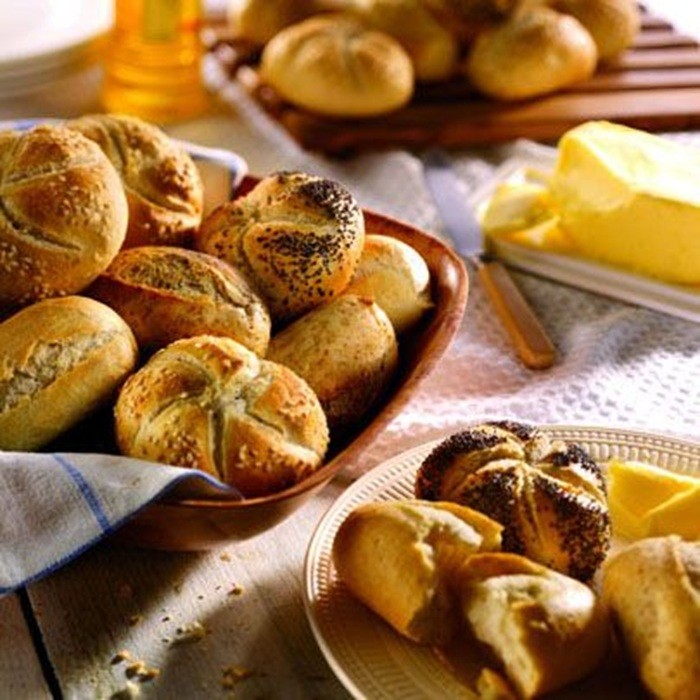
Sift flour, baking powder, salt, and sugar together. In a separate bowl, beat 6 eggs, then blend in the butter and milk. Sprinkle one tablespoon of sev dzandig (black seeds) and all the mahleb on top of the dry ingredients. Make a hole in the center of the dry ingredients and pour the wet ingredients in all at once, mixing with a few strokes until the dough can be turned out onto a floured board. Add more flour if necessary; it shouldn't be too sticky. Knead the mixture gently, just a few times, and then roll it out until it is ½" thick. Cut it into diamond shapes, circles, or long strips which can be rolled and braided into loaves. Prick each piece several times with a fork. Beat the seventh egg with additional sev dzandig (black seeds) added. Brush each piece of koulenje with this glaze and place on cookie sheet covered with baking parchment. Bake at 400° for 12-15 minutes until slightly golden. Cool on a rack. These are best eaten warm. You can reheat them by wrapping in foil.
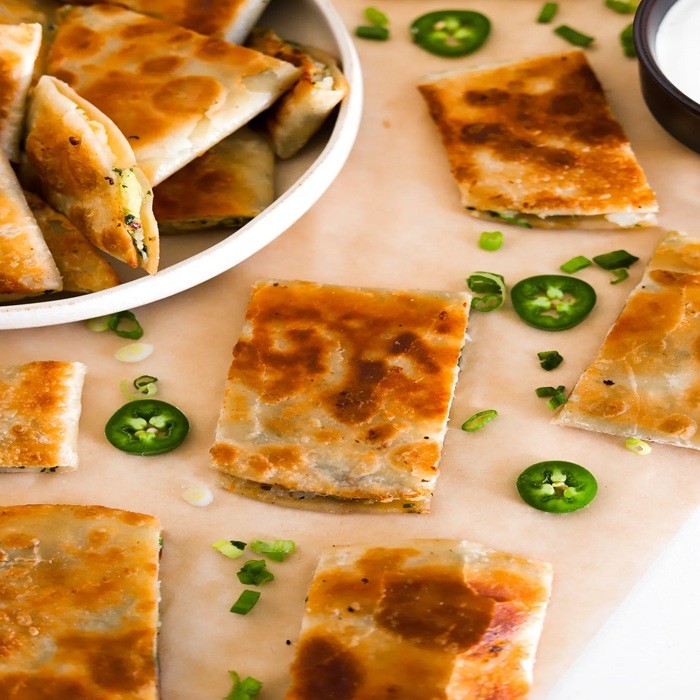
Put the flour and teaspoon of salt in a mixing bowl. Slowly adding as much water as is required. Mix to form a stiff dough. Place the dough on a clean work surface and knead for about 5-10 minutes until the dough is elastic, smooth and shiny. Form the dough into a ball, cover with a damp cloth and set aside for at least half an hour. Peel and wash the potatoes and boil them in salted water until soft. Drain off the water and mash thoroughly. Add the spring onions, salt and black pepper. Divide the dough into 3 or 4 balls. Roll out each ball as thinly as possible on a lightly floured surface (the thickness should be no more than 1.5mm - if the dough is too thick the Bolani will be tough) Take a round cutter of 13-15cm (I often use a pan lid or tid lid), and cut as many rounds as possible. On each round spread 1-2 tablespoons of the mashed potato. Moisten the edges of the dough, fold over and seal shut. The Bolani should be spread out on a lightly floured surface until ready to fry. Heat enough vegetable oil in a frying-pan and shallow fry one or two Bolani at a time, browning on both sides. Make sure to keep the fried Bolani warm until all are finished, and serve straight away.
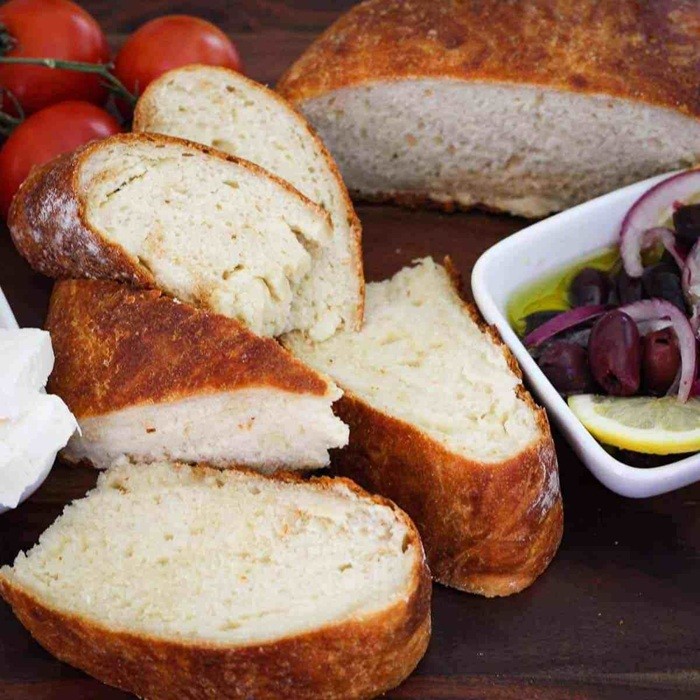
1 Prepare On a large baking tray or a clean work surface, mix together the dry ingredients - flour, baking soda and salt. 2 Make a well in the middle and add the yogurt. Using your hands slowly combined the ingredients together to start to form a dough. 3 Kneed the dough on a floured surface, adding extra flour if you find the texture too sticky. The dough is ready when it is of a pizza dough texture and still very slightly sticky, this should only take a few minutes. 4 On a baking tray add a little oil and put the dough on top. Shape and flatten the dough into a circle shape ensuring the height of the dough is about 5cm. 5 Cover the dough with a little bit of olive oil, ensure it is fully covered. 6 You can bake the Kulaç as it is or you can create patterns which also helps with even cooking. The most common patterns are using the back of a fork to slightly press down to create line dents all over or spiking the dough with the fork. 7 Baking Place on the bottom shelf of a pre heated oven. Bake for 40 minutes or until the dough is golden and firm to touch. 8 Cooling Once removed from the oven, stand upright or place on a cooling rack to allow the Kulaç to cool. 9 Serving Cut the Kulaç the way you would a cake into 8 slices. If you are serving warm you may want to snap and pull apart the bread with your hands instead.

Cut the cabbage and chop it into 1 inch pieces Put the cabbage in a large bowl and add cold water to rinse. Wash the cabbage. Rinse and drain three times. In a large clean bowl, pour in the bottle of water. Put the cabbage and green onion into the salt water mixture. Add in the salt.
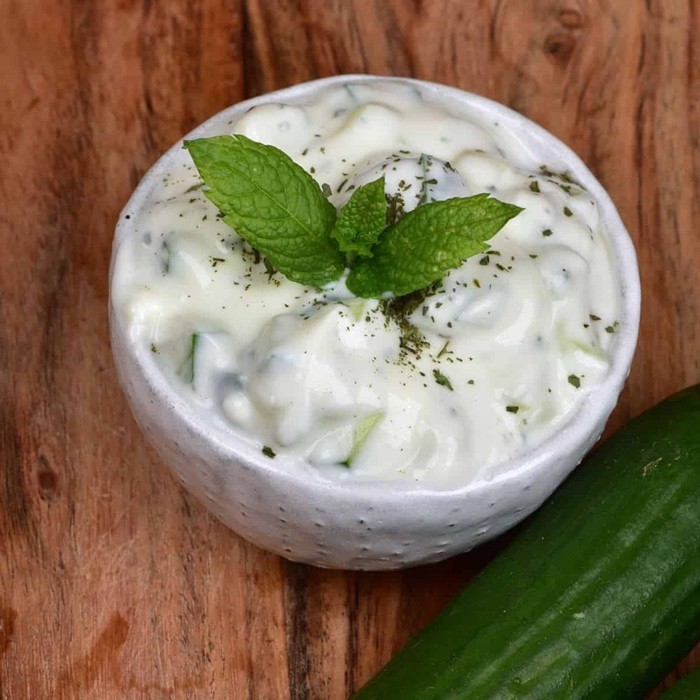
Place yogurt, water, garlic and salt in food processor and process for a few seconds. Transfer to a bowl and mix with mint and cucumber. Best served chilled for a few hours. When serving, add a few ice cubes to add additional refreshment! Makes about four servings.

Toast the bread slices -- either in a toaster, or by baking them in the oven at 400°F -- until crispy and golden. (Toasting/baking time will totally depend on the type and thickness of your bread.) Take a clove of garlic and rub it cut-side-down all over the top of a slice of bread. Take a tomato half and rub it cut-side-down all over the top of the bread. Drizzle the bread evenly with a hint of olive oil. Sprinkle with a pinch of salt. Repeat with the remaining slices of bread. Then serve immediately while they're nice and warm!
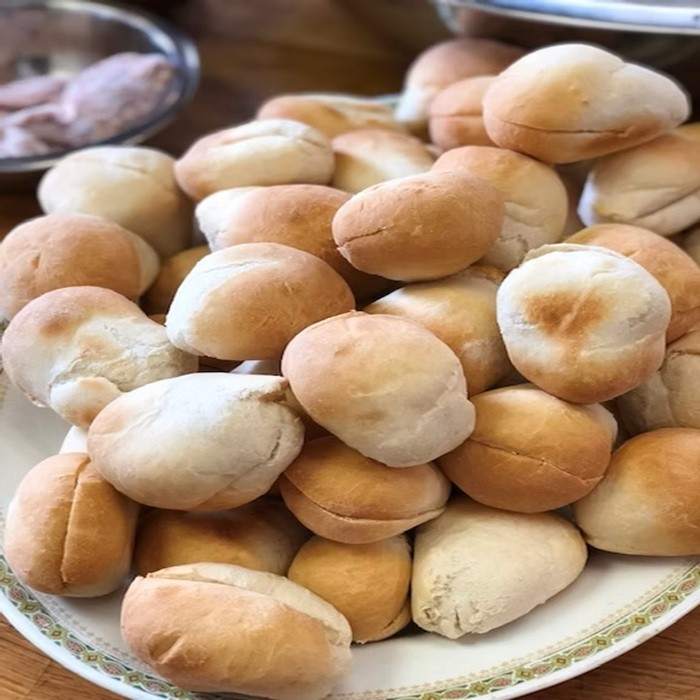
Sift half the flour, mix with salt and yeast in a large mixing bowl, and slowly add warm water until the mixture forms a stiff dough. Add more sifted flour until you have a stiff enough dough to knead. Lightly flour the work surface, knead the dough for 10 minutes until it is smooth and elastic, and then place it in a greased bowl. Now place the bowl warmly for 40-50 minutes until it has doubled. You know the dough is ready when you poke a finger, and the indentation remains. Preheat oven to 425 degrees F or 220 degrees C. Now divide the dough into 12 equal portions, roll each into a fist size ball, and place on a greased baking sheet. Now place in a warm place again for a further 40 minutes or again until the dough has doubled in size. Now place in the oven’s center and bake for 25-30 minutes until golden brown rolls sound hollow when tapped.
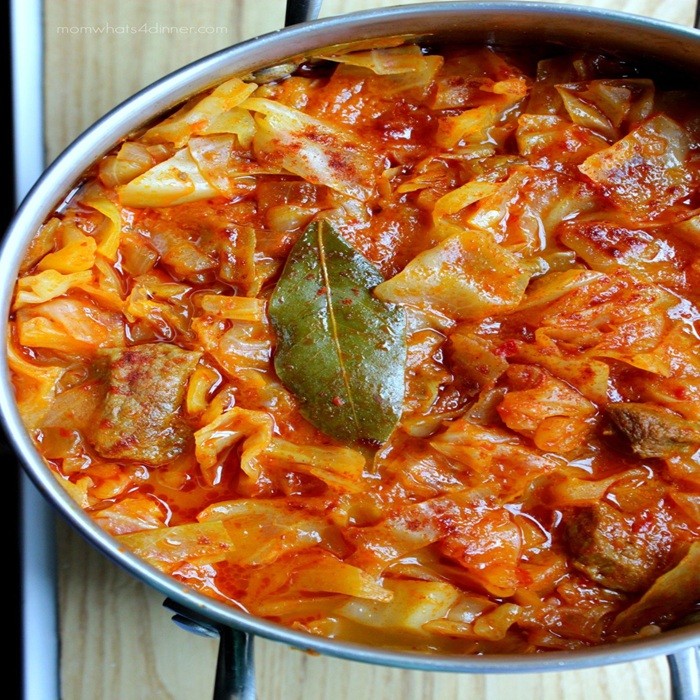
1 Cooking Add some olive oil to a saute pan or saucepan (one with a lid). One heated add in the onions, diced beef, red peppers and fry for 5 minutes stirring occasionally. The meat should be fully browned. 2 Add the paprika, tomato puree, chilli flakes and season with salt and pepper. Mix together and continue to fry for 2 minutes. 3 Add the cabbage and stir the mixture together. Fry the mixture while stirring occasionally for 3-5 minutes. Most of the oil should have burned away. 4 Pour the boiling water into the pan, ensuring that the water level completely covers the cabbage, plus about 1 inch above it. Put on the lid and bring to the boil. 5 Leave to simmer for 2.5 hours. The stew is ready when the cabbage is soft and meat tender. 6 Serving Serve into wide bowls and leave to cool for 5 minutes.

Bring water with salt to a boil then add grits; reduce heat and cover. occasionally stirring. Cook approximately 15 minutes or until grits have desired consistency. Cool then serve
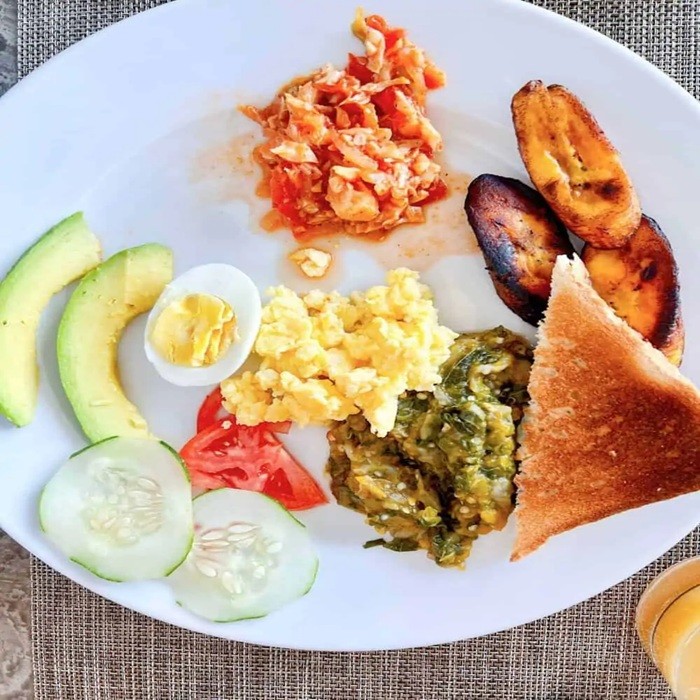
Peel and chop eggplant and pumpkin into medium-sized pieces. Heat butter and add onions and garlic in a medium sized pot set to medium to high heat. Sauté for 2 minutes until softened but not browned. Add pumpkin and eggplant. Sauté for an additional two to three minutes. Add water just to cover the vegetables. Bring to a boil, reduce heat to a simmer and cook until the vegetables are soft. Add the chopped spinach, stir and cook for an additional 3 minutes. Pour the vegetable mixture into a colander and let drain. After vegetable mixture has been drained return it to the pot and mash vigorously with a potato masher or a thick whisk. Add salt and pepper. Adjust seasoning to taste.
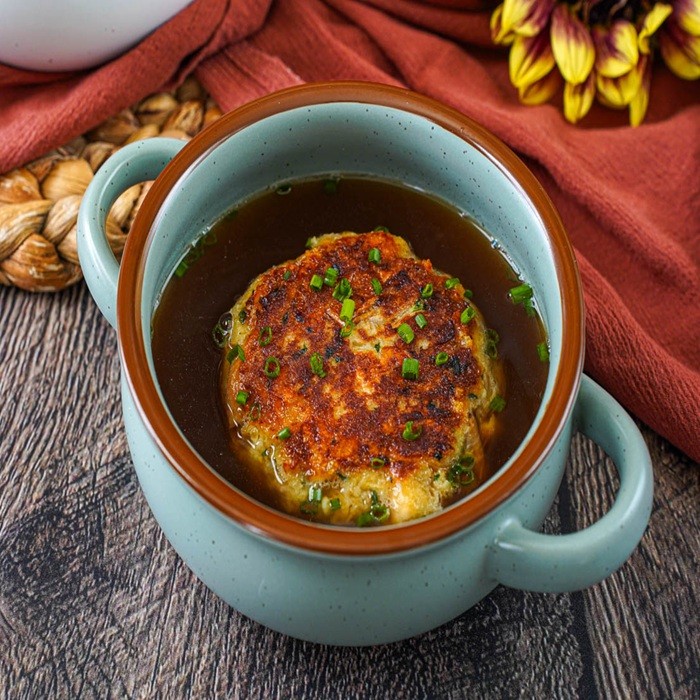
Step 1 Mix the cubed white bread with the milk, season with salt, and let the mixture rest for a while. Step 2 Now add the shredded potatoes, the grated cheese, eggs, and parsley. Step 3 Melt the butter and fry the cubed onions until golden brown in colour and put into the mixture. Step 4 Add the flour and gently knead the dough. Shape it into round dumplings, gently press them flat and fry them on both sides in butter until golden brown. Step 5 Serve in clear broth.
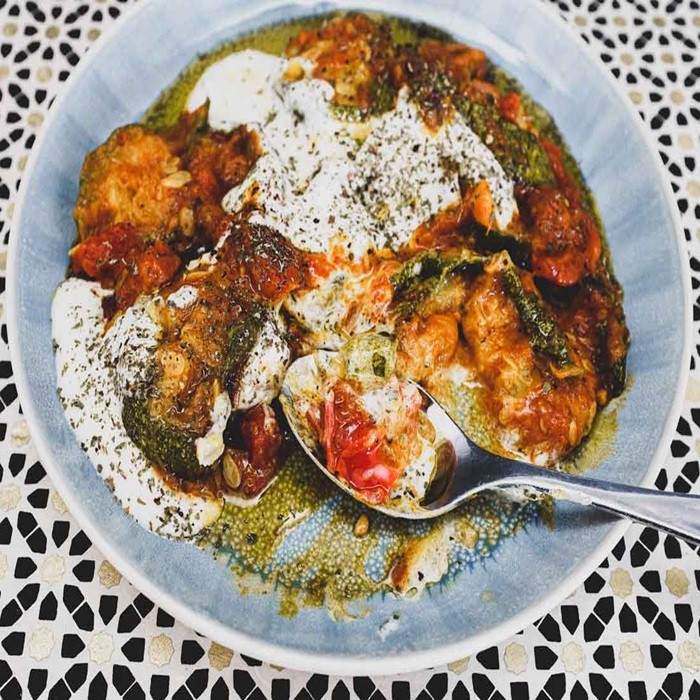
Peel the squash and cut it into pieces 1cm wide. Deep fry it in oil until golden and set aside. Using the same pan and oil, deep fry the onions until golden. Remove the onions and grind with the garlic (if using garlic paste, mix it into the onions once ground). Add a small amount of oil to a pan on medium heat. Once hot, add the turmeric. Mix the salt into one cup of water and add it to the turmeric. Add a layer of squash, then a layer of onion and garlic. Repeat this step until the squash, onion and garlic have been used up. Add the sugar and one cup of water. Turn the heat down and cook until the water has reduced. Add 1-2 tablespoons of melted curd to a plate, add the squash on top with another layer of melted curd. At last, add some green chilli and serve!