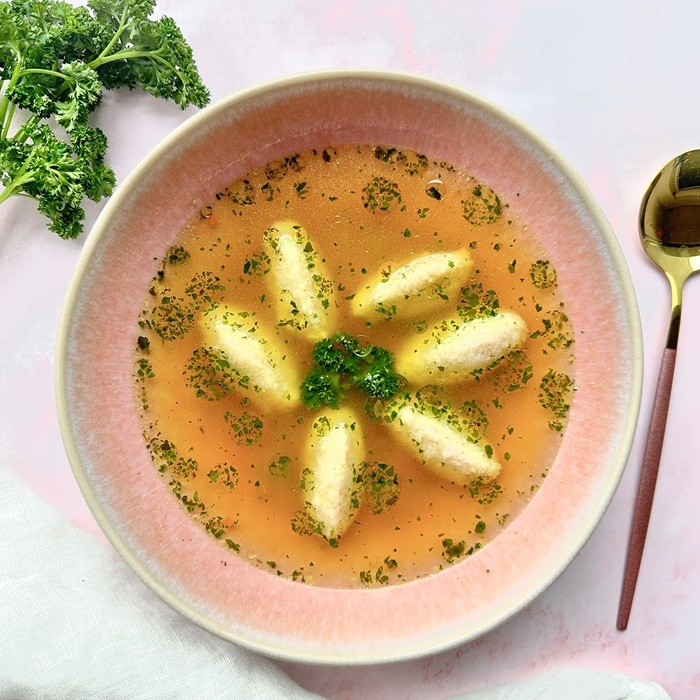
Step 1 Allow butter to come to room temperature before beating in a bowl until creamed. Season with salt and a small, delicate pinch of nutmeg. Step 2 Add in the egg, stirring vigorously. Sprinkle the semolina over this, and mix it in well until the surface is smooth. Cover with saran wrap and leave to rest for 15 – 20 minutes. Step 3 Use two spoons, dipped regularly into hot water throughout, to press or shape dumplings from the paste. You can also place these on a lightly oiled board or plate and again leave them to stand for a short while (this allows the dumplings to rise even more). Step 4 Heat a generous quantity of salted water in a large pan. Place the dumplings into the water and bring them back to a boil before turning down the heat and leaving to simmer gently for 10 – 15 minutes (do not boil). Carefully turn the dumplings occasionally. Step 5 Remove the semolina dumplings carefully and put them in the heated soup. Serve promptly, with a garnish of sprinkled parsley or chives. Step 6 The semolina dumplings can also be cooked in the beef broth, but this causes the soup to take on a slightly dull appearance. The cooked dumplings should never be left standing in the soup for too long, as they will “soak up” the soup and become softened.
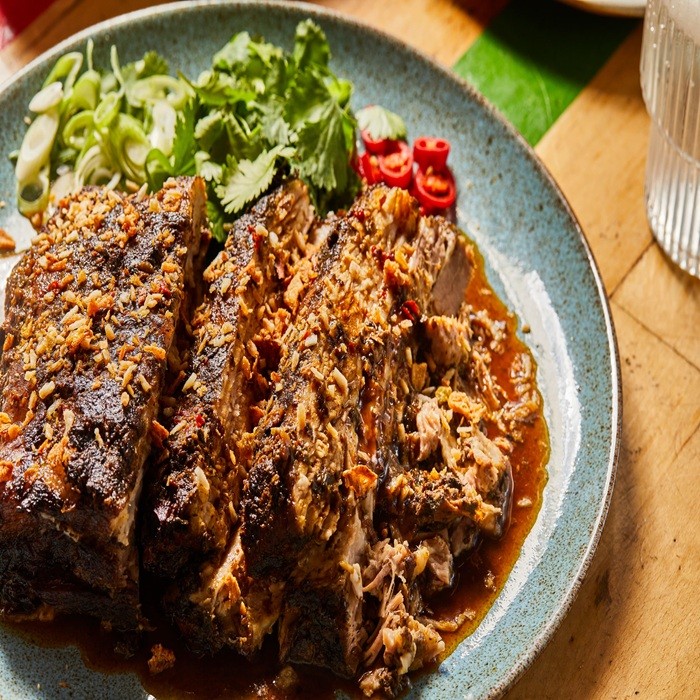
Blitz all the marinade ingredients in a food processor or with a hand blender. Lay the pork in a large dish, pour over the marinade, then turn the meat in the mixture, rubbing in the marinade all over and making sure every bit of the belly is coated. Cover the dish and leave overnight in the fridge. The next day, heat the oven to 140C (120C fan)/275F/gas 1. Lift the meat out of its marinade (don’t wipe off any that sticks to the joint, though; just leave most of the marinade behind in the dish) and transfer to a large roasting dish. Cover with foil, slip into the oven and roast for four and a half hours – every now and then (say, three or four times over the whole cooking period), take the dish out of the oven, lift off the foil lid and spoon the juices from the bottom of the dish over the meat. Return the foil lid, then put back in the oven. After the time is up, remove the foil, turn up the heat to 180C (160C fan)/350F/gas 4 and give the pork a final blast – after 15-20 minutes, the top will take on a lovely colour and the meat should be yielding and soft enough to cut with a spoon. To make crackling shards to serve with the meat, heat the oven to 200C (180C fan)/390F/gas 6 and line a roasting tray with baking paper. Lightly score the skin from the pork belly with a sharp knife, then rub it with a three or four fat pinches of salt – I also like to add a few caraway, cumin or fennel seeds at this point (use anything that takes your fancy). Cut the skin into long strips and lay these fat side down on the lined tray (you can, of course, leave it whole, but I think its pleasing to dress the plate with long, golden shards of crackling). Lay a second sheet of baking paper on top of the skin, then put a second baking tray of the same size on top, and roast for 45 minutes to an hour (if by this point the crackling has not gone crisp, just put it back in the oven and carry on roasting it until it has). Cut or pull the pork apart, top with finely chopped coriand

First boil the rice for eight minutes. Meanwhile, peel and finely chop the onion. Then chop the herbs. The recipe didn't really say what to do with the chickpeas (also known of course as garbanzo beans), beyond soaking them overnight and rinsing them. I used canned chickpeas, since I've never actually seen them dried. I decided to chop/mash them slightly so they would better incorporate into the filling. Chickpeas (or garbanzo beans) roughly chopped Now mince the lamb (I used my mini food processor). Here's where I ran into another problem: what to do with the lamb fat this recipe calls for? Mince it? Melt it? Does lamb fat even melt? I decided to mince mine. Thankfully, my husband doesn't actually read this blog because he'd be horrified if he knew I put fat in the dolma on purpose. Minced lamb and its good friend, minced fat. Ew. The ingredients for the dolma stuffing include onion, cilantro, chickpeas and turmeric. Anyway, now get your hands into all that slimy raw meat and mix in the onion, spices, chickpeas, rice, chopped herbs and fat. Add a little salt and pepper for good measure. In fact, based on my results I would say to err on the side of a little extra salt and pepper. Mix well with your hands until the stuffing looks something like this. Fill the biggest saucepan you own with salted water and bring it to a boil over high heat. Now pull the outer leaves off of the cabbage (save them) and drop the rest of it, whole, into the water. Let it boil for three or four minutes, turning it if the water level isn't quite high enough to completely cover it. The reason you are doing this is because it's difficult to get whole cabbage leaves off of an American cabbage. The cabbages you typically buy in our supermarkets come in very tight round balls, and because the leaves are crispy they will snap and crack when you try to pull them off in an un-blanched state. Blanching them for a few minutes makes it so they will come righ

Grate finely and toss together. 1 lb. sharp yellow cheese (cheddar or oude boerenkaas) 1 lb. keshi di buriko (or any white cheese such as fromage blanc, queso blanco, ricotto, feta etc.) Stir in: 6 eggs, beaten 5 Tbs. Cornstarch Shape the mixture into small balls. These may be kept indefinitely in the freezer. Drop the balls into deep, hot fat and fry until golden. Serve piping hot on toothpicks.
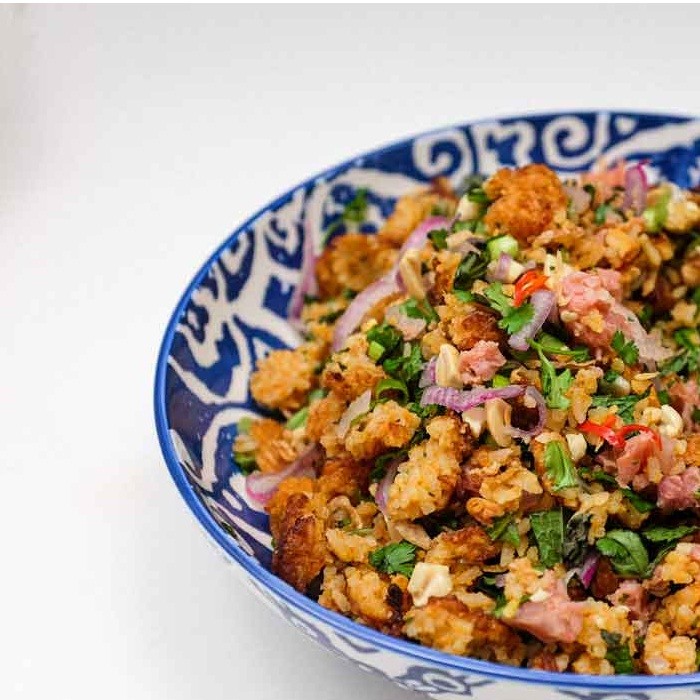
Slice the onion and shallots thinly. Let them soak in a ice water bath while preparing the rest of the meal. Grate the coconut. Put in a large bowl. Add the coconut in a large bowl. Add the rice. Using your hands, mix the coconut and rice together. Roll the mixture to form 2-inch rice ball croquettes. Heat up the cooking oil in a pot or pan. Beat two eggs and a large bowl. Dip the balls into the egg mixture. Then, drop the balls into the cooking oil. Allow the balls to turn a dark amber brown color. Deep fry until crispy, crunchy, and golden. Remove and set on paper towel to drain excess oil. Once cooled, break apart the rice balls and add into a larger bowl. Drain the onion and the shallots. Make sure you tear the pork sausage up into small pieces. You can use a knife too, but the traditional method is tearing. In the large bowl, add in the onion, shallots, sour pork sausage, pickled garlic, lime juice, fish sauce, sugar, cilantro, hot mint, regular mint. Top with peanuts. Serve with Lettuce, dry chilli, and other fresh vegetables. Preserving Naem Khao Recipe Naem Khao can be kept in the refrigerator for 4 days. It can then be served chilled. It should not be frozen. Serving Naem Khao Nam Khao is generally served with lettuce leaves and a variety of different herbs like hot mint, mint, basil, and perilla.
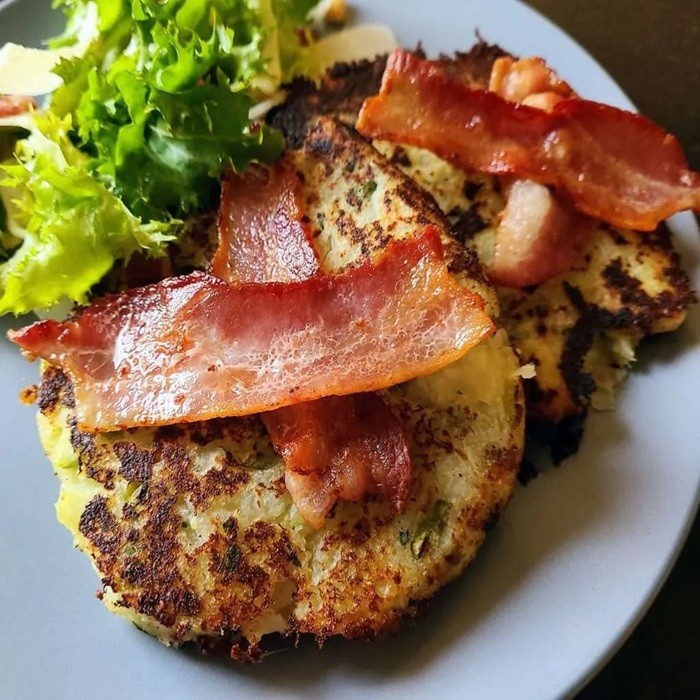
Bring salted water to boil in a large pot. Add in the cabbage and potatoes, cook until tender about 30-40 minutes When tender, drain, very well. Return the vegetables to the pot and turn on the burner to low. Let steam Meanwhile cook up the bacon, reserving the fat for frying the hash. Chop up the bacon, into small pieces. Mash the potatoes and cabbage with a potato masher and add in the minced garlic. Add in salt and pepper to taste. Using a form for individual servings, press the hash mixture into the form with bacon on top, fry in the reserved bacon fat until golden brown, flip over and repeat on the other side. Remove form and garnish with chopped parsley. If you want to make one big hash, just use a skillet, pressing the hash into the skillet with the bacon pieces and reserved fat, then flip over once golden brown. Cut into servings. Garnish with chopped parsley.
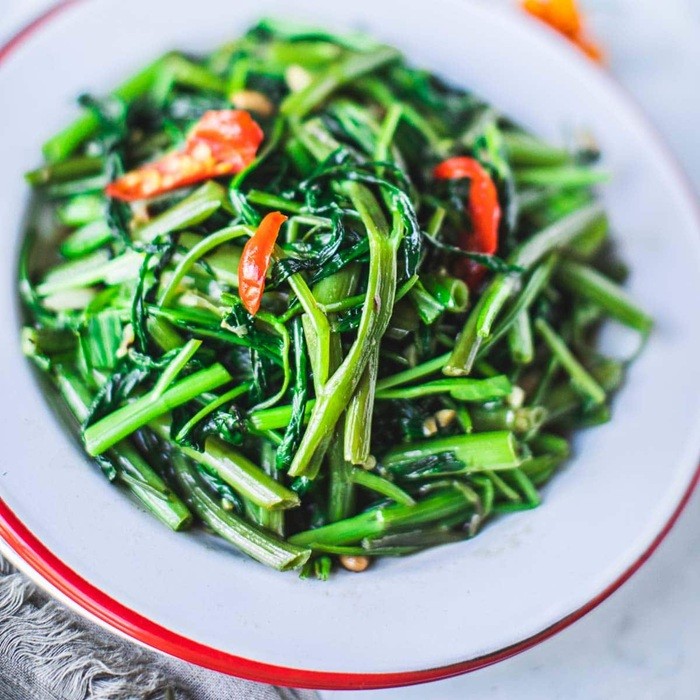
In a wok or large pan, heat 1 tablespoon of vegetable oil over medium heat. Once the oil is hot, add the garlic and stir-fry for about 30 seconds, until fragrant but not burnt. Add the minced pork to the pan and break it up with a spatula. Stir-fry until the pork is fully cooked and browned, about 2-3 minutes. Stir in the fermented soy beans and cook for another minute, mixing it thoroughly with the pork. Toss in the cut morning glory and stir-fry for 2-3 minutes to retain its bright green colour and crisp texture. Check the seasoning and adjust with fish sauce or sugar if needed. Transfer to a serving dish and serve immediately with steamed rice.
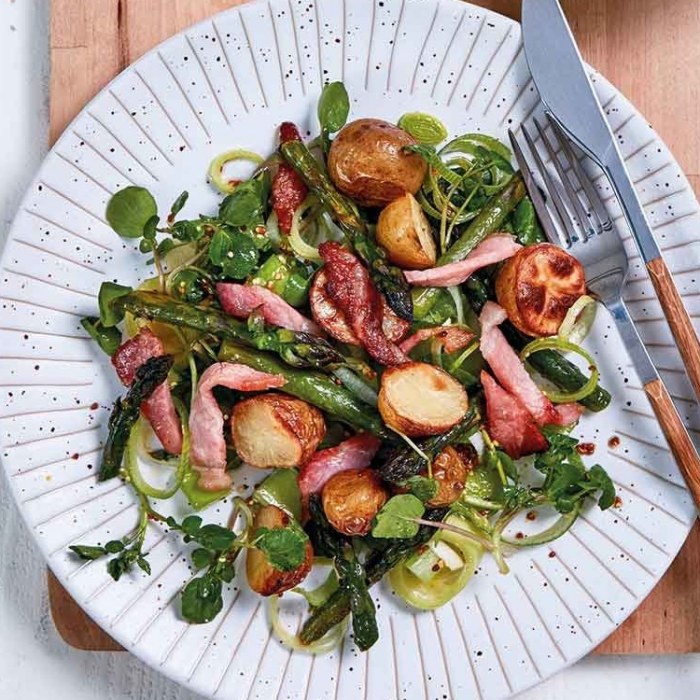
step 1 Preheat the oven to 200C/Gas 6/fan 180C. Snap off the woody ends of the asparagus and discard. Arrange the asparagus in a single layer in a baking tray with sides. Cut the tomatoes in half widthways, nestle them in with the asparagus, season with sea salt and pepper and drizzle with olive oil. Roll each bacon rasher into a tight roll (if large, first cut in half crosswise), and arrange in the tray. Drizzle the bacon rolls with the honey and bake for 20 minutes until the tomatoes are soft and the bacon is crisp. step 2 In the meantime, boil the potatoes until tender. Whisk the vinegar, olive oil, mustard, some sea salt and pepper in a large bowl until blended. Toss the rocket or spinach leaves in half of the dressing, and arrange on a large serving platter. step 3 Drain the potatoes and cut in half. Gently toss them in the rest of the dressing, and arrange on the platter with the asparagus. Tuck in the tomatoes and bacon.
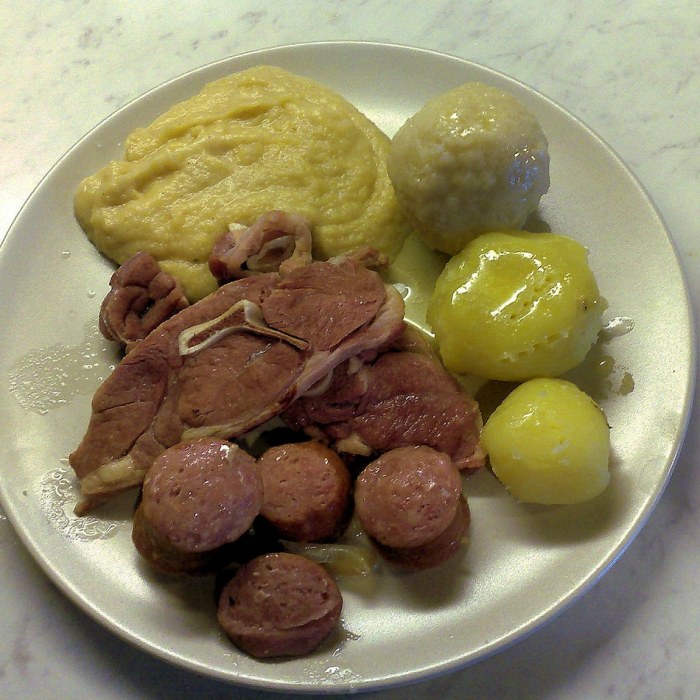
Raspeballer & (Optional) Salted Meat ▢ If you're making pork knuckle, cook it in simmering water for about 3 hours, until the meat falls from the bone. Remove the pork and save the broth to cook the raspeballer. ▢ Boil the boiled potatoes and peel once cooled. Also peel the raw potatoes, and then grate them or run them through a food processor. Use a paper towel to remove some of the moisture from the grated potatoes. ▢ Mash the boiled potatoes in a potato ricer or with a masher. Make sure there are no lumps. Add the grated raw potatoes to the mashed potatoes in a large mixing bowl and stir together. Add the barley flour, all purpose flour, and salt and mix together with your hands until the mixture is fully blended. ▢ You can cook the raspeballer in either vegetable or beef broth, or if you're making pork knuckle, cook them in the broth from the pork knuckle. Bring the broth to a very light simmer – you don't want it to fully boil because then the raspeballer might break apart. ▢ Use a tablespoon dipped in cold water to shape each raspeball in your hand. Try to make them as smooth as possible and then gently drop them into the simmering broth. Dip the tablespoon in a bowl of cold water between each raspeball. ▢ Let the raspeballer simmer for about 30 minutes. If you're making smoked sausage, you can heat the sausage in the same pot with the raspeballer. Top with fresh chopped parsley. Mashed Rutabaga ▢ Peel the rutabaga and carrots and cut into small pieces. Boil in water for about 30 minutes, or until tender. Then drain the water, add the cream/milk, butter and nutmeg and mash until smooth. ▢ Serve alongside the raspeballer and meat.

step 1 Wash the wild garlic leaves well in a colander, then pour over boiling water from the kettle until just wilted. Immediately rinse under cold running water, then squeeze out the excess water and finely chop. step 2 Warm the milk in a pan over a low heat until just steaming. Heat the oil or butter in a second pan and, once warm or melted, stir in the flour for a couple of minutes until it starts to brown a little. Gradually add the warm milk, a little at a time, until you have a thick, silky sauce. Bubble for a minute or two, stirring to make sure all the flour has cooked out. Season. step 3 Add the manchego, jamón and wild garlic to the pan, and beat to combine. Tip out onto a lightly oiled baking tray or plate, spread out then cover and chill for at least 1 hr. Will keep chilled for up to 24 hrs. step 4 Lightly oil your hands and shape the mixture into 18-20 even-sized balls. Arrange on a baking tray and freeze for 30 mins to firm up. step 5 Beat the egg in a shallow dish with a little seasoning. Tip the panko into a second dish. Dip each of the croquetas in the egg, then turn to coat in the breadcrumbs. At this point, the raw croquetas can be frozen for up to three months. Pour the oil into a large, deep pan ensuring it is no more than a third full and heat to 170C, or until a cube of bread browns lightly in 30 seconds. Fry the croquetas in batches for 2-3 mins until deeply golden. To cook from frozen, fry at 160C for a few minutes longer until they’re piping hot inside. Remove to a sheet of kitchen paper using a slotted spoon and leave to drain. Serve warm with a glass of sherry.
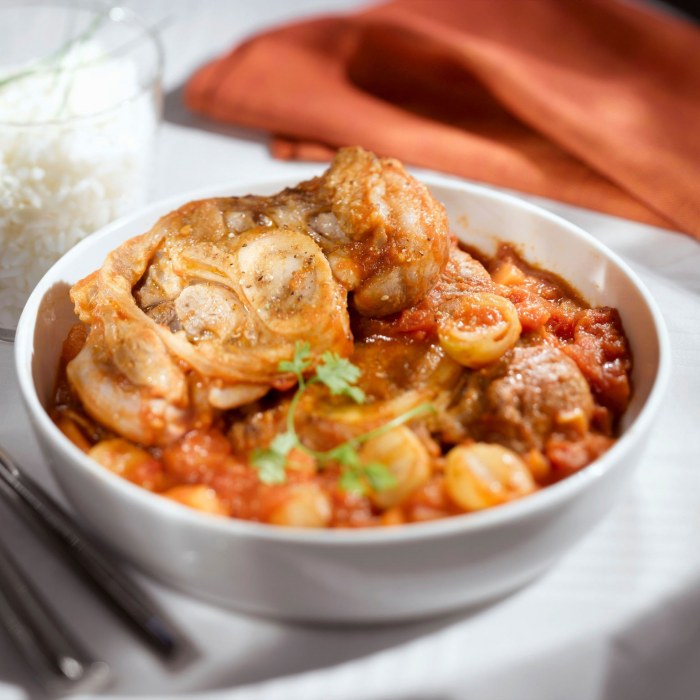
Heat the oven to 300 degrees. Dredging the shanks: pour the flour into a shallow dish (a pie plate works nicely). Season the veal shanks on all sides with salt and pepper. One at a time, roll the shanks around in the flour coat, and shake and pat the shank to remove any excuses flour. Discard the remaining flour. Browning the shanks: put the oil and 1 tablespoon of the butter in a wide Dutch oven or heavy braising pot (6 to 7 quart) and heat over medium-high heat. When the butter has melted and the oil is shimmering, lower the shanks into the pot, flat side down; if the shanks won’t fit without touching one another, do this in batches. Brown the shanks, turning once with tongs, until both flat sides are well caramelized, about 5 minutes per side. If the butter-oil mixture starts to burn, lower the heat just a bit. Transfer the shanks to a large platter or tray and set aside. The aromatics: pour off and discard the fat from the pot. Wipe out any burnt bits with a damp paper towel, being careful not to remove any delicious little caramelized bits. Ad the remaining 2 tablespoons butter to the pot and melt it over medium heat. When the butter has stopped foaming, add the onion, carrot, celery, and fennel. Season with salt and pepper, stir, and cook the vegetables until they begin to soften but do not brown, about 6 minutes. Stir in the garlic, orange zest, marjoram, and bay leaf, and stew for another minute or two. The braising liquid: add the wine, increase the heat to high, and bring to a boil. Boil, stirring occasionally, to reduce the wine by about half, 5 minutes. Add the stock and tomatoes, with their juice, and boil again to reduce the liquid to about 1 cup total, about 10 minutes. The braise: Place the shanks in the pot so that they are sitting with the exposed bone facing up, and pour over any juices that accumulated as they sat. Cover with parchment paper, pressing down so the parchment nearly touches the veal and the edges hang over the sides of the pot
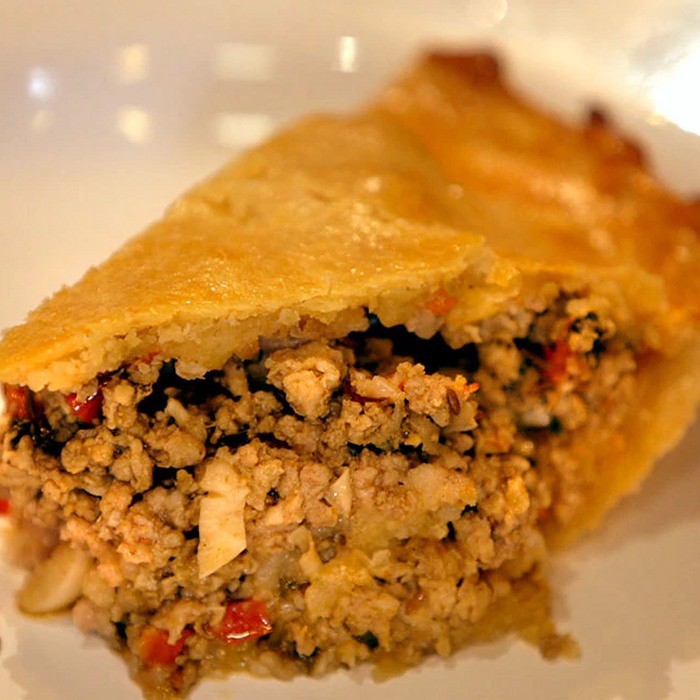
Heat a large frying pan and toast the cumin seeds for a few minutes, then set aside. Heat the oil in the same pan and fry the onion, garlic, chilli, pepper and a good pinch of salt for around eight minutes, until there is no moisture left. Remove from the heat, stir in the toasted cumin seeds, ground mace (or nutmeg) and ground coriander. Leave to cool. In a large bowl mix together the minced lamb, white pepper, fresh coriander, and the cooled spiced onion mixture until combined. Set aside, covered, in the fridge. Preheat the oven to 200C/400F/Gas 6 and generously grease a 20cm/8in diameter loose-bottomed or springform round cake tin with lard. To make the pastry, sift the flour and salt in a large bowl and make a well in the centre. Put the milk, lard and 90ml/3fl oz of water in a saucepan and heat gently. When the lard has melted, increase the heat and bring to the boil. Pour the boiling liquid into the flour, and use a wooden spoon to combine until cool enough to handle. Bring together into a ball. Dust a work surface with flour and, working quickly, knead the dough briefly – it will be soft and moist. Set aside a third of the pastry and roll the rest out on a well-floured surface. Line the pie dish with the pastry, pressing it right up the sides until it pokes just over the top of the tin. Add the filling into the pastry-lined tin bit by bit. As you reach the top, form a slight peak. Roll out the reserved pastry and top the pie with it. Pinch the edges to seal and trim the excess. Poke a hole in the top of the pie and insert a small tube made from aluminium foil to allow steam to escape. Brush the top of the pie with a little beaten egg yolk, and bake in the preheated oven for 30 minutes (put a tray on the shelf below to catch any drips). Then reduce the temperature to 160C/325F/Gas 3 and cook for a further 1¼ hours until golden-brown. Leave to cool completely before refrigerating for two hours, or overnight. Run a knife around the edge of the pie, remo
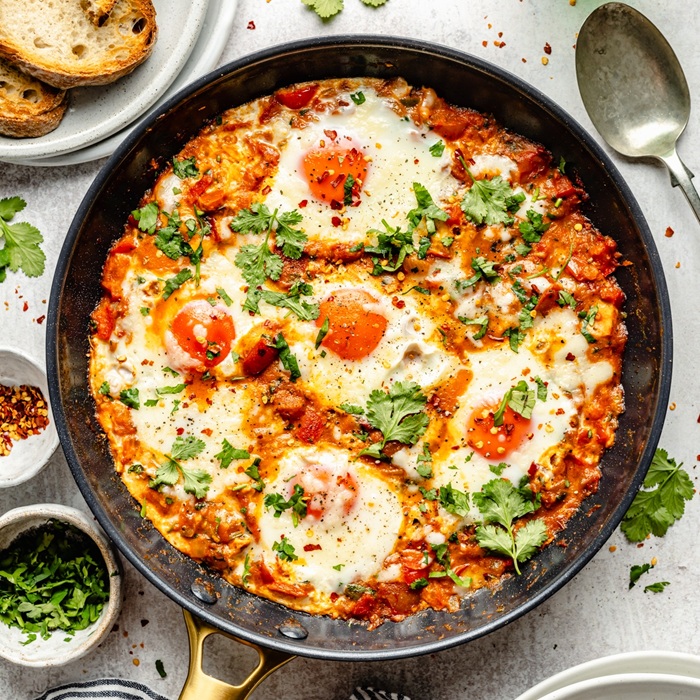
1 First, pan fry the black pepper and garlic over a dry medium heat until fragrant. 2 Add a good amount of extra virgin olive oil and infuse for a minute. 3 Once the oil heats up, add the tomatoes and salt, and cover with a lid. Simmer for 5 minutes. 4 Remove the lid and mash the tomatoes. Reduce until you reach the desired consistency of choice. 5 Make craters for the eggs and lower the heat. Carefully crack the eggs into the craters, making sure it touches the pan and not the tomato sauce. 6 Cover the eggs and leave it for 5 minutes without lifting the lid. 7 Remove from the heat and let the residual heat steam the eggs for 1-2 minutes. 8 Serve with flatbread. Enjoy!
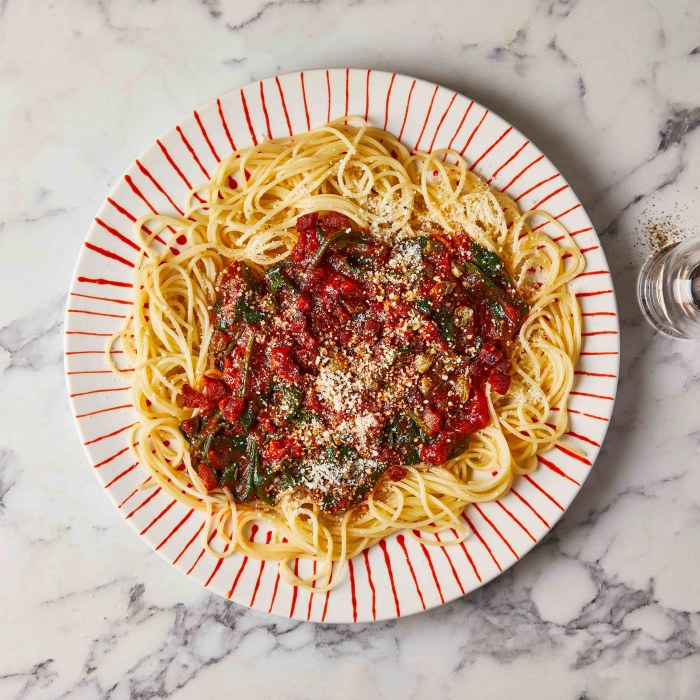
step 1 Put a pan of water on over a high heat to boil. Meanwhile, snip the chorizo into strips with scissors, and chop the parsley and peppers (check for stray seeds first). step 2 When the water is boiling briskly, add the spaghetti with a good measure of salt, stir and return to the boil. Cook for 3 minutes. step 3 In a large frying pan, heat the oil, add the chorizo and peppers and plenty of black pepper. Cook for a minute or so, until heated through and the juices are stained red from the paprika in the chorizo. Scoop half a mugful of pasta water from the pan, drain the remainder and tip the spaghetti into the frying pan. step 4 Add the parsley and parmesan, toss well and splash in the pasta water, to moisten. Hand round extra parmesan at the table.
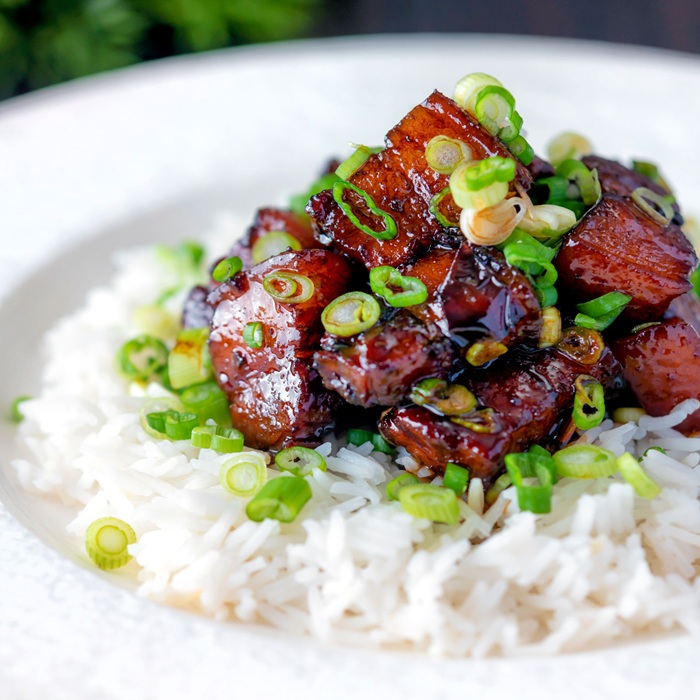
step 1 Heat 1 tbsp of the oil in a wok over a high heat and stir-fry the pork in batches until browned all over. Remove with a slotted spoon and set aside. step 2 Turn the heat right down and add the remaining oil, then stir in the shallots, ginger and chilli. Cook over a low heat for a couple of mins until just starting to soften. Add the sugar, fish sauce and 200ml water to the pan and stir everything together. Bring to the boil, stirring, so that the sugar dissolves, then return the pork to the pan. Bubble vigorously for 8-10 mins until the sauce thickens to coat the meat and become glossy. Taste and stir in a little more fish sauce, if needed, along with the chilli sauce. Sprinkle with the spring onions and serve with steamed rice and pak choi.
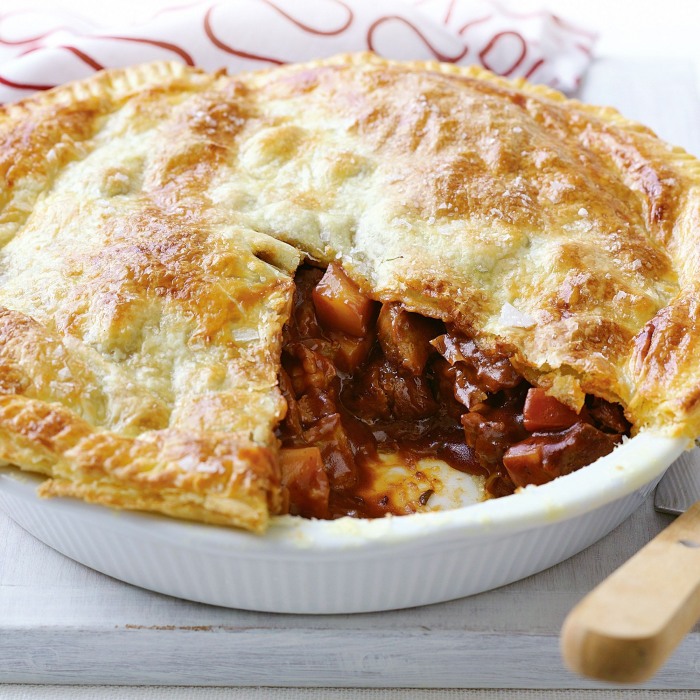
Dust the meat with flour to lightly coat. Heat enough vegetable oil in a large saucepan to fill the base, and fry the onion and meat until lightly browned. Season with salt and pepper. Add the carrots, stock and more seasoning to taste. Bring to the boil, cover and reduce the heat to a simmer. Simmer for at least an hour or until the meat is tender. Take your time cooking the meat, the longer you leave it to cook, the better the flavour will be. Preheat the oven to 180C/350F/Gas 4. Add the drained potato cubes to the lamb. Turn the mixture into a pie dish or casserole and cover with the shortcrust pastry. Make three slits in the top of the pastry to release any steam while cooking. Brush with beaten egg and bake for about 40 minutes, until the pastry is golden brown. Serve.
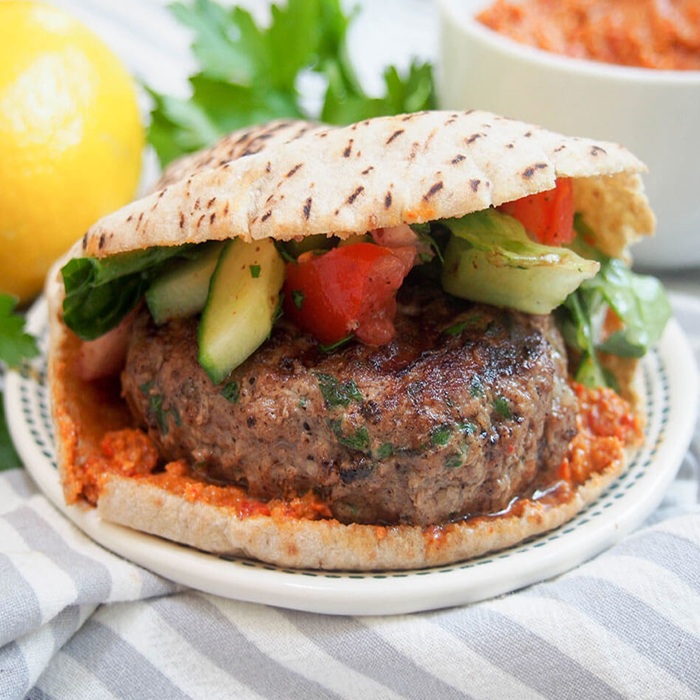
step 1 Tip the mince into a large bowl (use a clean washing-up bowl if you don’t have anything big enough) with all the other burger ingredients and a good pinch of salt. Roll up your sleeves, get your hands into the mix and squelch everything together through your fingers until completely mixed. Pat the mix into 16 small burgers. These may now be frozen for up to 1 month or chilled up to a day ahead. step 2 To cook, heat grill to its highest setting and lay the burgers in a single layer on a baking tray (you may need to do this in batches, depending on how big your tray is). Grill on the highest shelf for 5-6 mins on each side until browned and cooked through. Pile burgers onto a platter and serve with all the accompaniments, so everyone can construct their own sandwich.

step 1 Heat the oil in a large saucepan or flameproof casserole. Add the spring onions and coriander stalks and cook for 1 min. Add the pork slices and cook for 5 mins until starting to brown. step 2 Stir in the curry paste and peanut butter. After 30 secs, add the sugar, soy and coconut milk, plus ½ can of water. Mix well, put a lid on and leave to simmer for 15 mins, stirring occasionally. step 3 Remove the lid, add the baby corn and increase the heat. Bubble for 3 mins until the corn is cooked and the sauce has thickened a little. Stir in the lime juice and check the seasoning. Can now be frozen for up to 2 months. To cook from frozen: thoroughly defrost, then heat in a pan on the hob until curry is hot all the way through. Serve scattered with the coriander leaves and rice.

step 1 Heat oven to 230C/fan 210C/gas 8. step 2 Drizzle a little sunflower oil evenly into two 4-hole Yorkshire pudding tins or two 12-hole non-stick muffin tins and place in the oven to heat through. step 3 To make the batter, tip 140g plain flour into a bowl and beat in 4 eggs until smooth. step 4 Gradually add 200ml milk and carry on beating until the mix is completely lump-free. Season with salt and pepper. step 5 Pour the batter into a jug, then remove the hot tins from the oven. Carefully and evenly pour the batter into the holes. step 6 Place the tins back in the oven and leave undisturbed for 20-25 mins until the puddings have puffed up and browned. step 7 Serve immediately. You can now cool them and freeze for up to 1 month.
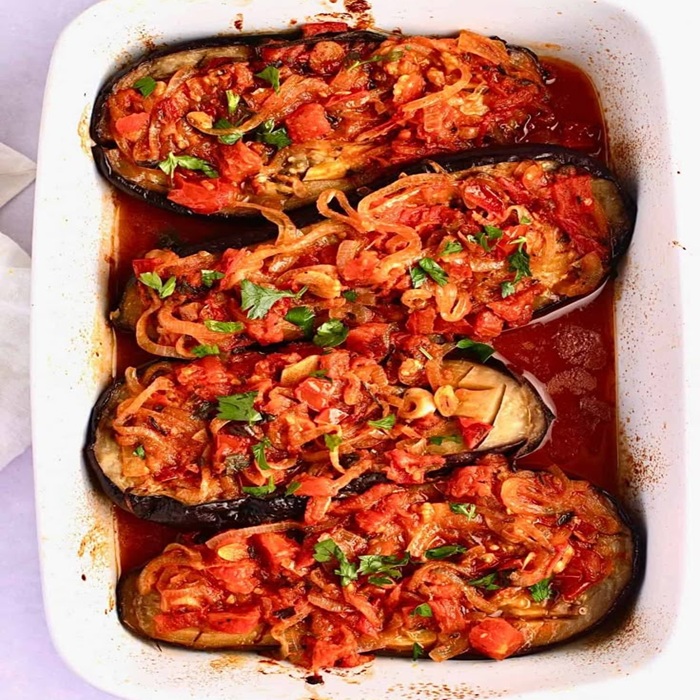
step 1 Heat oven to 190C/170C fan/gas 5. Halve the aubergines lengthways and score the flesh side deeply, brush with a good layer of olive oil and put on a baking sheet. Roast for 20 mins or until the flesh is soft enough to scoop out. step 2 Fry the onion in a little oil until soft, add the garlic and cinnamon and fry for 1 min. Once the aubergines are cool enough to handle, scoop out the centres. Roughly chop the flesh and add it to the onions. Halve the tomatoes, scoop the seeds and juice into a sieve set over a bowl, then chop the flesh. Add the chopped tomatoes to the pan and cook everything for 10 mins until nice and soft. Add a little more oil if you need to. Stir in the parsley, leaving a little for scattering at the end. step 3 Lay the aubergine halves in a baking dish and divide the tomato mixture between them. Pour over the juice from the tomatoes, drizzle with more olive oil and bake for 30 mins until the aubergines have collapsed. step 4 Meanwhile, mix the tzatziki ingredients together and put in a small serving bowl. step 5 Season the lamb with salt, black pepper and a pinch of paprika. Griddle, grill or barbecue for 3 mins on each side or until the fat is nicely browned, then put in a serving dish and squeeze over the lemon halves. Scatter the aubergines with parsley, then serve with the lamb and tzatziki.
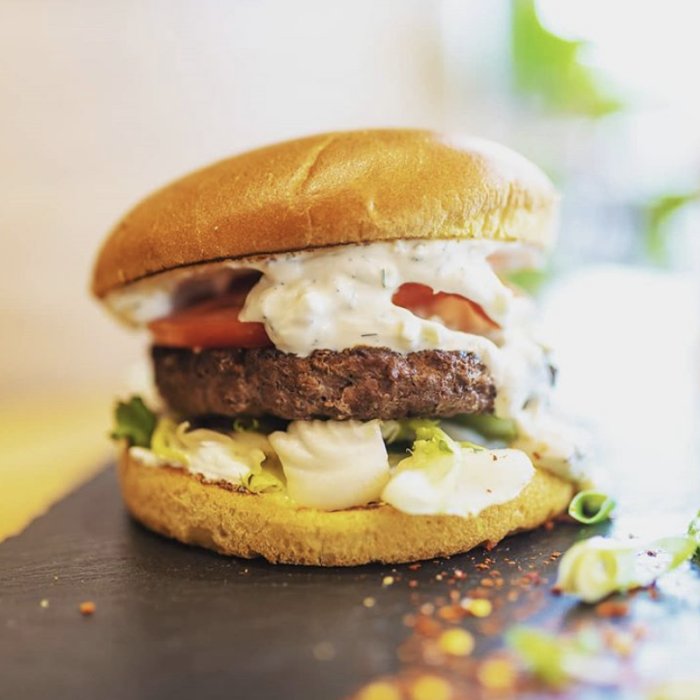
Tip the bulghar into a pan, cover with water and boil for 10 mins. Drain really well in a sieve, pressing out any excess water. To make the tzatziki, squeeze and discard the juice from the cucumber, then mix into the yogurt with the chopped mint and a little salt. Work the bulghar into the lamb with the spices, garlic (if using) and seasoning, then shape into 4 burgers. Brush with a little oil and fry or barbecue for about 5 mins each side until cooked all the way through. Serve in the buns (toasted if you like) with the tzatziki, tomatoes, onion and a few mint leaves.
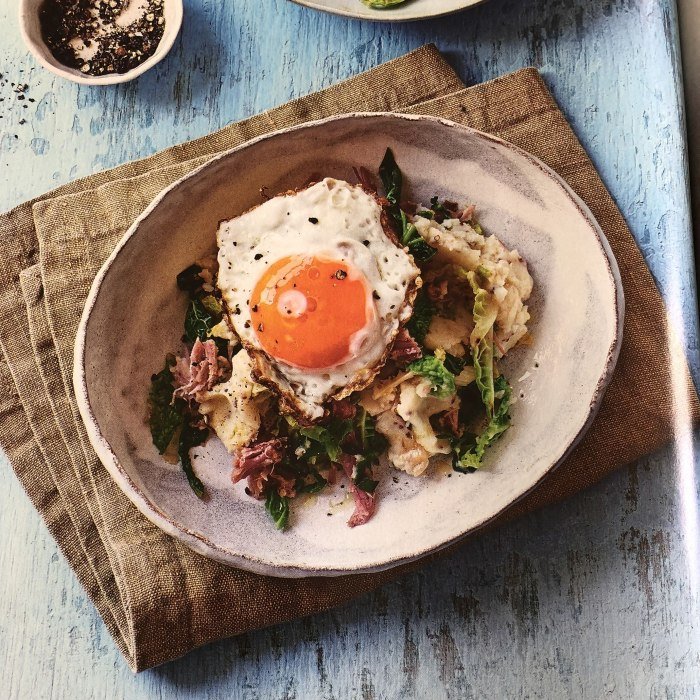
STEP 1 Peel and cut the potatoes into even, medium-sized chunks. Put in a large pan filled with cold salted water, bring to the boil and cook for 10-15 mins until a knife can be inserted into the potatoes easily. STEP 2 Meanwhile, melt the butter in a large sauté pan over a medium heat. Add the garlic, cabbage, spring onions and some seasoning. Stir occasionally until the cabbage is wilted but still retains a little bite, then set aside. STEP 3 Drain the potatoes, leave to steam-dry for a couple of mins, then mash with the cream, mustard and seasoning in the same saucepan. Stir in the cabbage and ham hock. Keep warm over a low heat. STEP 4 Reheat the pan you used to cook the cabbage (no need to wash first), add a splash of oil, crack in the eggs and fry to your liking. To serve, divide the colcannon between bowls and top each with a fried egg.
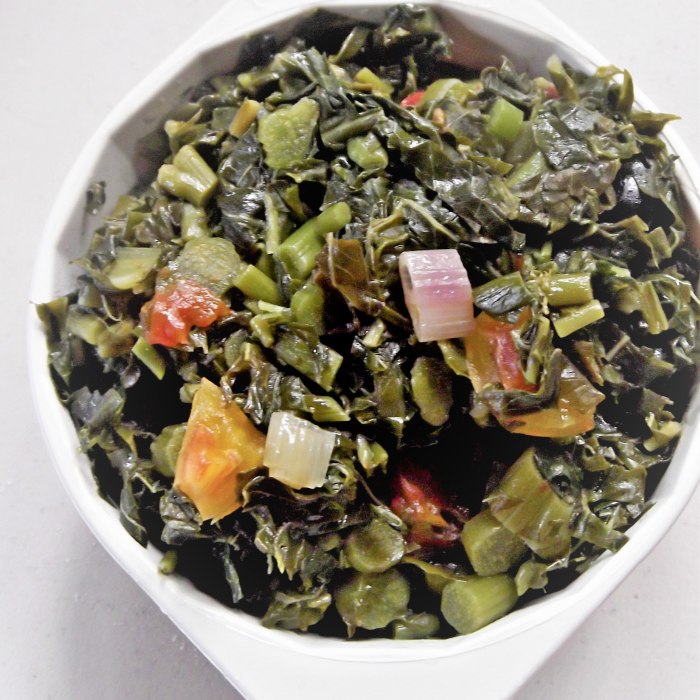
Cut leaves and soft stems from the kale branches, them soak in a bowl of cold water for about 5-10 minutes or until finish with prep. Proceed to slicing the onions, mincing the garlic and dicing the tomatoes. Set aside Remove kale from water cut in chunks. Place bacon on saucepan and cook until crispy. Then add onions, garlic, thyme, stir for about a minute or more Add tomatoes; scotch bonnet pepper, smoked paprika. Sauté for about 2-3 more minutes. Finally add vegetable, salt, mix well, and steamed for about 6-8 minutes or until leaves are tender. Add a tiny bit of water as needed. Adjust seasonings and turn off the heat. Using a sharp knife cut both ends off the plantain. This will make it easy to grab the skin of the plantains. Slit a shallow line down the long seam of the plantain; peel only as deep as the peel. Remove plantain peel by pulling it back. Slice the plantain into medium size lengthwise slices and set aside. Coat a large frying pan with cooking oil spray. Spray the tops of the plantains with a generous layer of oil spray and sprinkle with salt, freshly ground pepper. Let the plantains "fry" on medium heat, shaking the frying pan to redistribute them every few minutes. As the plantains brown, continue to add more cooking oil spray, salt and pepper (if needed) until they have reached the desired color and texture. Remove and serve with kale
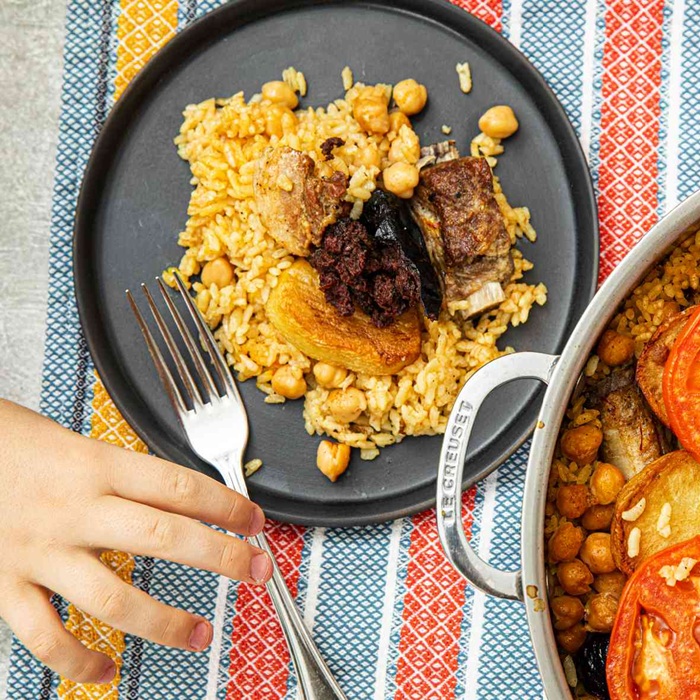
step 1 Heat oven to 200C/180C/gas 6. Heat half the oil in a deep frying or sauté pan (or shallow casserole dish) measuring around 30cm in diameter. Over a high heat, colour the pork belly slices on each side in several batches, then transfer to a bowl. Add the remaining oil to the pan and lower the heat to medium, then add the black pudding and bacon and fry all over for several mins. Remove with a slotted spoon. Fry the onion and peppers for around 10 mins until soft and pale gold, then add the tomato and cook until soft. Add the garlic, smoked paprika and chilli flakes and cook for another 2 mins, then put the pork, black pudding and bacon back in the pan. Add the beans, stock and whichever herb you're using, and bring everything to the boil. step 2 Sprinkle the rice around the pork belly, pushing it underneath the stock. Let the stock come to the boil again, season well, then transfer to the oven (leave it uncovered). Cook for 20 mins without stirring, then check to see how the rice is doing. The rice should be tender and the stock absorbed. If it’s not ready, put back in the oven for another 5 mins, then check again. Taste for seasoning. step 3 Squeeze lemon juice over the top and drizzle over some extra virgin olive oil just before serving, if you like.