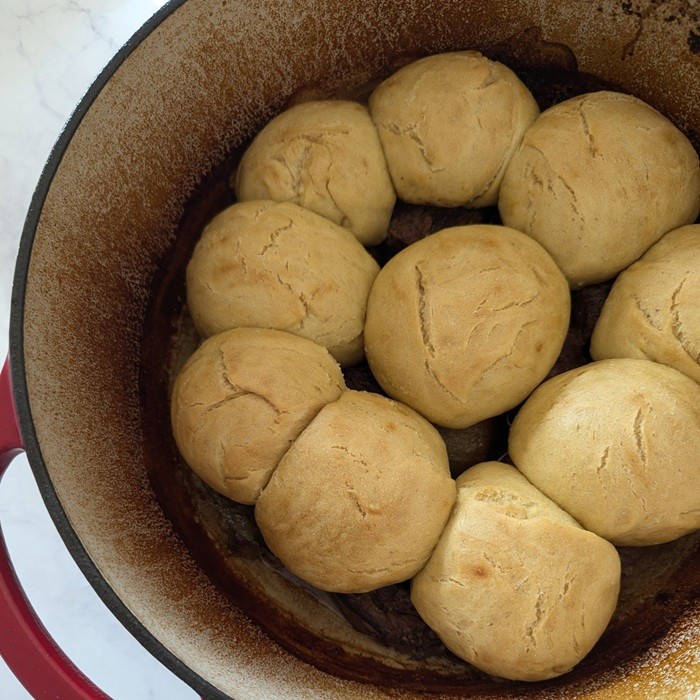
This recipe requires a stew to steam the dumplings on top of, at abour 180℃ or 350℉, give or take (it doesn't have to be specific, but can't be very high or very love heat). You will add the dumplings in during the last thirty minutes of your stew's cooking time, They need to steam covered, so the stew should be in a lidded pot that is oven-proof. Mix the dumpling dough In a measuring cup, combine the warm water, sugar, and yeast. Leave until foamy, about 5 minutes. To a stand mixer bowl, or a large bowl if mixing by hand, add the flour and salt. Stream in the water-yeast mixture while kneading. Knead for several minutes after the dough comes together, until a smooth ball of dough forms. Leave the dumpling dough to rise Place the ball of dough in an oiled dough, cover, and leave to rise until doubled, about 1 hour. Shape the dumplings Divide the risen ball of dough into 10 equal portions for large dumplings, or 12-14 portions for smaller dumplings. Shape each portion of dough into a smooth, round ball. Steam the dumplings In the last thirty minutes of cooking a stew, place the shaped dumplings right atop the stew. Push them down gently into the stew. Cover tightly and return to the oven for 25-30 minutes. The dumplings are done when they're risen and light golden.
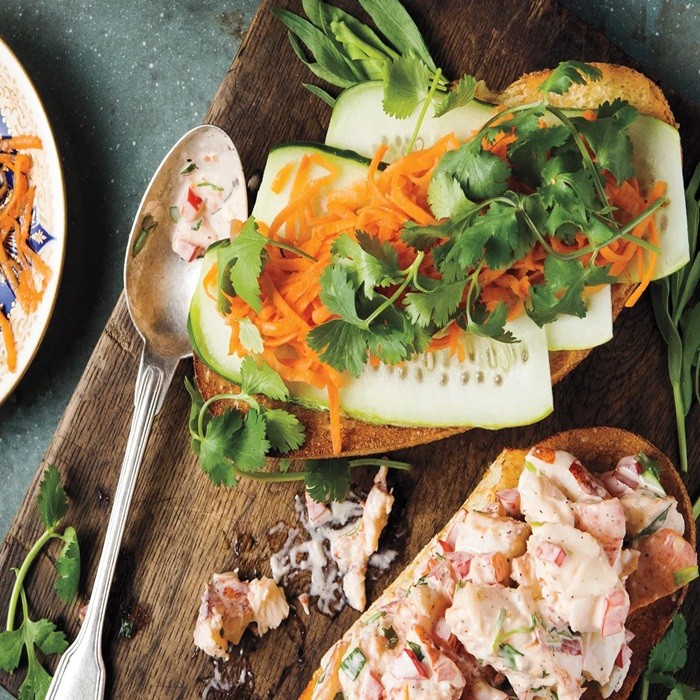
1. In a medium bowl, whisk together the soy sauce and honey to create a marinade. 2. Add the chicken thigh strips to the marinade, ensuring each piece is fully coated, and let it sit for 20 minutes at room temperature. 3. While the chicken marinates, combine the julienned carrots, daikon radish, rice vinegar, and granulated sugar in a separate bowl, stirring until the sugar dissolves to pickle the vegetables. 4. In a small bowl, mix the mayonnaise and sriracha sauce thoroughly to make a spicy aioli. 5. Heat the vegetable oil in a large skillet or wok over medium-high heat until it shimmers, about 2 minutes. 6. Add the marinated chicken strips to the hot skillet in a single layer, cooking for 4-5 minutes per side until they reach an internal temperature of 165°F and develop a golden-brown crust. 7. While the chicken cooks, lightly toast the split baguettes in a toaster oven or under a broiler for 2-3 minutes until just crisp on the edges. 8. Spread a generous layer of the spicy aioli on the inside of each toasted baguette. 9. Drain the pickled carrots and daikon radish from their liquid, then layer them onto the bottom half of each baguette. 10. Place the cooked chicken strips evenly over the pickled vegetables in each sandwich. 11. Top the chicken with fresh cilantro leaves and thinly sliced cucumber. 12. Close the sandwiches by pressing the top half of each baguette down gently.
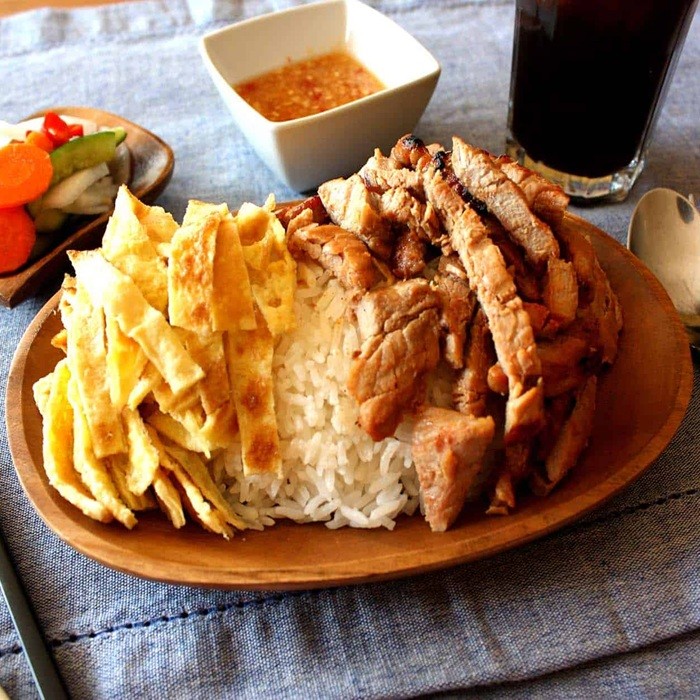
1. In a large bowl, combine the coconut milk, soy sauce, oyster sauce, honey, minced garlic, and black pepper to make the marinade. 2. Add the thinly sliced pork shoulder to the marinade, ensuring each piece is fully coated, then cover and refrigerate for at least 30 minutes to allow the flavors to penetrate. 3. While the pork marinates, rinse the jasmine rice under cold water until the water runs clear to remove excess starch, which helps prevent clumping. 4. In a medium pot, combine the rinsed rice and 4 cups of water, bring to a boil over high heat, then reduce to a simmer, cover, and cook for 15 minutes until the water is absorbed and the rice is tender. 5. Heat a grill pan or outdoor grill to medium-high heat (about 400°F) and lightly brush with vegetable oil to prevent sticking. 6. Remove the pork from the marinade, shaking off any excess, and place it on the hot grill, cooking for 3-4 minutes per side until nicely charred and cooked through with an internal temperature of 145°F. 7. Tip: Avoid overcrowding the grill pan to ensure even browning and proper caramelization of the marinade. 8. Once the pork is grilled, let it rest for 5 minutes before slicing to retain its juices and tenderness. 9. Tip: If you prefer a saucier dish, simmer the leftover marinade in a small saucepan for 5 minutes until slightly thickened and drizzle it over the pork. 10. Fluff the cooked rice with a fork to separate the grains and serve it warm alongside the grilled pork slices. 11. Arrange the thinly sliced cucumber and fresh cilantro leaves on top as a refreshing garnish. 12. Tip: For an extra kick, serve with a side of pickled vegetables or a squeeze of lime juice to balance the rich, savory flavors.

1. Add the chopped potatoes and garlic to a high pan and fill it with tap water until the potatoes are fully submerged. 2. Add some salt. Then place the pan over high heat and bring the potatoes to a boil. Cook them until tender. In the meantime rinse and drain the savoy cabbage. Slice it up finely. 3. Add a tablespoon of butter to a large non-stick pan. Place it over medium-high heat. Once melted, add the savoy cabbage. Season with a pinch of pepper and salt. 4. Stir fry the cabbage for 15 to 20 minutes or until the cabbage is soft and tender. Then turn the heat off and take the cabbage off the heat. In the meantime, pan fry the sausages (or sliced bacon if you are using both) in a non-stick pan in a tablespoon of butter or oil until golden brown and cooked through. 5. Transfer the sausages (and bacon) to a plate and cover with a lid or tinfoil to keep the meat warm. In the same greasy pan, add the sliced onion and extra butter and cook it gently over medium heat for 10 minutes until softened. (I often add diced bacon as well, if I only serve the stoemp with sausages.) 6. Then add the beer and turn the heat up. Let the beer reduce until you get a nice beer and onion sauce (you can add a little flour or sauce thickener if you like). Add the pan fried meat back to the pan and cover to keep warm. 7. Drain the cooked potatoes and garlic, add them back to the pan you cooked them in together with the pan fried cabbage and chopped parsley. Sprinkle with some pepper, salt and nutmeg. Also add the milk and the rest of the unsalted butter. 8. Mash the potatoes, parsley and cabbage up. Add extra butter or milk if necessary. Also check the seasoning and add extra pepper, nutmeg or salt to taste if necessary. Scoop the cabbage mash onto plates and top with the pan fried sausages (and bacon). Drizzle with the beer and onion sauce. Serve hot.
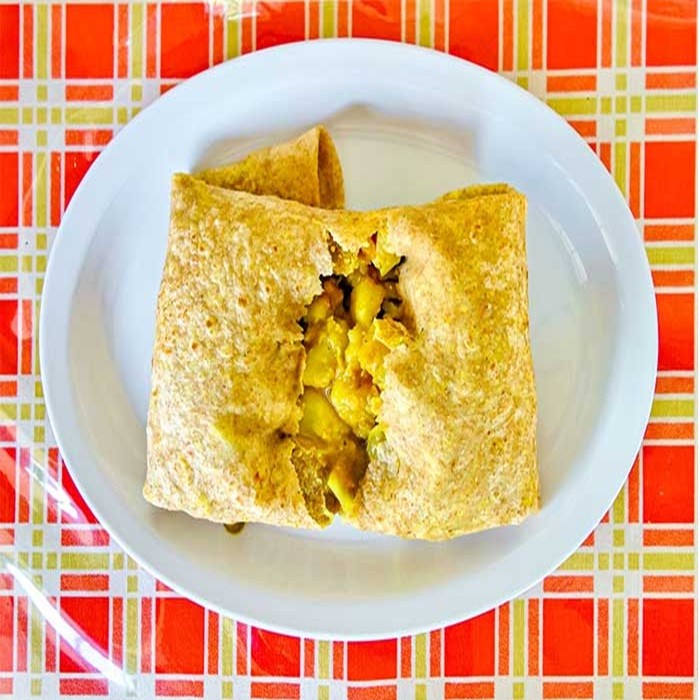
Add a pint of chicken stock to the simmer and put three tablespoons of sugar into a large saucepan on high; cook until the sugar caramelizes, then add the cubed chicken breasts and stir until the chicken browns. Add chopped onions, garlic, parsley, thyme, jerk seasoning, salt, and the whole scotch bonnet pepper – do not cut up the pepper! Reduce the heat to low and let this simmer for 25 minutes. In a large mixing bowl, sift the flour, and add a pinch of salt to taste. Now add the first tablespoon of shortening, and with your fingers, rub the flour into the shortening until it forms a breadcrumb-like consistency. Then add the second tablespoon of shortening and rub against the flour until it looks like breadcrumbs. Now add the third tablespoon of shortening and repeat the process. You should by now have used all the flour. Your bowl should be all breadcrumb-like; if you still have fresh flour, use another tablespoon of shortening until your fresh flour is all used up. Add a small amount of water and mix with a butter knife; keep adding small amounts until your mixture forms a soft dough. Now dust your surface with flour and roll out your pastry; you want to roll wafer-thin rounds – this mixture should make at least 12 roti skins. Cover with a tea towel while returning to the pot. Now peel the potatoes and cube them into small bite-size pieces. After 25 minutes of simmering, add 1/2 pint of water and the potatoes to the pool. Now cover and cook for 30 minutes on low heat. Turn a flat baking tray upside down, lightly cover with foil, and place on the stovetop on high; cook each roti skin for 1 minute on each side until brown but not crisp. Now pile up your cooked roti skins, remove the pot after 30 minutes, and remove the whole scotch bonnet. Take the entire pot to the table with a pile of plates; each person assumes the roti skin, lays it flat on the scale, spoons some filling into the middle of the roti skin, and folds around the filling eats enjoy.
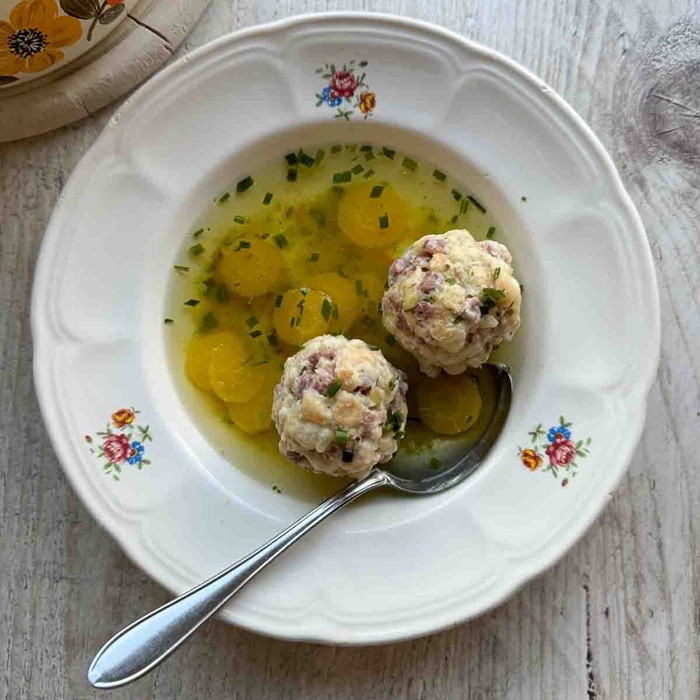
Step 1 Finely chop the shallots, and dice the smoked ham or sausage into small cubes. Heat some butter or clarified butter in a pan and sweat the onions in it until translucent. Add the meat and the parsley and fry together briefly before removing from the heat. Step 2 Place the bread in a bowl. Beat the milk with the eggs and season well with salt, pepper and nutmeg. Pour over the bread. Stir in the sausage and onion paste and mix in the flour. Mix together to form a relatively firm paste (adding more bread or flour if necessary) and season again according to taste. Smooth the surface of the dough out and leave to stand for approx. 30 minutes. Step 3 Heat up a good quantity of salted water in a large pan. Use the paste to form smaller dumplings (for use as a garnish in soups) or medium-sized dumplings, as required. Moisten the hands regularly with cold water during this stage so that the dumplings take on smooth forms. Step 4 Place in boiling water, bring back to the boil, turn down the heat, and simmer gently for 8-20 minutes, depending on the size. Step 5 Remove from the water, dry off well and serve up garnished with chopped parsley and melted butter (which has been taken on a nut-brown colour).
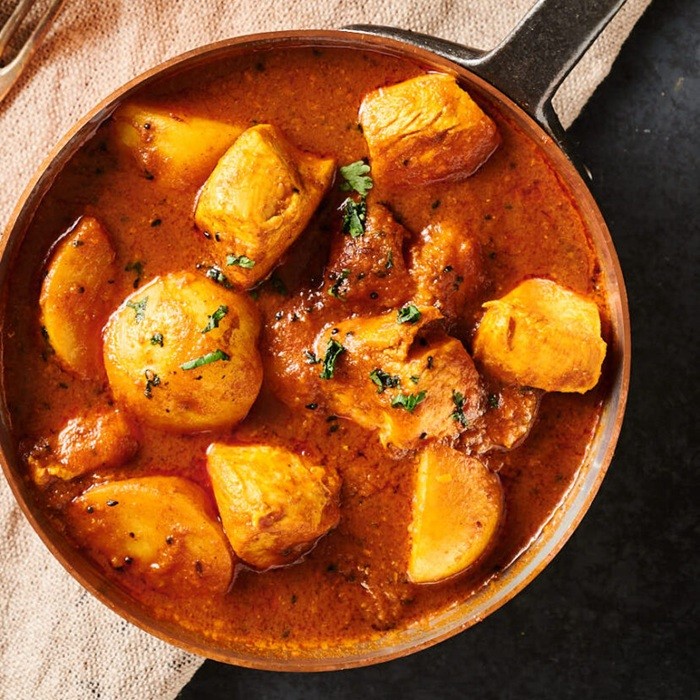
Heat the olive oil in a large skillet over medium-high heat. Cook and stir the onions in the hot oil until translucent, about 5 minutes. Add the ginger-garlic paste and continue cooking another 5 minutes. Reduce heat to medium; stir the tomatoes into the mixture and cook until the tomatoes are pulpy, 5 to 10 minutes. Season with the cayenne pepper, curry powder, garam masala, turmeric, and cumin; cook and stir another 5 minutes. Add the chicken and potatoes to the mixture in the skillet; simmer, stirring occasionally, until the potatoes are tender and the chicken is no longer pink in the center, about 20 minutes. Sprinkle the cilantro over the mixture and continue simmering another 10 minutes. Serve hot.
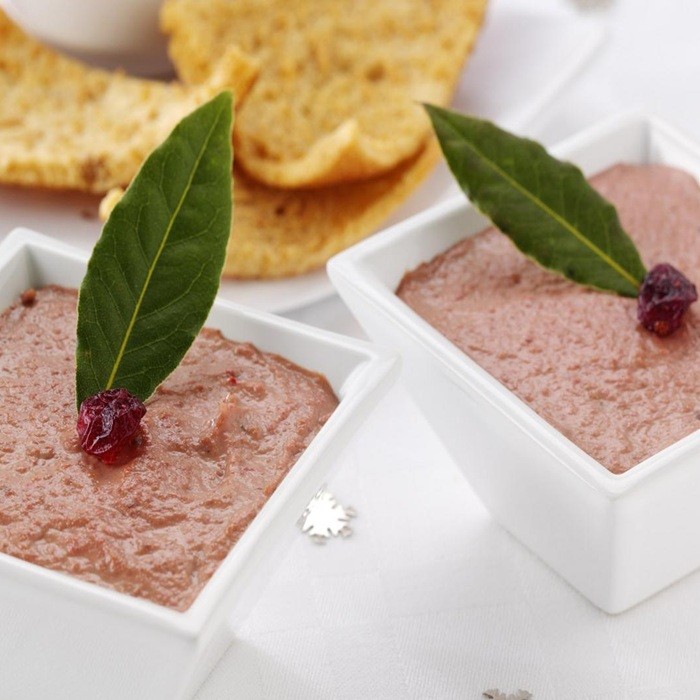
Clean livers of sinews and gall. Put into a fireproof casserole with all other ingredients roughly chopped. Season and cover with milk. Put the lid on the casserole and cook in a slow oven (300ºF) for 2 hours. Liquidize in a blender. Adjust seasoning. Add sherry or brandy. Put in a dish and cover with melted butte
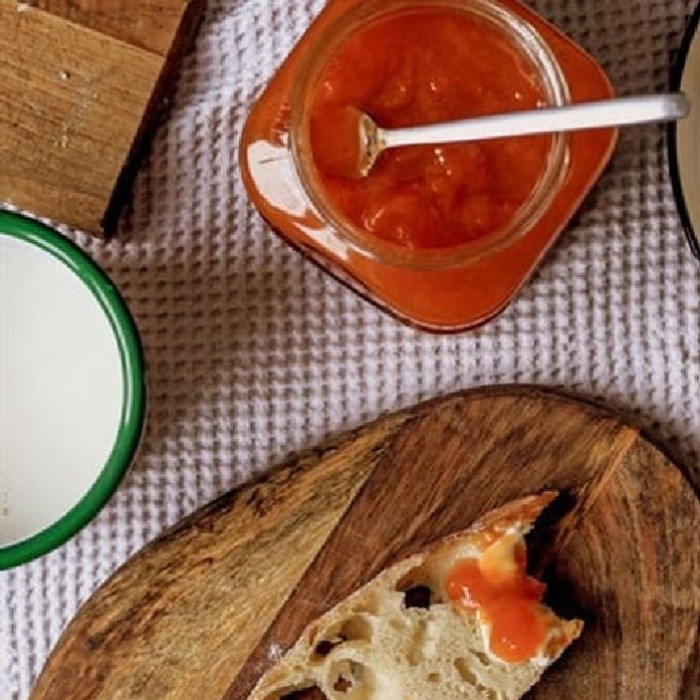
1. Remove the skin of the pumpkin. Also remove the inner seeds. 2. Cut the flesh into 2cm cubes. 3. Take the zest off the oranges, with as little pith as possible, and cut into matchstick-sized strips. 4. Extract the juice from the oranges. Remove the seeds from the cardamom pods and reserve. 5. Place the pumpkin, orange juice, orange strips, sugar and whole cardamom pod seeds in a large pan, mix well and leave to marinate for about 10 hours or overnight. Stir occasionally. 6. Bring the mixture to the boil, then reduce the heat and simmer until the liquid has thickened and become syrupy. This can take about an hour or a little bit longer. Leave to cool then place in clean, dry jars. Enjoy!
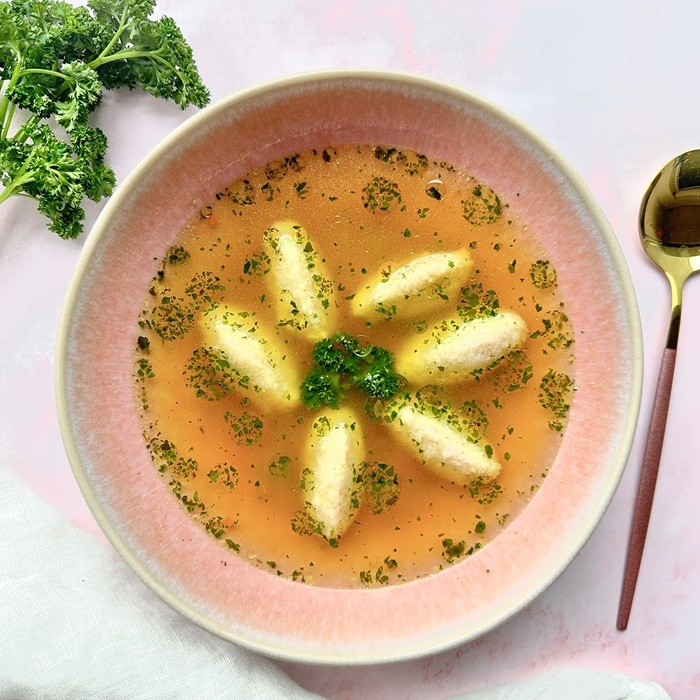
Step 1 Allow butter to come to room temperature before beating in a bowl until creamed. Season with salt and a small, delicate pinch of nutmeg. Step 2 Add in the egg, stirring vigorously. Sprinkle the semolina over this, and mix it in well until the surface is smooth. Cover with saran wrap and leave to rest for 15 – 20 minutes. Step 3 Use two spoons, dipped regularly into hot water throughout, to press or shape dumplings from the paste. You can also place these on a lightly oiled board or plate and again leave them to stand for a short while (this allows the dumplings to rise even more). Step 4 Heat a generous quantity of salted water in a large pan. Place the dumplings into the water and bring them back to a boil before turning down the heat and leaving to simmer gently for 10 – 15 minutes (do not boil). Carefully turn the dumplings occasionally. Step 5 Remove the semolina dumplings carefully and put them in the heated soup. Serve promptly, with a garnish of sprinkled parsley or chives. Step 6 The semolina dumplings can also be cooked in the beef broth, but this causes the soup to take on a slightly dull appearance. The cooked dumplings should never be left standing in the soup for too long, as they will “soak up” the soup and become softened.
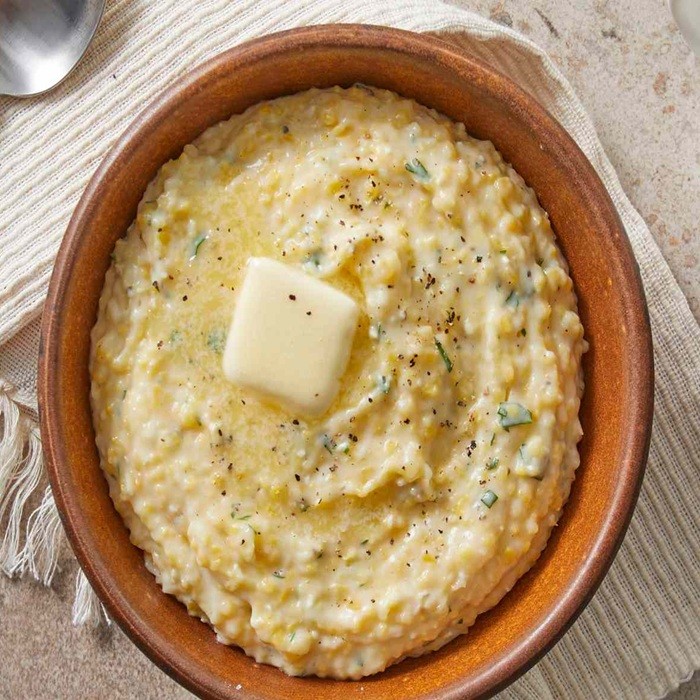
Bring water with salt to a boil then add grits; reduce heat and cover. occasionally stirring. Cook approximately 15 minutes or until grits have desired consistency. Cool then serve
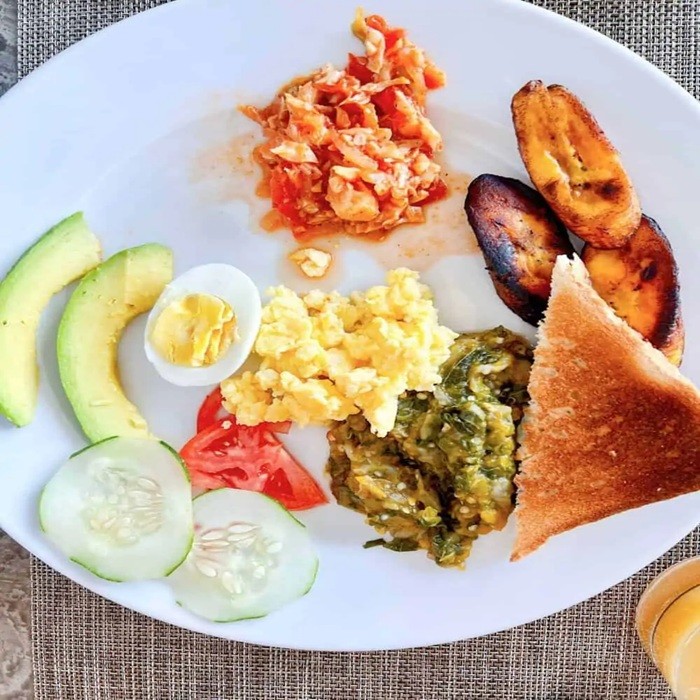
Peel and chop eggplant and pumpkin into medium-sized pieces. Heat butter and add onions and garlic in a medium sized pot set to medium to high heat. Sauté for 2 minutes until softened but not browned. Add pumpkin and eggplant. Sauté for an additional two to three minutes. Add water just to cover the vegetables. Bring to a boil, reduce heat to a simmer and cook until the vegetables are soft. Add the chopped spinach, stir and cook for an additional 3 minutes. Pour the vegetable mixture into a colander and let drain. After vegetable mixture has been drained return it to the pot and mash vigorously with a potato masher or a thick whisk. Add salt and pepper. Adjust seasoning to taste.
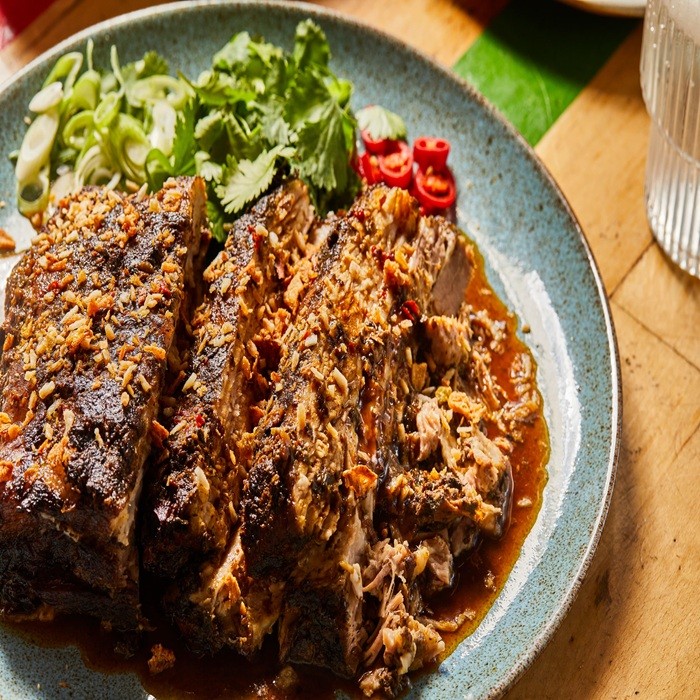
Blitz all the marinade ingredients in a food processor or with a hand blender. Lay the pork in a large dish, pour over the marinade, then turn the meat in the mixture, rubbing in the marinade all over and making sure every bit of the belly is coated. Cover the dish and leave overnight in the fridge. The next day, heat the oven to 140C (120C fan)/275F/gas 1. Lift the meat out of its marinade (don’t wipe off any that sticks to the joint, though; just leave most of the marinade behind in the dish) and transfer to a large roasting dish. Cover with foil, slip into the oven and roast for four and a half hours – every now and then (say, three or four times over the whole cooking period), take the dish out of the oven, lift off the foil lid and spoon the juices from the bottom of the dish over the meat. Return the foil lid, then put back in the oven. After the time is up, remove the foil, turn up the heat to 180C (160C fan)/350F/gas 4 and give the pork a final blast – after 15-20 minutes, the top will take on a lovely colour and the meat should be yielding and soft enough to cut with a spoon. To make crackling shards to serve with the meat, heat the oven to 200C (180C fan)/390F/gas 6 and line a roasting tray with baking paper. Lightly score the skin from the pork belly with a sharp knife, then rub it with a three or four fat pinches of salt – I also like to add a few caraway, cumin or fennel seeds at this point (use anything that takes your fancy). Cut the skin into long strips and lay these fat side down on the lined tray (you can, of course, leave it whole, but I think its pleasing to dress the plate with long, golden shards of crackling). Lay a second sheet of baking paper on top of the skin, then put a second baking tray of the same size on top, and roast for 45 minutes to an hour (if by this point the crackling has not gone crisp, just put it back in the oven and carry on roasting it until it has). Cut or pull the pork apart, top with finely chopped coriand
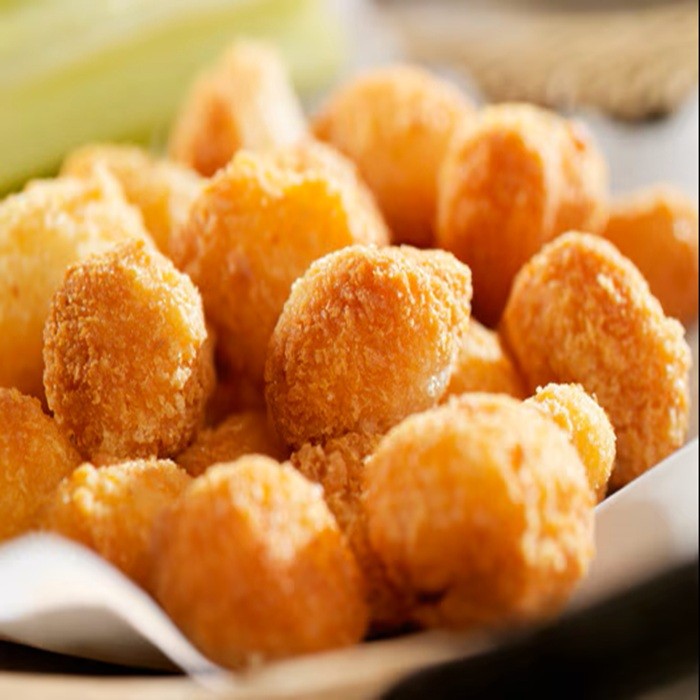
Grate finely and toss together. 1 lb. sharp yellow cheese (cheddar or oude boerenkaas) 1 lb. keshi di buriko (or any white cheese such as fromage blanc, queso blanco, ricotto, feta etc.) Stir in: 6 eggs, beaten 5 Tbs. Cornstarch Shape the mixture into small balls. These may be kept indefinitely in the freezer. Drop the balls into deep, hot fat and fry until golden. Serve piping hot on toothpicks.
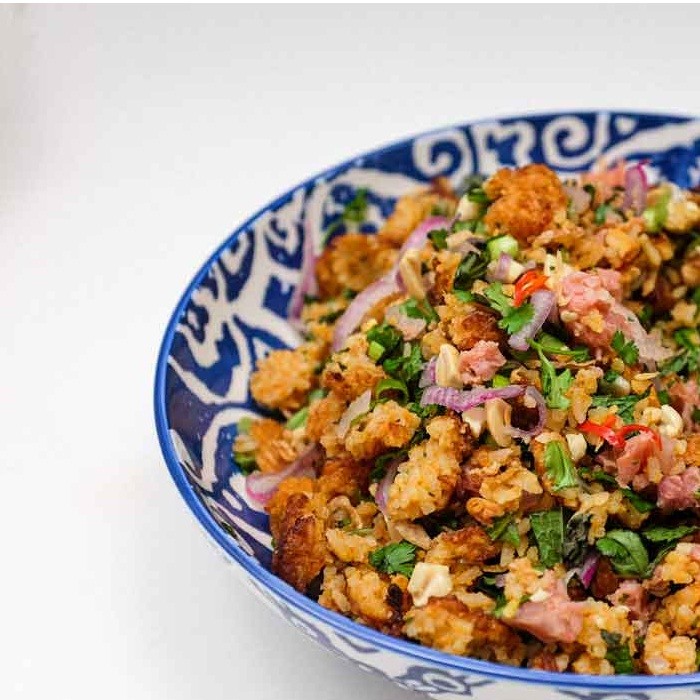
Slice the onion and shallots thinly. Let them soak in a ice water bath while preparing the rest of the meal. Grate the coconut. Put in a large bowl. Add the coconut in a large bowl. Add the rice. Using your hands, mix the coconut and rice together. Roll the mixture to form 2-inch rice ball croquettes. Heat up the cooking oil in a pot or pan. Beat two eggs and a large bowl. Dip the balls into the egg mixture. Then, drop the balls into the cooking oil. Allow the balls to turn a dark amber brown color. Deep fry until crispy, crunchy, and golden. Remove and set on paper towel to drain excess oil. Once cooled, break apart the rice balls and add into a larger bowl. Drain the onion and the shallots. Make sure you tear the pork sausage up into small pieces. You can use a knife too, but the traditional method is tearing. In the large bowl, add in the onion, shallots, sour pork sausage, pickled garlic, lime juice, fish sauce, sugar, cilantro, hot mint, regular mint. Top with peanuts. Serve with Lettuce, dry chilli, and other fresh vegetables. Preserving Naem Khao Recipe Naem Khao can be kept in the refrigerator for 4 days. It can then be served chilled. It should not be frozen. Serving Naem Khao Nam Khao is generally served with lettuce leaves and a variety of different herbs like hot mint, mint, basil, and perilla.

Bring salted water to boil in a large pot. Add in the cabbage and potatoes, cook until tender about 30-40 minutes When tender, drain, very well. Return the vegetables to the pot and turn on the burner to low. Let steam Meanwhile cook up the bacon, reserving the fat for frying the hash. Chop up the bacon, into small pieces. Mash the potatoes and cabbage with a potato masher and add in the minced garlic. Add in salt and pepper to taste. Using a form for individual servings, press the hash mixture into the form with bacon on top, fry in the reserved bacon fat until golden brown, flip over and repeat on the other side. Remove form and garnish with chopped parsley. If you want to make one big hash, just use a skillet, pressing the hash into the skillet with the bacon pieces and reserved fat, then flip over once golden brown. Cut into servings. Garnish with chopped parsley.

Finely grate the zest of 1 medium orange (about 2 teaspoons) and 1 medium lemon (about 1 teaspoon) into a medium saucepan. Add 1 quart whole milk, 1/2 cup granulated sugar, and 1 (3-inch) cinnamon stick. Bring to a boil over medium heat. Remove the pan from the heat and add 1/3 cup dry sherry. Let sit until cool enough to handle. Meanwhile, cut 1 (12-ounce) day-old baguette crosswise into 1-inch-thick slices (about 16). Arrange in a single layer on a rimmed baking sheet. Pour the milk mixture over the bread and let it soak for 5 minutes. Flip each slice of bread. Let the bread sit until it absorbs most of the liquid but isn't falling apart, about 5 minutes more. Heat 1 cup olive oil in a large frying pan over medium-high heat until shimmering. Meanwhile, whisk 4 eggs together in a medium bowl. Working with 1 slice at a time, dip the bread in the egg mixture to coat. Let the excess drip off, then add to the pan. Repeat with as many slices as needed until the pan is filled with a single layer. Fry until golden-brown on the bottom, about 4 minutes. Flip the slices and fry until the second side until golden-brown, 3 to 4 minutes more. Transfer to a paper towel-lined plate or baking sheet. Repeat dipping and frying the remaining bread. Drizzle with honey to serve.
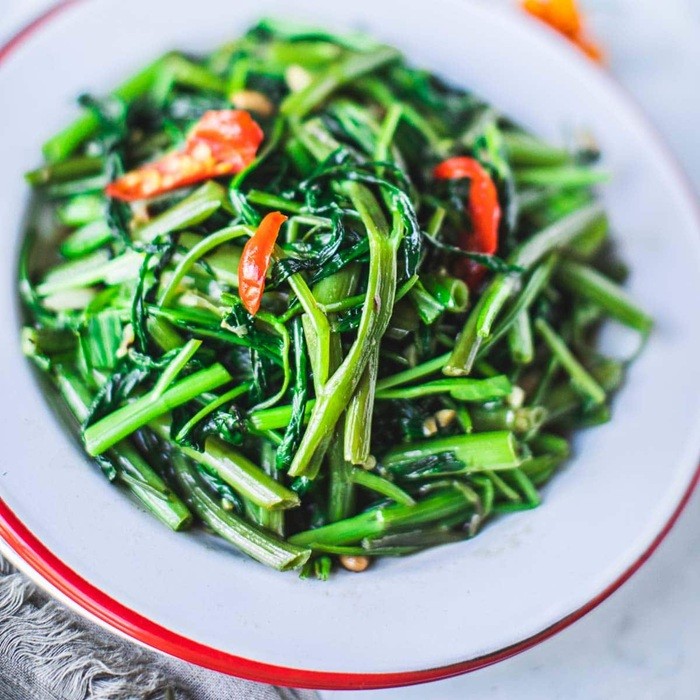
In a wok or large pan, heat 1 tablespoon of vegetable oil over medium heat. Once the oil is hot, add the garlic and stir-fry for about 30 seconds, until fragrant but not burnt. Add the minced pork to the pan and break it up with a spatula. Stir-fry until the pork is fully cooked and browned, about 2-3 minutes. Stir in the fermented soy beans and cook for another minute, mixing it thoroughly with the pork. Toss in the cut morning glory and stir-fry for 2-3 minutes to retain its bright green colour and crisp texture. Check the seasoning and adjust with fish sauce or sugar if needed. Transfer to a serving dish and serve immediately with steamed rice.
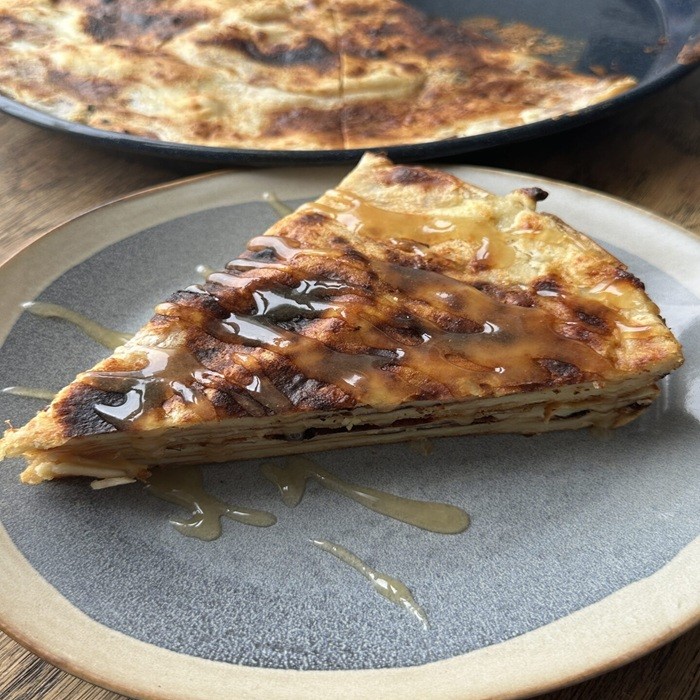
1 Prepare the Flour Batter Mix together the flour, water and salt ensuring all the lumps are dissolved. The mixture should be thick but still of a pouring consistency, add a little extra water if required. Put to one side. 2 Prepare the Batter Filling Mix together the butter, oil and chosen yogurt / cream ensuring all the lumps are dissolved. The mixture should be runny, leave to rest for 10 minutes before given it another good mix. The consistency should be similar to custard. Put to one side. 3 Baking Preheat the gill to a medium setting (I use mark 4 of 6). Take a large deep baking tray or pie pan and rub some olive oil over the base. Make the first layer of flour batter using a squirty bottle or laydel, don't try to pour the batter as it will be too thick in the pan. You need to make a star effect by leaving triangles between each line of batter layers. Place under the grill until golden brown. This will take between 3 - 5 minutes. 4 Remove from under the grill and using a brush or the back of spoon rub over the whole pan (both battered and un-battered areas) a layer of the batter filling. Then, add a layer of the flour filling, use the same star effect this time placing the lines of batter through the gaps left from the previous layering. Also, leaving the same triangle shapes between each line. Place under the grill until golden brown. This will take between 3 - 5 minutes. 5 Repeat step 4 until all the mixture has been used and ensuring each triangle gap is filled with flour batter on each layer - this will take around 2 hours. After every couple of layers, use one layer just to fill up any spaces (large gaps between the batter stars) that may have started to show. 6 Serving Once the Flija is ready serve straight away with honey or yogurt.
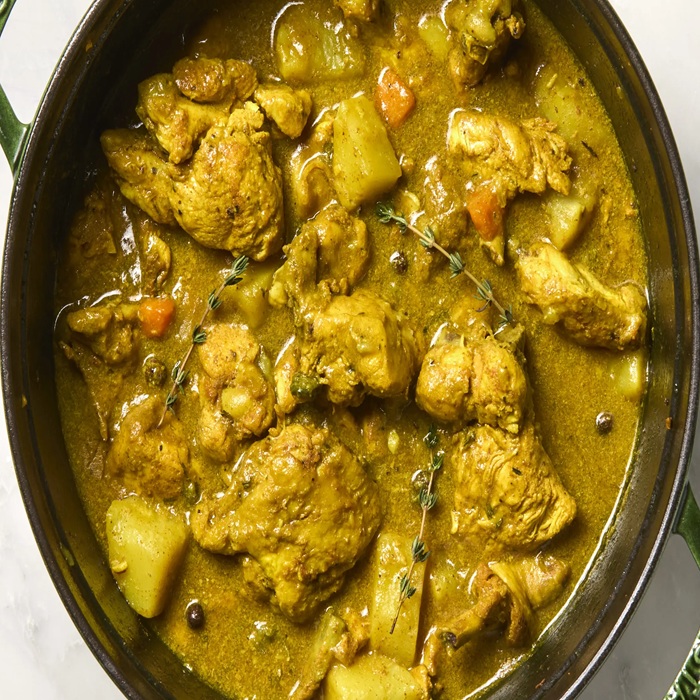
Equipment Dutch Oven Instructions Add chicken thighs, all-purpose seasoning, 1 tablespoon of curry powder, onion, green onions, green pepper, garlic cloves, scotch bonnet pepper (if using), and thyme to a large bowl and combine, making sure all chicken pieces are covered with the seasoning. Cover and refrigerate for at least 1 hour or up to overnight. One the chicken is done marinating, remove onions, peppers, and garlic cloves from chicken and set aside. Heat olive oil in a large heavy bottom pot over medium heat. Add remaining curry powder and stir, cooking for about 20-30 seconds. Add onions, green pepper, garlic cloves, thyme, and scotch bonnet pepper (if using) to pot and stir until onions have softened, about 3-5 minutes. If your onions and peppers are looking dry, add about 1 tablespoon of water. Add chicken and ¼ cup of water to the pot. Cover and reduce heat to medium low. Cook, stirring occasionally, for 30-35 minutes. When there is about 15 minutes remaining, stir in potato and continue to cook covered. Once chicken is cooked and potatoes are softened, remove from heat. Salt and pepper to taste.
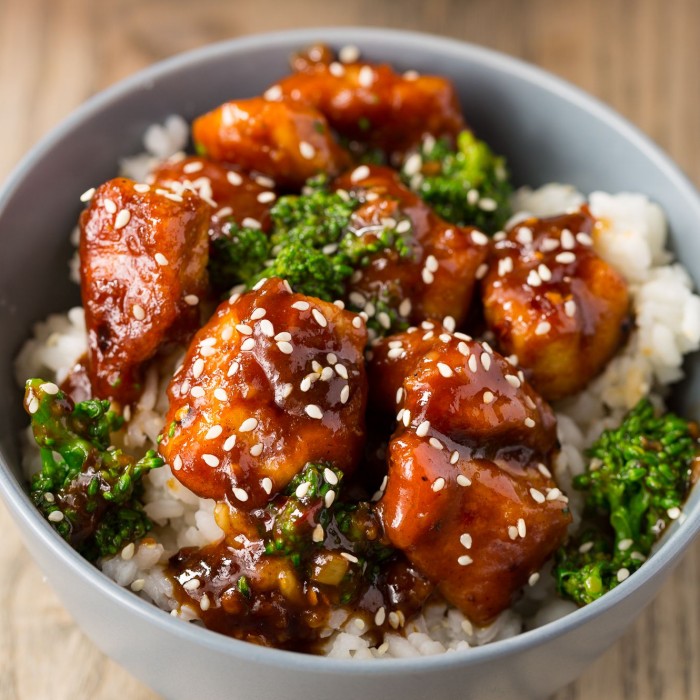
DIRECTIONS: STEP 1 - SAUCE In a bowl, add 2 Cups of water, 2 Tablespoon soy sauce, 2 Tablespoon white vinegar, sherry cooking wine, 1/4 Teaspoon white pepper, minced ginger, minced garlic, hot pepper, ketchup, hoisin sauce, and sugar. Mix together well and set aside. STEP 2 - MARINATING THE CHICKEN In a bowl, add the chicken, 1 pinch of salt, 1 pinch of white pepper, 2 egg whites, and 3 Tablespoon of corn starch STEP 3 - DEEP FRY THE CHICKEN Deep fry the chicken at 350 degrees for 3-4 minutes or until it is golden brown and loosen up the chicken so that they don't stick together. Set the chicken aside. STEP 4 - STIR FRY Add the sauce to the wok and then the broccoli and wait until it is boiling. To thicken the sauce, whisk together 2 Tablespoon of cornstarch and 4 Tablespoon of water in a bowl and slowly add to your stir-fry until it's the right thickness. Next add in the chicken and stir-fry for a minute and serve on a plate
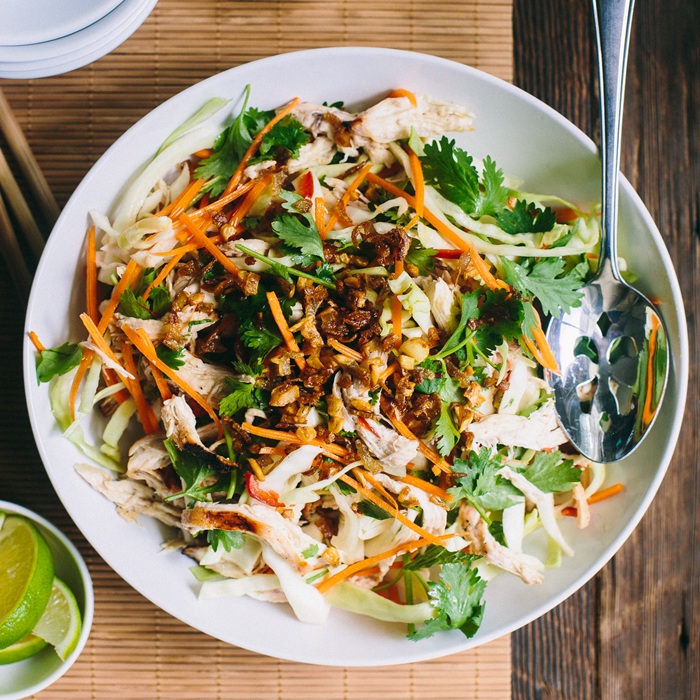
step 1 To make the dressing, whisk all the ingredients together in a large serving bowl. Cook the noodles following pack instructions, then drain and add to the bowl with the dressing. step 2 Peel the carrot into long strips using a vegetable peeler. Do the same for the cucumber, until you reach the seeds (discard them). Add the carrot and cucumber to the noodle mixture along with the shredded chicken, radishes, red onion and mint. Toss well to coat in the dressing, scatter over the peanuts and serve.
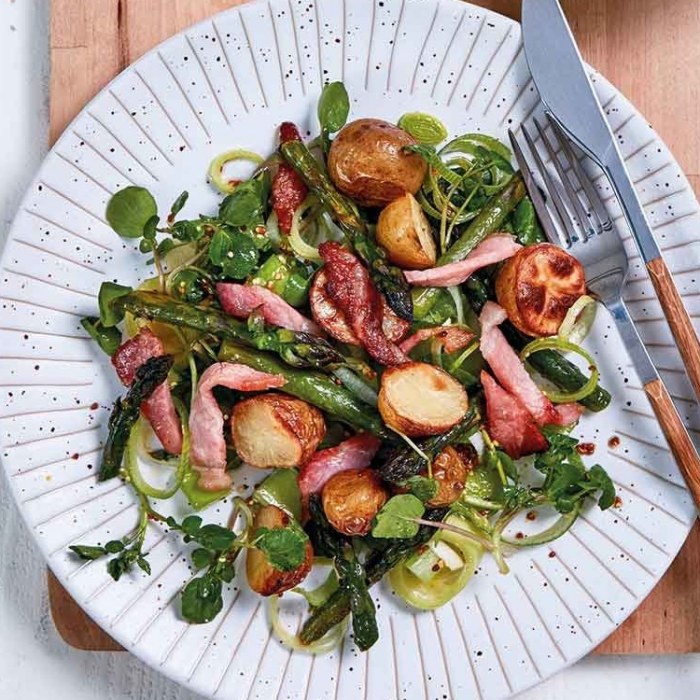
step 1 Preheat the oven to 200C/Gas 6/fan 180C. Snap off the woody ends of the asparagus and discard. Arrange the asparagus in a single layer in a baking tray with sides. Cut the tomatoes in half widthways, nestle them in with the asparagus, season with sea salt and pepper and drizzle with olive oil. Roll each bacon rasher into a tight roll (if large, first cut in half crosswise), and arrange in the tray. Drizzle the bacon rolls with the honey and bake for 20 minutes until the tomatoes are soft and the bacon is crisp. step 2 In the meantime, boil the potatoes until tender. Whisk the vinegar, olive oil, mustard, some sea salt and pepper in a large bowl until blended. Toss the rocket or spinach leaves in half of the dressing, and arrange on a large serving platter. step 3 Drain the potatoes and cut in half. Gently toss them in the rest of the dressing, and arrange on the platter with the asparagus. Tuck in the tomatoes and bacon.
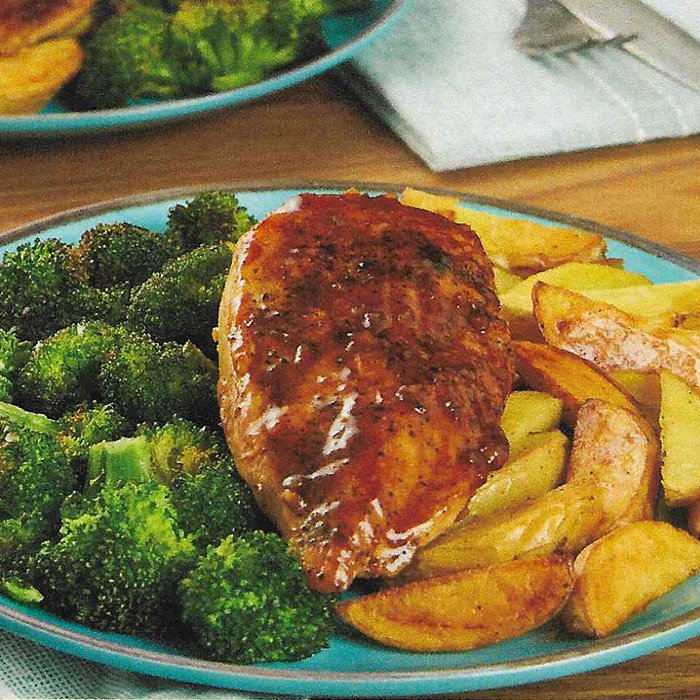
2 Servings 1. Preheat oven to 425 degrees. Wash and dry all produce. Cut potatoes into 1/2-inch-thick wedges. Toss on one side of a baking sheet with a drizzle of oil, salt, and pepper. (For 4 servings, spread potatoes out across entire sheet.) Roast on top rack for 5 minutes (we'll add the broccoli then). 2. Meanwhile, cut broccoli florets into bite-size pieces, if necessary. Peel and finely chop garlic. In a small microwave-safe bowl, combine 1 TBSP olive oil (2 TBSP for 4 servings) and half the garlic. Microwave until garlic sizzles, 30 seconds. 3. Once potatoes have roasted 5 minutes, remove sheet from oven and add broccoli to empty side; carefully toss with garlic oil, salt, and pepper. (For 4 servings, add broccoli to a second sheet.) Continue roasting until potatoes and broccoli are browned and crispy, 15-20 minutes more. 4. While veggies roast, pat chicken dry with paper towels; season all over with salt and pepper. Heat a drizzle of oil in a large pan over medium-high heat. Add chicken and cook until browned and cooked through, 5-6 minutes per side. (If chicken browns too quickly, reduce heat to medium.) Turn off heat; set chicken aside to rest. Wash out pan. 5. Heat pan used for chicken over medium-high heat. Add a drizzle of oil and remaining garlic; cook until fragrant, 30 seconds. Stir in vinegar, honey, stock concentrate, and 1/4 cup water (1/3 cup for 4 servings). Simmer until thick and glossy, 2-3 minutes. Remove from heat and stir in 1 TBSP butter (2 TBSP for 4). Season with salt and pepper. 6. Return chicken to pan and turn to coat in glaze. Divide chicken, broccoli, and potatoes between plates. Spoon any remaining glaze over chicken and serve.