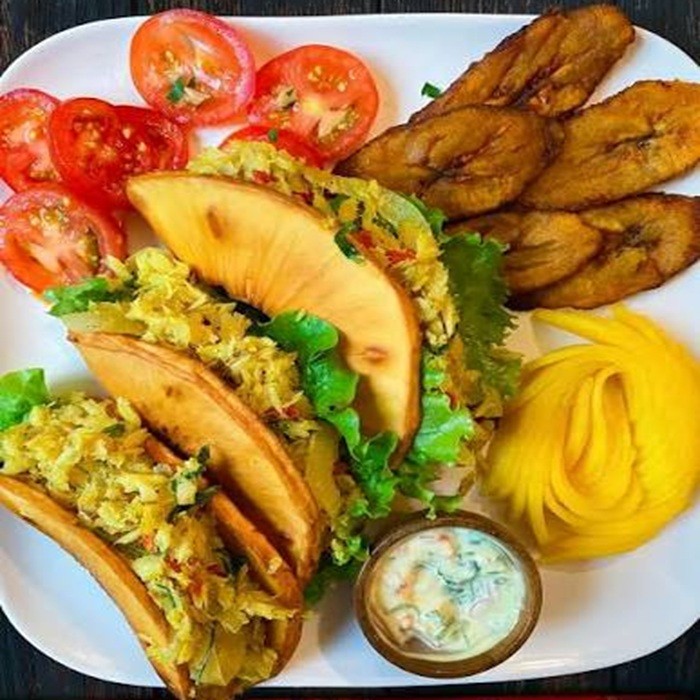
Place a large pot of water to boil, add breadfruit, and let it cook for around 30 minutes Remove breadfruit from pot and let it cool for a few minutes Hold the breadfruit firmly and using a large sharp knife slice into thin rounds Slice as many as you need Then cut off skin and core (You may leave the core on if you like) Gently fold to shape like a taco shell, use two toothpicks to hold it in place. Place on a large plate or tray and repeat this process for all breadfruit slices Heat oil for deep frying, using a pair of tongs submerge breadfruit slices in pan, You can guide slices with tongs if you need to You can leave the small toothpicks in the taco shells and remove them after they're cooked. Or, you can do like I did. If your'e using larger toothpicks, you may need to remove them safely. Be very careful as you need to adjust it in the hot oil. Remove when golden brown Set over tissue paper Repeat this for the rest of the shells Stuff the shell with your favorite filling. I chose codfish/ salt fish
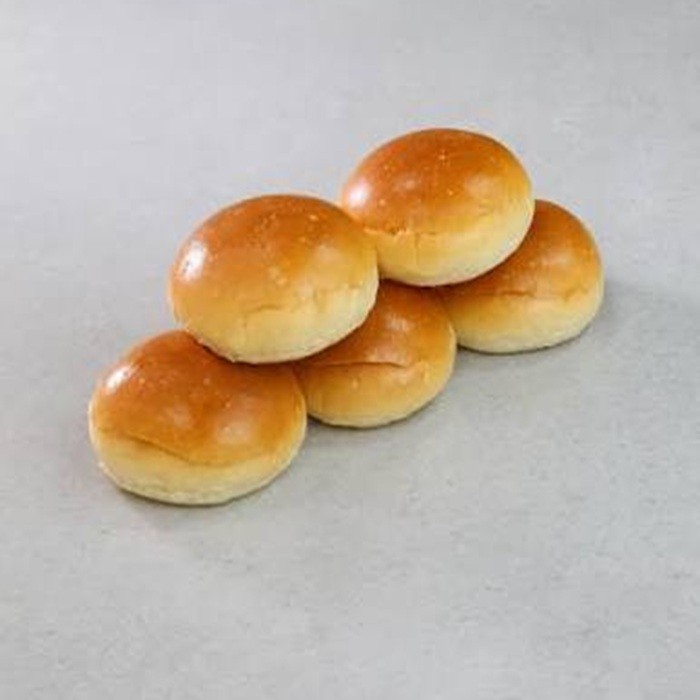
Combine the flour, the sugar, yeast, and salt in a mixing bowl or large bowl Add warm milk and start kneading dough Once the dough is smooth and elastic, add the butter and continue kneading Allow the dough to rise in a covered bowl until it’s doubled in bulk, about 90 minutes. Turn the dough out onto a lightly floured surface, divide dough and round all of the pieces into smooth balls. Lightly grease pans Place dough on pan Cover the pans, and let the loaves rise until they're puffy and soft Using a brush, add egg whites to loaves Towards the end of the rising time, preheat the oven to 375°F Uncover the loaves, and bake them for 28 to 32 minutes, until their crust is golden brown Remove from oven and enjoy
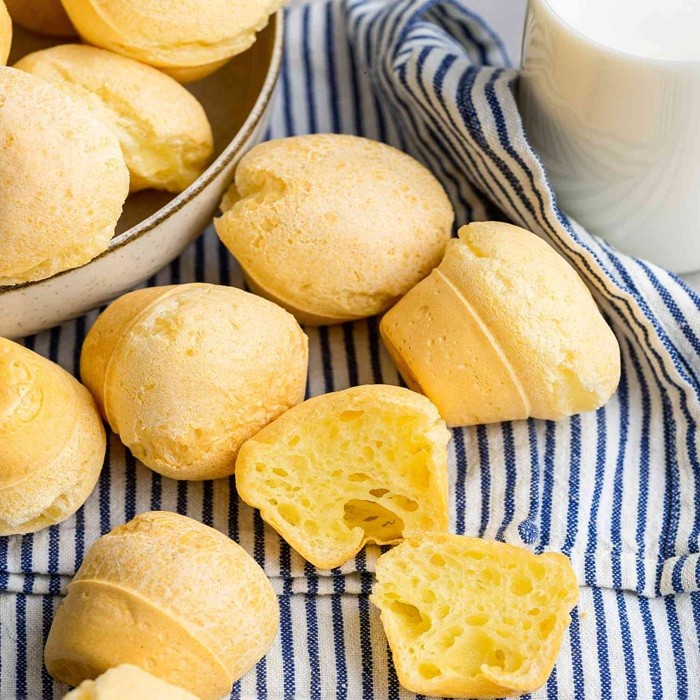
step 1 Heat the oven to 220C/200C fan/gas 7. Oil or butter a baking sheet and set aside. step 2 Heat the milk, butter and salt in a medium saucepan and bring to a boil. Remove from the heat and add the tapioca flour. Stir vigorously, then leave to cool a little. step 3 Pour the dough into a standing mix to beat the dough until its cool, or use a wooden spoon and beat by hand. Beat the eggs in one at a time, waiting until each is completely incorporated before adding the next. When the dough is glossy and mixed, add the parmesan. Beat again until mixed. step 4 Spoon the dough onto the baking sheet in 1 tbsp balls, 5cm apart. Bake for 30 mins until crisp and golden. Remove from the oven and eat while still warm.
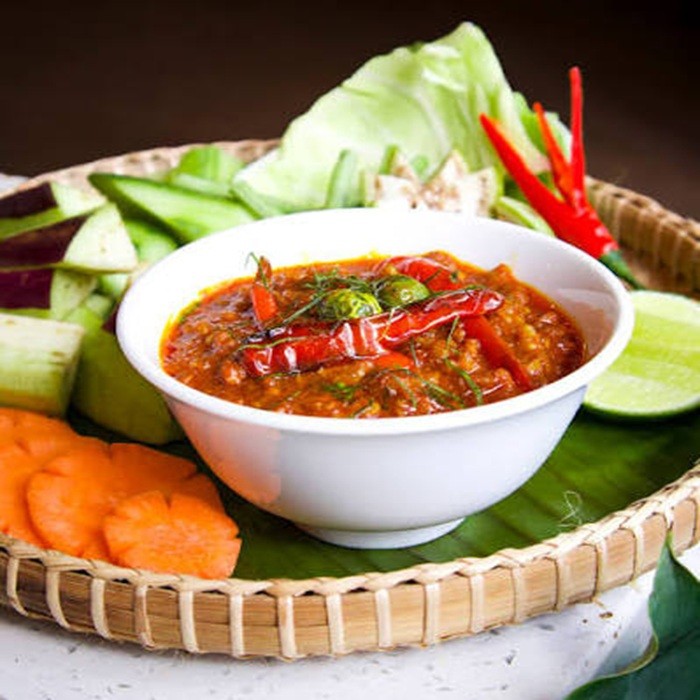
1. Heat 2 tbsp vegetable oil in a large skillet over medium-high heat until shimmering, about 1 minute. 2. Add 4 cloves minced garlic and 2 finely chopped shallots to the skillet, stirring constantly until fragrant and lightly golden, 2-3 minutes. 3. Tip: Keep the heat medium to prevent burning—garlic can turn bitter if overcooked. 4. Add 1 lb ground pork to the skillet, breaking it up with a spoon, and cook until no pink remains, 5-7 minutes. 5. Stir in 3 tbsp prahok and cook for 1 minute to blend the flavors, mashing it slightly into the pork. 6. Pour in 1 cup coconut milk, stirring to combine, then reduce heat to medium-low and simmer for 10 minutes until the mixture thickens slightly. 7. Tip: Simmer gently to avoid curdling the coconut milk—a steady bubble is ideal. 8. Add 2 tbsp fish sauce, 1 tbsp palm sugar, and 2 minced Thai chilies, stirring until the sugar dissolves, about 2 minutes. 9. Remove the skillet from heat and stir in 2 tbsp lime juice, mixing thoroughly. 10. Tip: Add lime juice off the heat to preserve its fresh, tangy flavor without cooking it out. 11. Transfer the dip to a serving bowl and garnish with ¼ cup chopped fresh cilantro. 12. Let the dip cool for 5 minutes before serving to allow the flavors to meld.
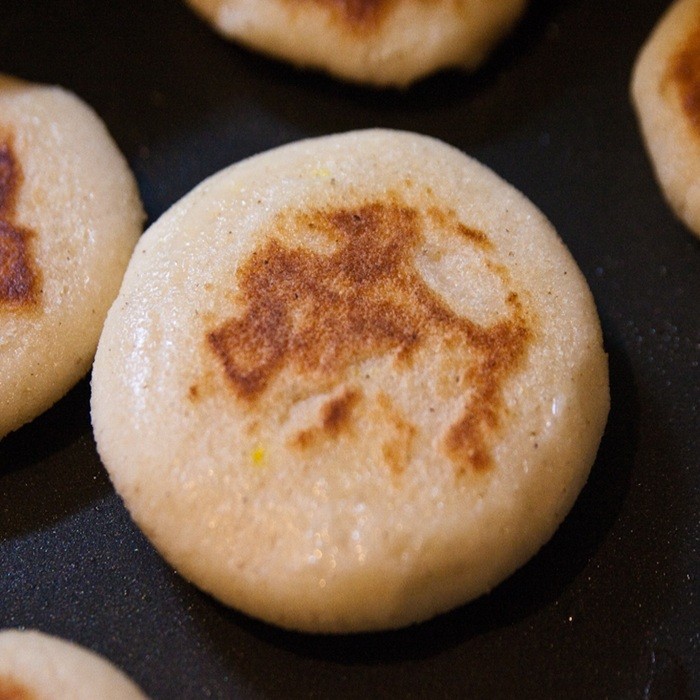
Put the corn flour in a bowl and add the salted water little by little, mixing with the flour until all the water has been used and the flour has become a dough. Let it rest for five minutes. Now, shape the dough into round rolls about 3 inches in diameter and 1/2 inch thick. In a lightly greased skillet, slowly cook the arepas until a crust forms on each side. Now place them into a casserole and bake in the oven at 350 degrees for approximately 20 minutes, until the arepas sound hollow when tapped. To enhance taste: instead of using just water, use chicken or beef broth.
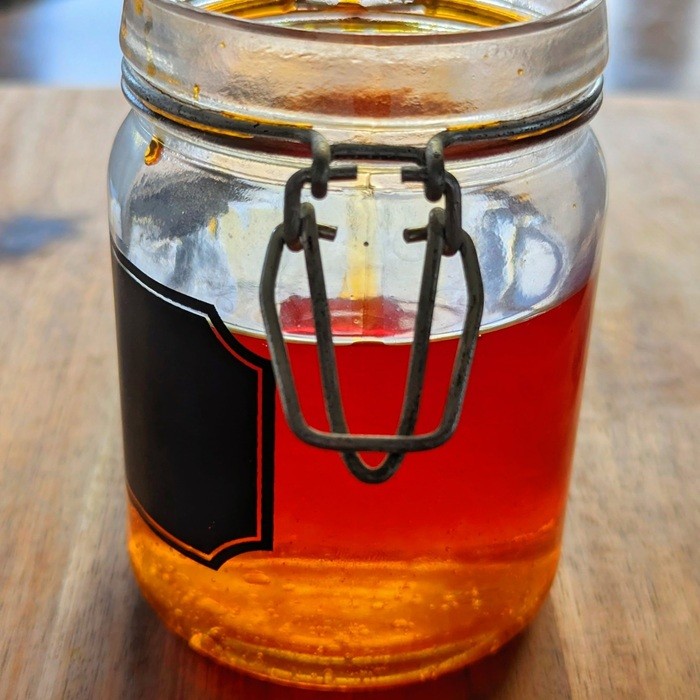
Heat the vegetable or olive oil and Achiote seeds in a small skillet over medium heat for about 2 to 3 minutes. Don't let the seeds turn black. Remove the skillet from the heat and let stand for 5 minutes more. Strain the oil and store for up to 15 days at room temperature in a jar with a tight lid.
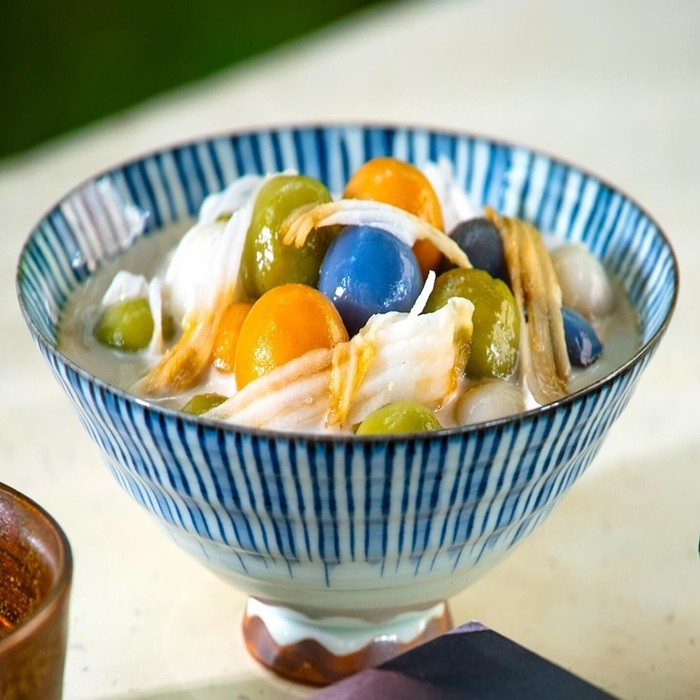
Place coconut cream in a small pot over low heat. Cut 3 pandan leaves into large strips and add to the pot with brown sugar, salt, and ginger. Bring to a boil, then cook 2 more minutes. Turn off the heat, remove the pandan leaves, and let cool. Chop the remaining 4 pandan leaves, blend with ¼ cup water until very green, then strain well. In a bowl, place 200 g sticky rice flour, add a little pandan liquid, and knead until smooth. Peel and chop beetroot, blend with ¼ cup water until red, then strain well. In a bowl, place 200 g sticky rice flour, add a little beetroot liquid, and knead until smooth. Bring 3 litres of water to a boil in a medium–large pot. Divide each dough into small pieces, roll into balls about ⅓ the size of a ping pong ball, then drop into boiling water. When they float, remove and place them into fresh, icy water to keep them separate. Drain well, then place the mixed colored balls into the cooled coconut sugar syrup and stir. Serve in small bowls (add longan and shredded coconut as desired). Add the coloring liquids gradually—each flour absorbs differently. You want a dough that’s smooth and pliable, not sticky.
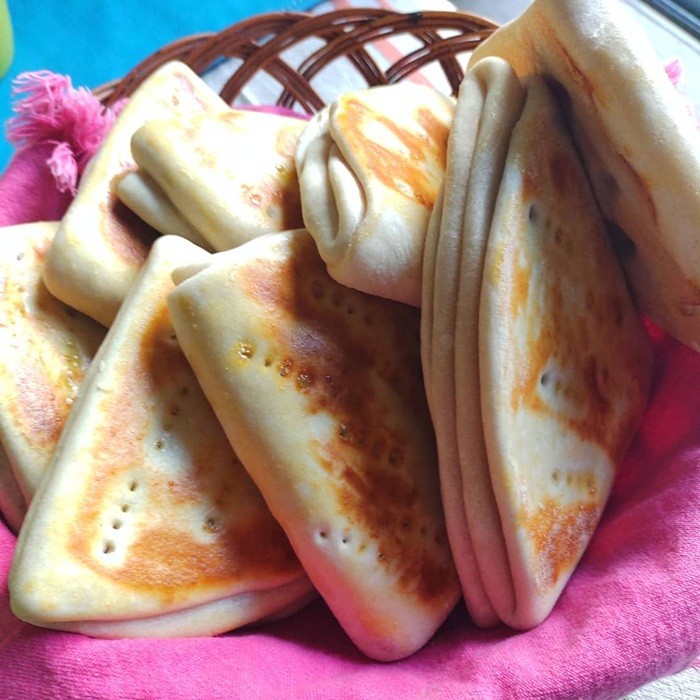
Preheat the oven to 450 degrees F (230 degrees C). Grease a baking sheet. Whisk flour, 1 cup melted butter, milk, baking powder, and salt together in a bowl until begins to pull together. Turn dough out onto a lightly floured surface; knead until smooth and elastic. Roll dough out to ⅛-inch thickness; cut into 8-inch circles. Brush circles with remaining 3 tablespoons melted butter. Fold each circle in half, then fold in half again to form triangles. Press firmly to seal the layers; place on the prepared baking sheet. Bake in the preheated oven until golden brown, about 15 minutes. Serve warm
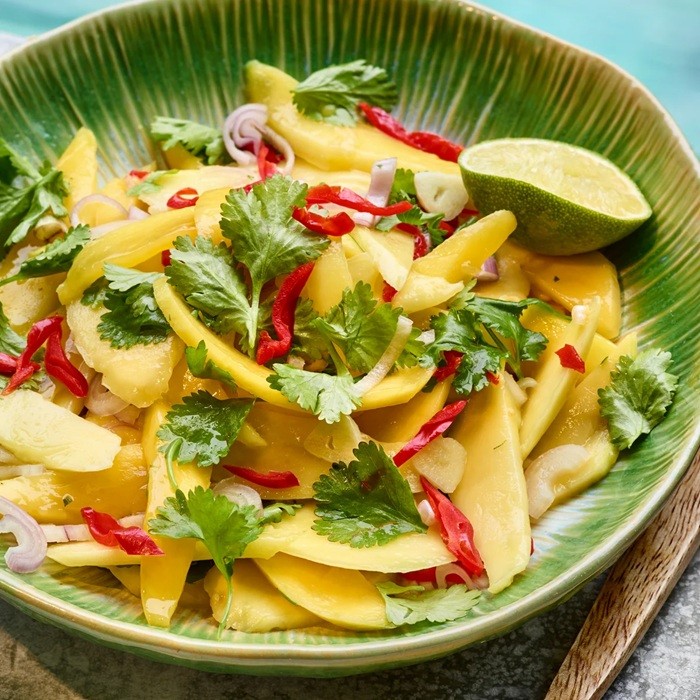
Simply combine everything in a bowl and serve alongside just about anything.
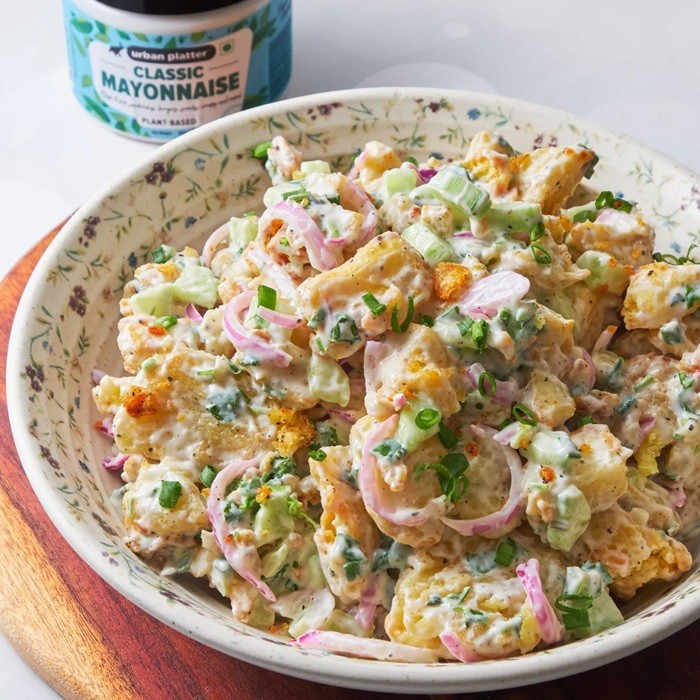
Peel and cut potatoes in cubes, boil in salted water until tender. Chop peppers and onion and set aside. Mix together mayonnaise, mustard, sugar and black pepper and set aside. Drain potatoes once tender and place in large mixing bowl. Add remaining ingredients and mix well. The salad may be served warm, but is normally served after it has been refrigerated for 2 to 3 hours.
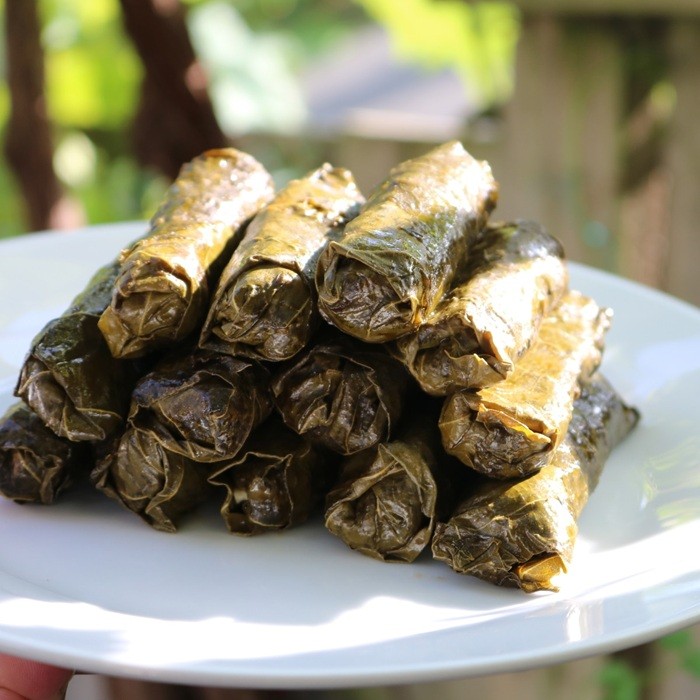
Wash rice in cold water until water runs clear. Sauté onions in olive oil until tender. Add spices and stir until fragrant. Add remaining ingredients. Bring to a gentle boil, then simmer for 30 minutes until all stock is absorbed and rice is tender. Serve as a side dish or filling for dolmas.
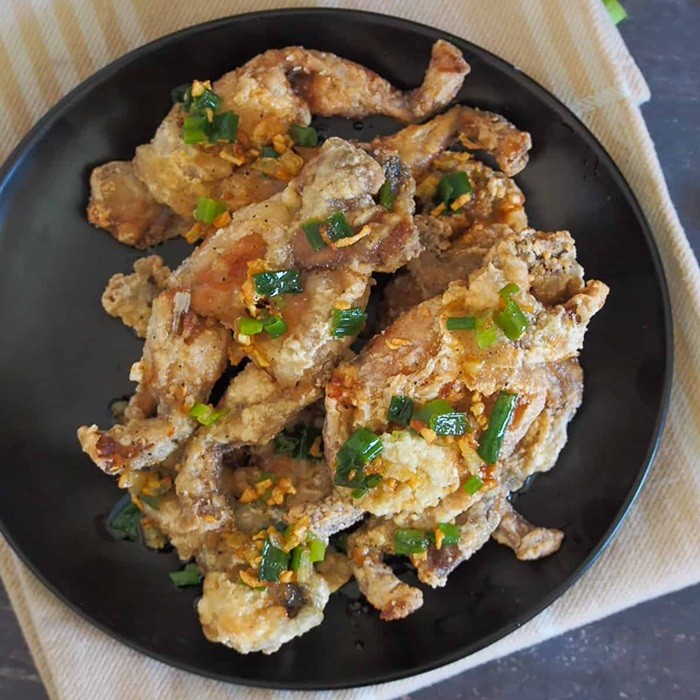
1. Let the frog legs soak in the milk in the fridge for an hour (optional). 2. Rinse the legs and pat them dry with kitchen paper. 3. Add the olive oil and half of the garlic butter to a large wok or frying pan. Place it over high heat until the butter starts to foam. Don't let it burn. 4. Add the frog legs to the pan. Pan fry them for about 10 minutes until they are golden brown on both sides. Turn the over regularly. 5. Add the rest of the garlic butter right in the end together with the freshly chopped parsley. Season with a pinch of pepper and salt to taste. 6. Divide the frog legs over plates. Serve with grilled bread and a green salad.
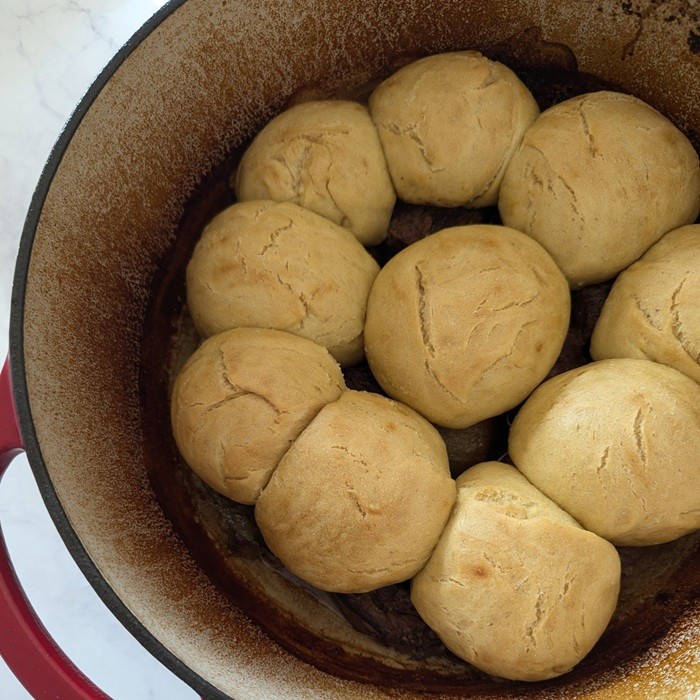
This recipe requires a stew to steam the dumplings on top of, at abour 180℃ or 350℉, give or take (it doesn't have to be specific, but can't be very high or very love heat). You will add the dumplings in during the last thirty minutes of your stew's cooking time, They need to steam covered, so the stew should be in a lidded pot that is oven-proof. Mix the dumpling dough In a measuring cup, combine the warm water, sugar, and yeast. Leave until foamy, about 5 minutes. To a stand mixer bowl, or a large bowl if mixing by hand, add the flour and salt. Stream in the water-yeast mixture while kneading. Knead for several minutes after the dough comes together, until a smooth ball of dough forms. Leave the dumpling dough to rise Place the ball of dough in an oiled dough, cover, and leave to rise until doubled, about 1 hour. Shape the dumplings Divide the risen ball of dough into 10 equal portions for large dumplings, or 12-14 portions for smaller dumplings. Shape each portion of dough into a smooth, round ball. Steam the dumplings In the last thirty minutes of cooking a stew, place the shaped dumplings right atop the stew. Push them down gently into the stew. Cover tightly and return to the oven for 25-30 minutes. The dumplings are done when they're risen and light golden.

Place all the ingredients, except the oil in a medium bowl and mix well using your hands until soft and smooth dough is obtained. Form small balls using your hands. In a deep pot, heat the vegetable oil to 300°F (Warm, not very hot). Carefully drop the balls in the warm oil and fry for about 3 to 4 minutes or until gilden brown. Remove from the oil and drain on a plate lined with paper towels. Serve. Frying Colombian buñuelos using the right temperature is very important. The oil can't be very hot or very cold. Be sure the oil is heated to 300 to 320 grades F.
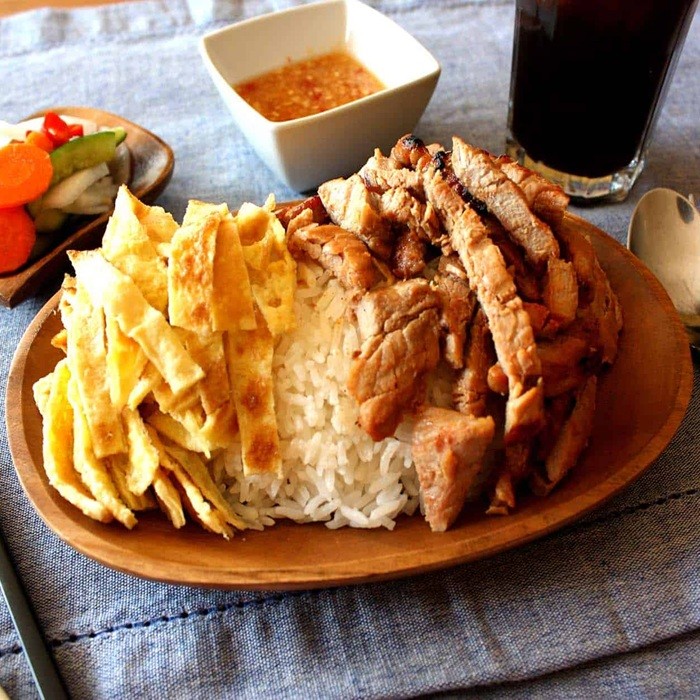
1. In a large bowl, combine the coconut milk, soy sauce, oyster sauce, honey, minced garlic, and black pepper to make the marinade. 2. Add the thinly sliced pork shoulder to the marinade, ensuring each piece is fully coated, then cover and refrigerate for at least 30 minutes to allow the flavors to penetrate. 3. While the pork marinates, rinse the jasmine rice under cold water until the water runs clear to remove excess starch, which helps prevent clumping. 4. In a medium pot, combine the rinsed rice and 4 cups of water, bring to a boil over high heat, then reduce to a simmer, cover, and cook for 15 minutes until the water is absorbed and the rice is tender. 5. Heat a grill pan or outdoor grill to medium-high heat (about 400°F) and lightly brush with vegetable oil to prevent sticking. 6. Remove the pork from the marinade, shaking off any excess, and place it on the hot grill, cooking for 3-4 minutes per side until nicely charred and cooked through with an internal temperature of 145°F. 7. Tip: Avoid overcrowding the grill pan to ensure even browning and proper caramelization of the marinade. 8. Once the pork is grilled, let it rest for 5 minutes before slicing to retain its juices and tenderness. 9. Tip: If you prefer a saucier dish, simmer the leftover marinade in a small saucepan for 5 minutes until slightly thickened and drizzle it over the pork. 10. Fluff the cooked rice with a fork to separate the grains and serve it warm alongside the grilled pork slices. 11. Arrange the thinly sliced cucumber and fresh cilantro leaves on top as a refreshing garnish. 12. Tip: For an extra kick, serve with a side of pickled vegetables or a squeeze of lime juice to balance the rich, savory flavors.
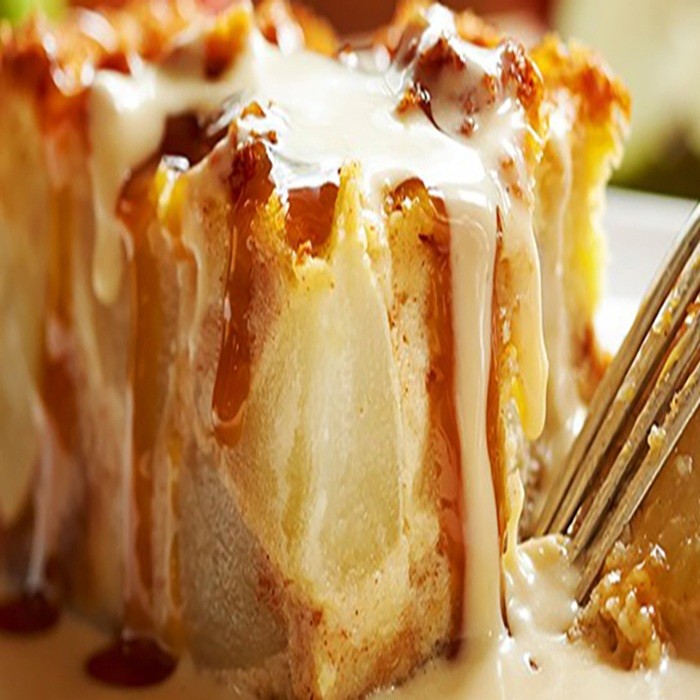
Cut the breadfruit, remove the seeds in the core, and peel. Boil in salted water with a little onion and oil, over high heat until tender and drain. Meanwhile, melt the butter in a frying pan and lightly brown the onion rings. Add the garlic, tomatoes, parsley, lime juice, salt, and pepper. Continue to sauté for a couple of minutes. Add the water, bring to the boil and simmer for 5-10 minutes. Slice the cooled breadfruit and place it in a serving dish. Pour the butter sauce over the breadfruit. Garnish with chopped fresh parsley. Serves 4

Cut the cheese and long strips and place in your fridge to prevent it becoming soft. Mix flour, butter and egg in a bowl, and add sugar, salt and olive oil to taste into the mix. Then gradually add milk and knead well for a suitable consistency. Stretch out the dough with a rolling pin and cut into long strips (2 to 3 cm) and then roll the strips of dough around the cheese strips forming a spiral. Make sure the dough covers the cheese fully so that it doesn't melt out while frying. Roll the cheese & dough strips through flour to prevent them from sticking while frying. Heat oil in a frying pan until hot before placing the cheese sticks, and fry until golden in color.
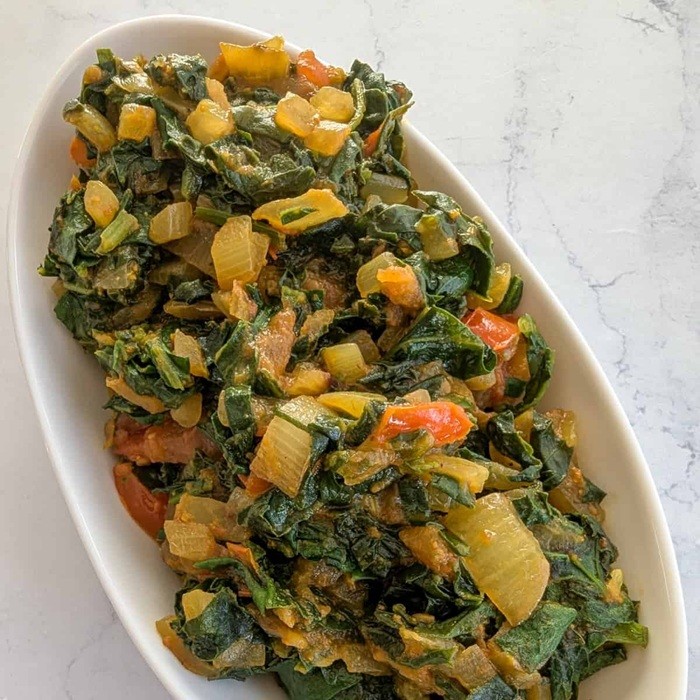
Heat the oil in a skillet over medium heat. When hot, add the diced onion and cook until lightly browned. Add the curry powder and salt to taste and toast for a few seconds. Add the chopped tomatoes and the water, stir well, and cook until the tomatoes begin to break down, 5-7 minutes. Add in the chopped (or baby) spinach and cook for 7-10 minutes more, until soft and wilted.
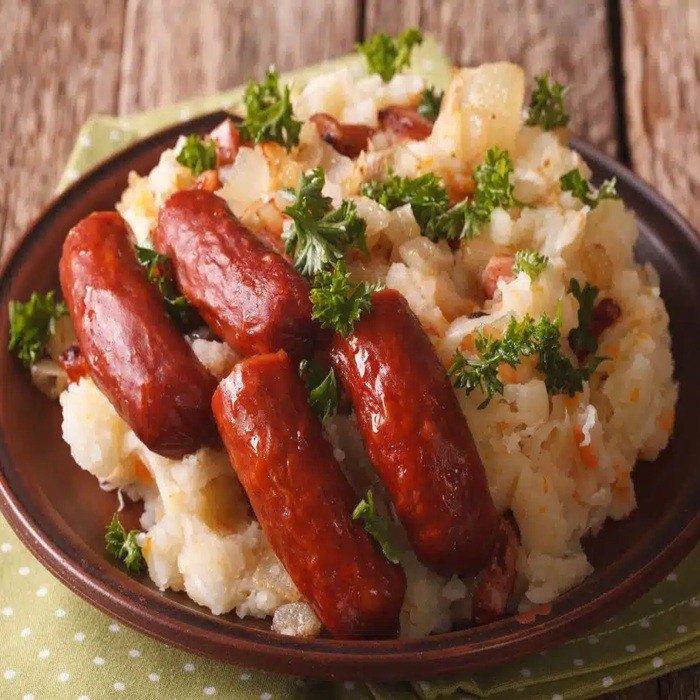
1. Add the chopped potatoes and garlic to a high pan and fill it with tap water until the potatoes are fully submerged. 2. Add some salt. Then place the pan over high heat and bring the potatoes to a boil. Cook them until tender. In the meantime rinse and drain the savoy cabbage. Slice it up finely. 3. Add a tablespoon of butter to a large non-stick pan. Place it over medium-high heat. Once melted, add the savoy cabbage. Season with a pinch of pepper and salt. 4. Stir fry the cabbage for 15 to 20 minutes or until the cabbage is soft and tender. Then turn the heat off and take the cabbage off the heat. In the meantime, pan fry the sausages (or sliced bacon if you are using both) in a non-stick pan in a tablespoon of butter or oil until golden brown and cooked through. 5. Transfer the sausages (and bacon) to a plate and cover with a lid or tinfoil to keep the meat warm. In the same greasy pan, add the sliced onion and extra butter and cook it gently over medium heat for 10 minutes until softened. (I often add diced bacon as well, if I only serve the stoemp with sausages.) 6. Then add the beer and turn the heat up. Let the beer reduce until you get a nice beer and onion sauce (you can add a little flour or sauce thickener if you like). Add the pan fried meat back to the pan and cover to keep warm. 7. Drain the cooked potatoes and garlic, add them back to the pan you cooked them in together with the pan fried cabbage and chopped parsley. Sprinkle with some pepper, salt and nutmeg. Also add the milk and the rest of the unsalted butter. 8. Mash the potatoes, parsley and cabbage up. Add extra butter or milk if necessary. Also check the seasoning and add extra pepper, nutmeg or salt to taste if necessary. Scoop the cabbage mash onto plates and top with the pan fried sausages (and bacon). Drizzle with the beer and onion sauce. Serve hot.
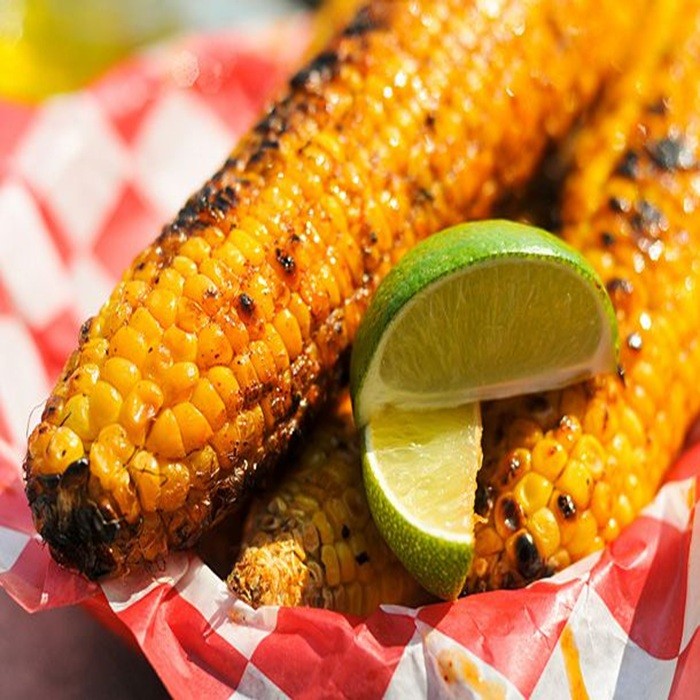
Bring the stock to a rolling boil in a big, deep pan. Slip in the cobs, leave to cook for about five minutes, then turn off the heat and leave the corn to sit in the stock as it cools. Put a heavy-based dry frying pan on a high heat and, once hot, lay the drained corn in the pan and char for a couple of minutes on each side – you’ll probably need to cook them two or three at a time, so you don’t overcrowd the pan. Put the coconut milk, lime juice and chillies in a small saucepan, season lightly, then bring up to a gentle simmer. Stir in the butter, turn off the heat and set aside. For the topping, toast the coconut flakes in a hot dry frying pan – coconut burns very easily, so keep them moving and keep your eye on them. As soon as the coconut has a golden, burnished, toasted colour, tip it into a bowl, leave to cool, then mix with the crispy shallots and herbs, and season to taste. To serve, spoon some of the coconut milk mixture over each cob, sprinkle with the toasted coconut mix and lime zest, and tuck in.
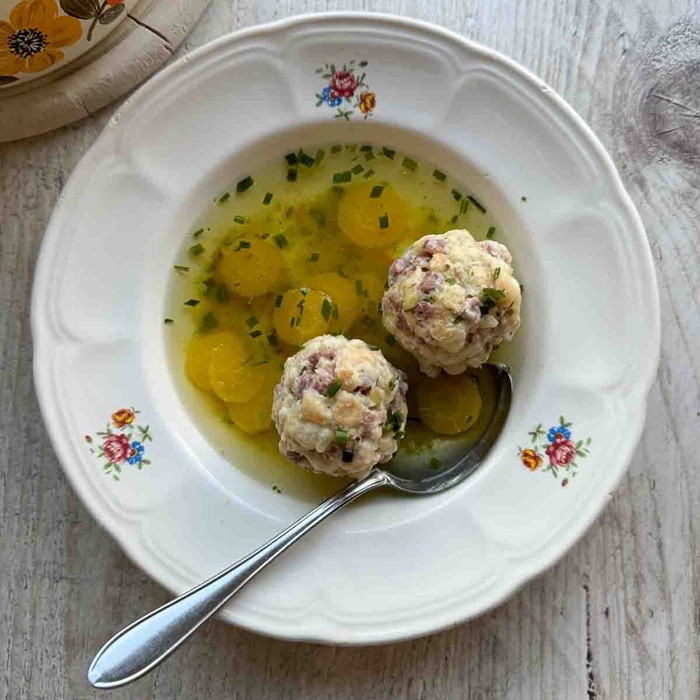
Step 1 Finely chop the shallots, and dice the smoked ham or sausage into small cubes. Heat some butter or clarified butter in a pan and sweat the onions in it until translucent. Add the meat and the parsley and fry together briefly before removing from the heat. Step 2 Place the bread in a bowl. Beat the milk with the eggs and season well with salt, pepper and nutmeg. Pour over the bread. Stir in the sausage and onion paste and mix in the flour. Mix together to form a relatively firm paste (adding more bread or flour if necessary) and season again according to taste. Smooth the surface of the dough out and leave to stand for approx. 30 minutes. Step 3 Heat up a good quantity of salted water in a large pan. Use the paste to form smaller dumplings (for use as a garnish in soups) or medium-sized dumplings, as required. Moisten the hands regularly with cold water during this stage so that the dumplings take on smooth forms. Step 4 Place in boiling water, bring back to the boil, turn down the heat, and simmer gently for 8-20 minutes, depending on the size. Step 5 Remove from the water, dry off well and serve up garnished with chopped parsley and melted butter (which has been taken on a nut-brown colour).
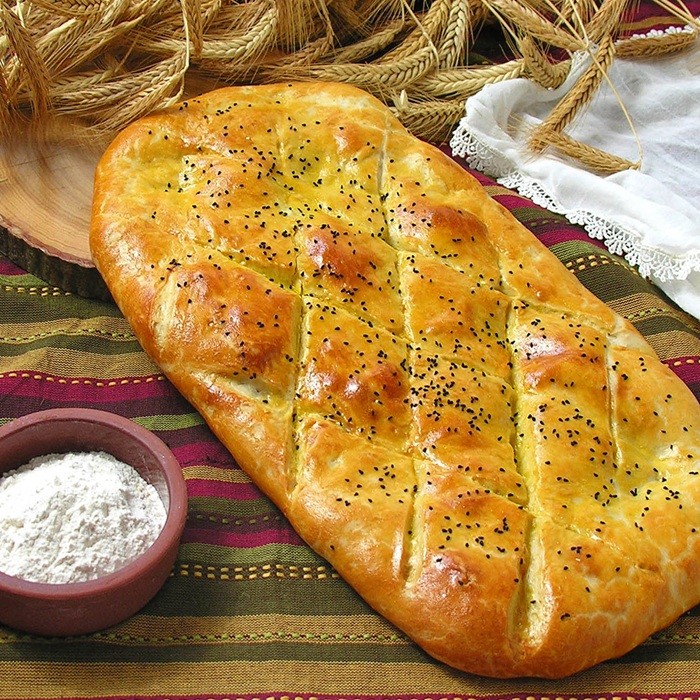
First a quick note about tandoori bread (or tandoori anything, really). The name comes from the clay oven, or "tandoor" that it is traditionally cooked in, and you will never be able to duplicate the flavor of any tandoori recipe without one of those ovens, no matter how hard you try. Now, a tandoor oven is actually a part of my dream kitchen (I love naan bread and tandoori chicken) but I don't have one in my current kitchen, so this bread just goes in a plain oven, which makes it not very authentic. However, this is how an Azerbaijani stranded in the US would make a tandoori bread, so I guess I don't feel too bad about including it in my meal. The ingredients for this bread are roughly similar to the ingredients for a basic french bread, but the shape is different and it is topped with poppy seeds which actually makes it quite beautiful in appearance. In fact this bread is quite possibly the most beautiful thing I've ever baked (my cakes certainly don't fall into that category). So as always I used my bread machine, but this time I didn't proof the yeast first. I just put it in the little yeast dispenser at the top of my machine, then added the water, flour and salt to the bucket. I put it on the dough cycle and then went and picked my kids up from school. This bread uses very basic ingredients, including bread flour and salt. If you want to do it the old-fashioned way: Mix the yeast with the water and let stand for a few minutes. Then sift the flour with the salt into a large bowl. Gradually add the water and yeast and mix with your hand until the dough forms a ball. Turn out onto a lightly floured surface. Knead the dough for 8 to 10 minutes, or until it is smooth. Put it in a large bowl and cover, then let it rise in a warm spot until doubled (this typically takes 1 to 1 1/2 hours). The dough after it has risen. Punch down and turn out onto a lightly floured surface. Stretch the dough until it is an oblong shape, then with a rolling pin roll
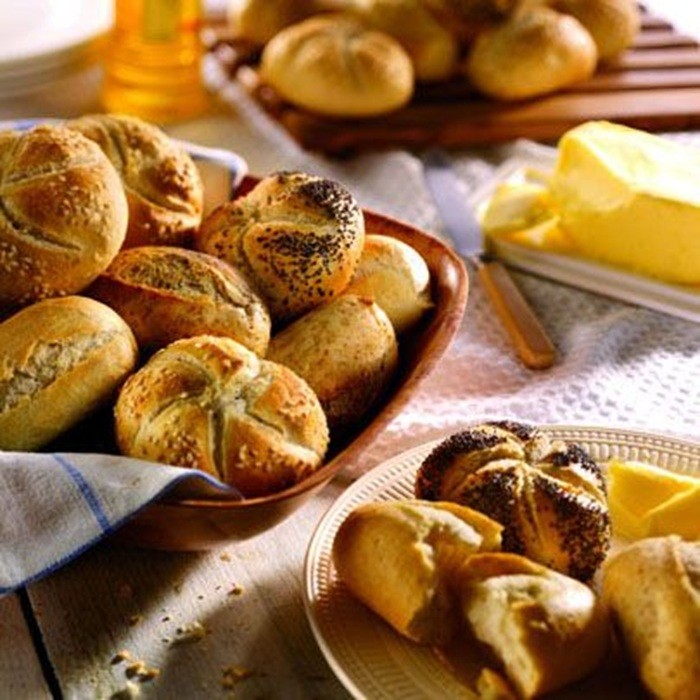
Sift flour, baking powder, salt, and sugar together. In a separate bowl, beat 6 eggs, then blend in the butter and milk. Sprinkle one tablespoon of sev dzandig (black seeds) and all the mahleb on top of the dry ingredients. Make a hole in the center of the dry ingredients and pour the wet ingredients in all at once, mixing with a few strokes until the dough can be turned out onto a floured board. Add more flour if necessary; it shouldn't be too sticky. Knead the mixture gently, just a few times, and then roll it out until it is ½" thick. Cut it into diamond shapes, circles, or long strips which can be rolled and braided into loaves. Prick each piece several times with a fork. Beat the seventh egg with additional sev dzandig (black seeds) added. Brush each piece of koulenje with this glaze and place on cookie sheet covered with baking parchment. Bake at 400° for 12-15 minutes until slightly golden. Cool on a rack. These are best eaten warm. You can reheat them by wrapping in foil.
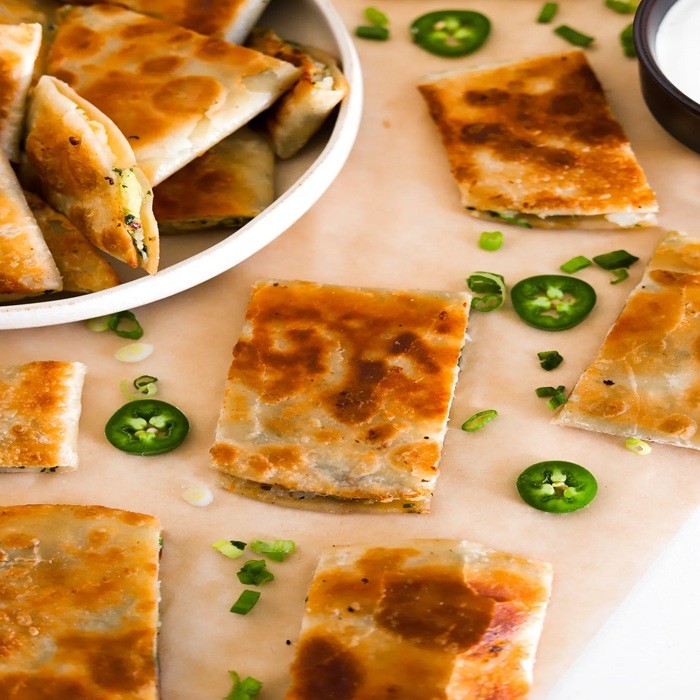
Put the flour and teaspoon of salt in a mixing bowl. Slowly adding as much water as is required. Mix to form a stiff dough. Place the dough on a clean work surface and knead for about 5-10 minutes until the dough is elastic, smooth and shiny. Form the dough into a ball, cover with a damp cloth and set aside for at least half an hour. Peel and wash the potatoes and boil them in salted water until soft. Drain off the water and mash thoroughly. Add the spring onions, salt and black pepper. Divide the dough into 3 or 4 balls. Roll out each ball as thinly as possible on a lightly floured surface (the thickness should be no more than 1.5mm - if the dough is too thick the Bolani will be tough) Take a round cutter of 13-15cm (I often use a pan lid or tid lid), and cut as many rounds as possible. On each round spread 1-2 tablespoons of the mashed potato. Moisten the edges of the dough, fold over and seal shut. The Bolani should be spread out on a lightly floured surface until ready to fry. Heat enough vegetable oil in a frying-pan and shallow fry one or two Bolani at a time, browning on both sides. Make sure to keep the fried Bolani warm until all are finished, and serve straight away.